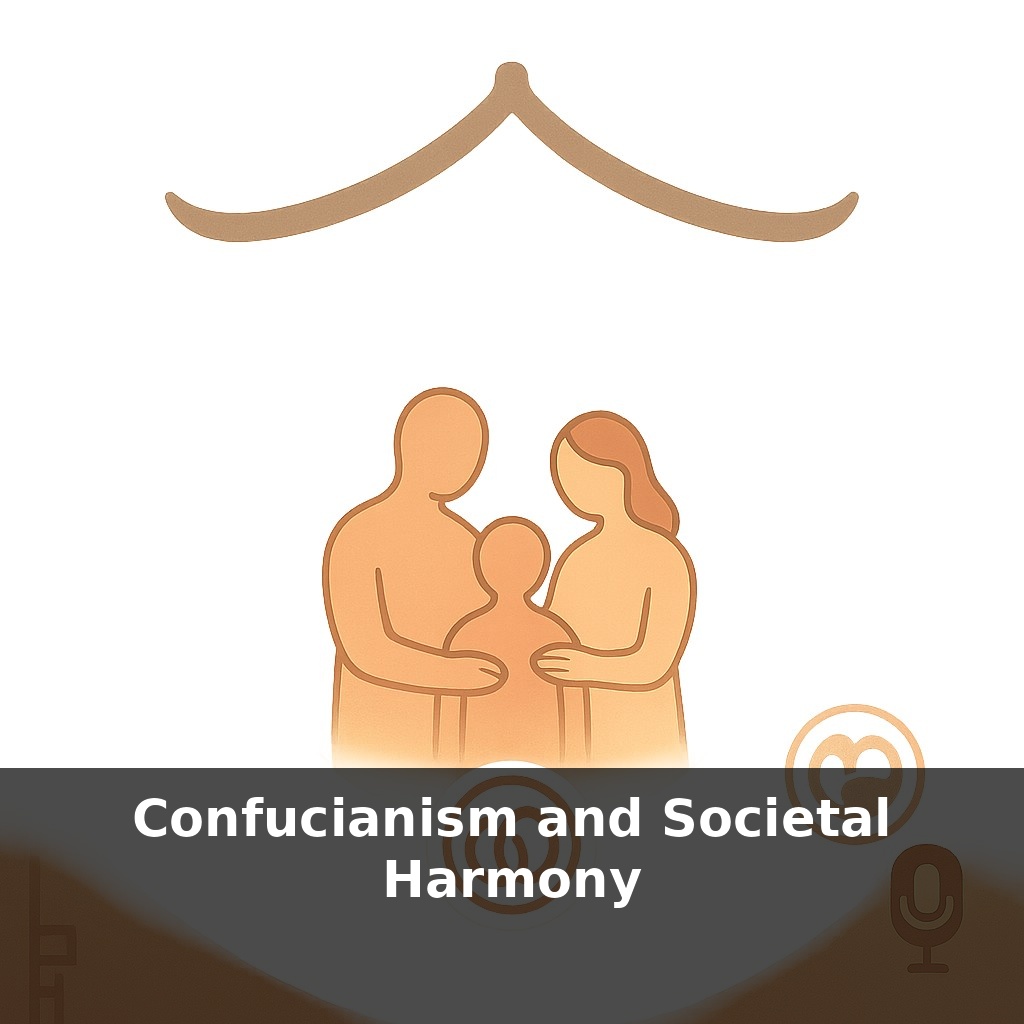
“Harmony in a family is the basis for happiness in a nation.” In modern China, most people still say a peaceful home life matters more than career or wealth. Today, we’ll step into a world where your joy isn’t a private feeling, but a public responsibility.
62% of people in China say their top life goal is a “harmonious family.” Not “follow my passion,” not “get rich”—harmony. That answer isn’t random; it’s the echo of a 2,000‑year experiment in designing happiness around relationships instead of individual feelings.
In earlier episodes, we met the utilitarian who measures happiness, the Kantian who obeys duty, the existentialist who invents meaning. Confucianism shifts the question: not “What makes me happy?” but “What kind of person must I become so that everyone around me can flourish?”
Think of a neighborhood where one person quietly starts picking up litter, greeting elders, helping kids with homework. Over time, tensions ease, trust grows, and even small conflicts soften. Confucianism claims this isn’t just good manners—it’s a blueprint for personal joy woven into social order.
In this tradition, your calendar is as important as your feelings. Daily routines—how you greet parents in the morning, address a coworker, or host a guest—are treated like small investments in a shared “relational bank account.” Confucian thinkers mapped five core relationships—parent‑child, ruler‑subject, husband‑wife, elder‑younger, friend‑friend—and asked: what habits keep these ties strong? It’s less about grand heroic acts, more about showing up consistently, like making regular deposits that, over time, generate the interest of trust and stability.
Confucian thinkers begin with a stark claim: you are never just “you.” You are always someone’s child, neighbor, colleague, citizen. So instead of hunting for private satisfaction, they ask: how do we become the kind of people whose presence steadies these surrounding ties?
Their answer centers on five virtues that act like a training program for character.
Ren is the emotional core: an expanding empathy that starts with family and radiates outward. A classic story tells of a disciple who sends rice home to his hungry parents before feeding himself. The point isn’t self‑sacrifice for its own sake; it’s learning to feel another’s need as your own.
Yi sharpens this kindness into moral backbone. It’s what stops Ren from turning into favoritism. Helping your cousin cheat on an exam might feel loyal, but it violates Yi. Confucianism insists that real care sometimes means refusing what benefits your in‑group when it harms the wider community.
Li gives these impulses structure. It’s not just ritual in a religious sense, but all the patterned behaviors—greetings, table manners, meeting etiquette—that signal respect. Where a utilitarian might ask, “Does this maximize overall happiness?” a Confucian might first ask, “What action fits this role and setting?” When everyone understands the script, daily frictions drop.
Zhi is practical moral intelligence: reading a room, sensing when a rule should flex, and foreseeing downstream effects on relationships. It’s what lets a manager apply company policy fairly, yet make humane exceptions without eroding trust.
Xin binds all of this over time. Promises are kept, words match deeds, and people become predictably reliable. In a workplace run on Xin, contracts still matter, but reputations matter more.
Historically, these virtues weren’t just private ideals. From the Han dynasty onward, aspiring officials sat through brutally competitive exams on the classics, premised on the idea that those who deeply grasp Ren, Yi, Li, Zhi, and Xin are best suited to govern. Happiness here is a by‑product of a society where such people shape laws, schools, and family norms.
If earlier Western theories put happiness in calculations, duties, or radical freedom, this tradition roots it in slow moral craftsmanship: refining your character so thoroughly that, wherever you stand in the web of roles, you quietly make life more livable for everyone attached to you.
In a modern office, you can see these virtues stress‑tested every day. A team lead who shares credit after a big product launch shows more than politeness; they reinforce a culture where others feel safe to take risks together. When conflicts flare over deadlines, someone who listens first, then gently names the hard truth, is exercising moral clarity without humiliating anyone. Over time, that person becomes the unofficial mediator others seek out.
Zoom out to city life: a neighbor who consistently returns borrowed tools on time, joins building meetings, and checks on elders during a heatwave may never speak about ethics, yet quietly reshapes the hallway atmosphere. People start holding doors, lending chargers, watching each other’s kids.
On a global scale, language programs inspired by this tradition don’t only teach grammar; they often stage festivals where students practice deference, hospitality, and gift‑giving. The point isn’t nostalgia, but experimenting with how structured courtesy can soften anonymity in huge, fast cities.
Sixty-two percent of people in one survey chose close‑knit kin over career or adventure. That preference is colliding with aging populations, climate stress, and AI‑driven work. If public policy leans on family care while workplaces demand 24/7 flexibility, something snaps. The open question is whether digital tools and ESG metrics can encode care without turning it into a score—like rating a forest’s “beauty” in dollars and then wondering why it feels less like a refuge.
So the question becomes: in a world of remote work, global teams, and parasocial “friendships” with creators, how do we keep our relational accounts from becoming ghost towns? Maybe the test isn’t how often we feel good, but how often others quietly relax when we enter the room, like streetlights flicking on at dusk.
Before next week, ask yourself: 1) “In my closest relationships (family, colleagues, friends), where am I out of alignment with Confucian *li* (appropriate roles and rituals)—is there one recurring interaction (like how I speak to a parent, junior coworker, or partner) that I could consciously handle with more respect and steadiness?” 2) “If I treated cultivating *ren* (humaneness) as daily ‘character training,’ what’s one specific situation today—maybe a tense meeting, a rushed commute, or a disagreement at home—where I could deliberately respond with patience and care instead of irritation or indifference?” 3) “Looking at the communities I’m part of (work team, neighborhood, online groups), is there one small, concrete way I could contribute to harmony this week—such as mediating a minor conflict, openly appreciating someone’s effort, or quietly supporting a person who’s being sidelined—and what would that look like in practice?”