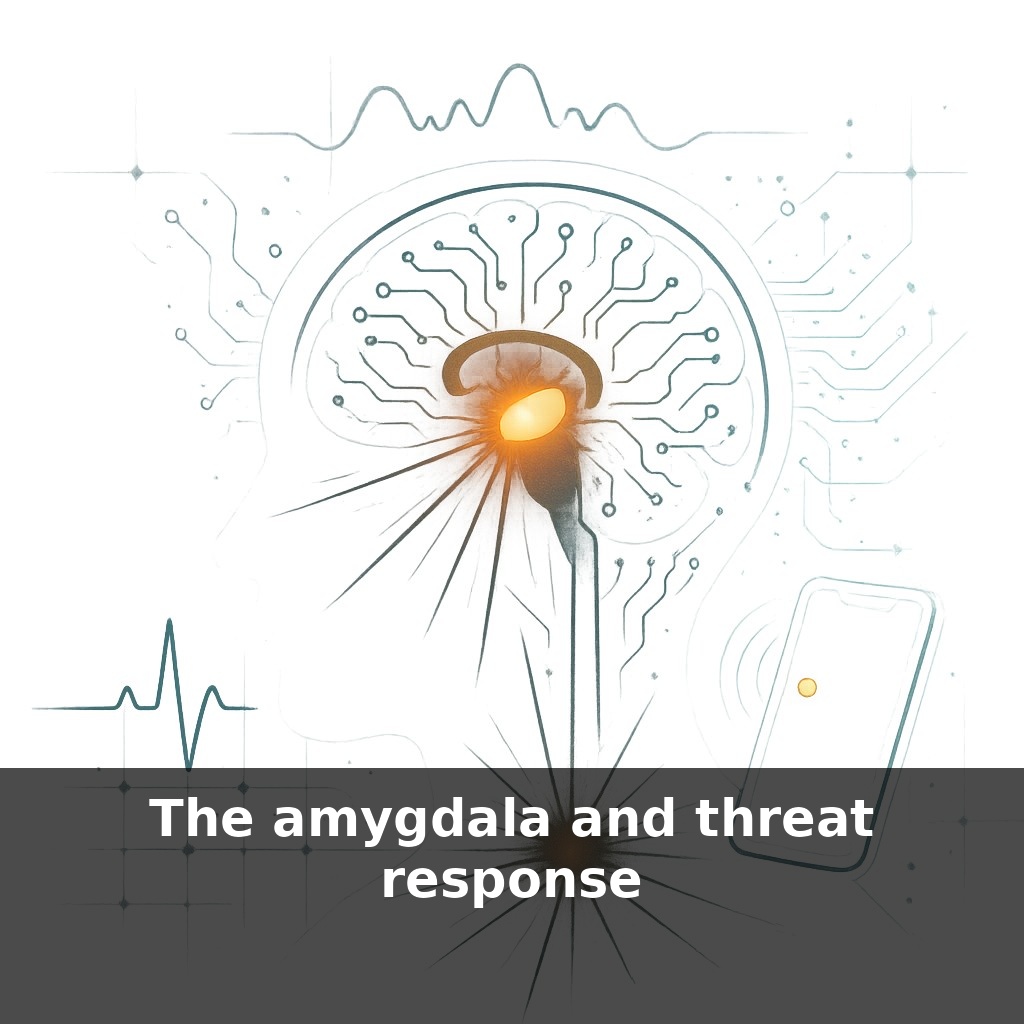
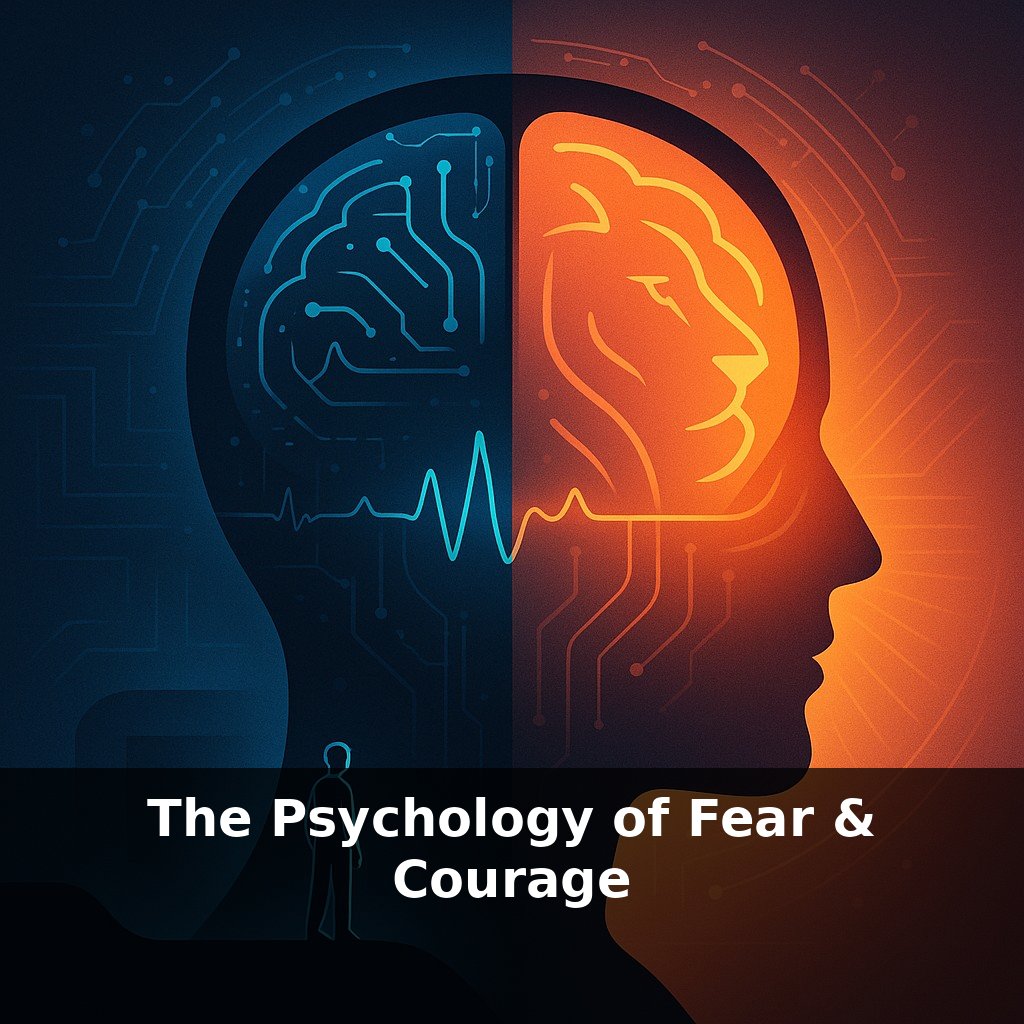
Your brain can start a full-body fear reaction before “you” even know what you saw. A shadow on the sidewalk, a sudden buzz from your phone, a sharp tone in someone’s voice—and your heart is already racing. Today we’re stepping into the tiny circuit that makes that happen.
That split-second jolt you feel isn’t random—it’s coordinated by a structure so small it would fit on your thumbnail. Nestled deep in each temporal lobe, your left and right amygdala quietly monitor the world, like backstage crew riding the dimmer switches on your emotional lighting. They’re not just about “fear” in the horror-movie sense; they help decide what deserves urgent attention and what can fade into the background. A harsh email, a slammed door, the pause before someone answers your question—these are all candidates for rapid prioritization. And here’s where it gets interesting: the amygdala can learn. It can become exquisitely tuned, even oversensitive, based on past experiences, trauma, and repeated stress. In some people it practically hums at baseline; in others it stays comparatively quiet. Understanding that difference is key to understanding why the same event can feel mildly stressful to one person and overwhelming to another.
That tuning has consequences far beyond panic attacks or jump scares. When researchers watch the amygdala light up in scanners, they see it responding not just to obvious danger, but to angry faces, critical feedback, financial loss, even social exclusion. It’s like your internal notification system for “things that might matter a lot.” In PTSD, for instance, that system fires too easily; in some anxiety disorders, it refuses to quiet down. Tech now lets scientists nudge this activity with precise light pulses or targeted therapy, raising a bigger question: how much should we edit our own threat detectors?
For something so small, the amygdala has an outsized communication network. It’s wired into fast sensory routes from the eyes and ears, then fans its output into systems that control hormones, posture, facial expression, even how sharply you focus your attention. That’s why you don’t just “feel” alarm—you might freeze, narrow your gaze, or suddenly become hyper-aware of every sound in the room.
One key feature is timing. Signals can arrive via a quick-and-dirty road that sacrifices detail for speed, and a slower, richer road that carries nuance. The first lets the amygdala react in roughly 150 milliseconds; the second lets the rest of the brain edit or override that reaction a bit later. That gap is where conscious regulation, coping skills, and therapy do their work. In neuroimaging studies, people who can successfully reframe a disturbing image—by, say, telling themselves a different story about it—show a pattern: activity ramps up in frontal control regions while amygdala activity drops. The connection between those regions and the amygdala can literally strengthen with practice.
Learning is the other crucial piece. Through fear conditioning experiments, researchers pair a neutral cue (like a tone) with something unpleasant. Over time, the amygdala starts responding to the cue itself, not just the event. Optogenetic work in animals goes a step further: by turning specific amygdala neurons on or off with light, scientists can “write in” or erase learned threat responses. That’s powerful, but also ethically thorny. If we can dial down learned fear, where’s the line between treatment and personality editing?
It’s also a mistake to think of the amygdala as devoted solely to the terrible. It responds robustly to social relevance: a friend’s approving smile, a rival’s smirk, a partner’s subtle withdrawal. In some experiments, it tracks reward and novelty as much as danger, helping weigh whether a risky choice might be worth it. When stakes are high—financial, social, or physical—its signals bias decisions toward caution or boldness, depending on context and prior learning.
Here’s your challenge this week: for seven days, pick one recurring situation that tends to spike your stress—maybe tense meetings, news headlines, or walking home after dark. Each time it happens, note the very first body change you can detect (heart, breath, muscles, gut) and then, only after that, the first thought you can clearly put into words. You’re not trying to change anything yet; you’re collecting timing data on yourself. At the end of the week, see if you can spot a consistent order: does your body move first and your story arrive later? That tiny sequence is your lived glimpse of the gap between rapid subcortical alarms and slower conscious interpretation.
Think about how your threat detector behaves in different “venues” of your life. At work, a calendar invite titled “Quick Chat?” might make your shoulders tense, while a musician might feel the same spike when a conductor suddenly stops rehearsal and glares at the violins. The cue changes, but the underlying pattern—rapid flagging of potential trouble—stays remarkably consistent.
Researchers see this in studies where people view ambiguous faces, hear uncertain tones, or watch market graphs fluctuating: that same deep circuit quietly tags some moments as higher stakes than others. Importantly, it doesn’t operate in isolation. Sleep debt, caffeine, menstrual cycle phase, past conflict with a specific person, even scrolling late-night catastrophe news can all pre-load the system so it fires more often the next day. Over weeks and months, these micro-biases don’t just shape what feels scary; they influence which jobs you take, who you trust, and how quickly you back away from opportunities that carry even a hint of social or financial risk.
Marketing teams already A/B test headlines; soon they may A/B test which message pattern nudges your threat circuitry just enough to grab you, but not enough to repel you. Courts, insurers, and schools could be tempted to treat your risk profile like a credit score, ranking whose alarms are “reliable.” Meanwhile, personal tools might let you see live readouts of your own reactivity, like a weather app for internal storms—raising the question: who should own that forecast, you or your employer?
As tech gets better at reading subtle flinches in your body and brain, the real frontier may be choosing how transparent you want to be—to apps, employers, even loved ones. Treat your own reactions less like a verdict and more like a weather report: shifting conditions, not absolute truth. The long-term project isn’t to silence alarm, but to become its editor.
Before next week, ask yourself: 1) “In the last few days, when did I feel my heart rate spike or my chest tighten, and what exactly seemed to trigger my amygdala—was it a Slack notification, a certain person’s tone, or a specific thought about the future?” 2) “The next time I notice that threat response kicking in, what concrete ‘safety signal’ can I send my brain in real time—like naming five things I can see, relaxing my jaw and shoulders, or reminding myself ‘this is discomfort, not danger’—and how does my body feel before and after I do it?” 3) “Looking at my week ahead, which one recurring situation (a meeting, commute, or social interaction) usually sets off my alarm system, and what is one specific way I can rehearse a calmer response in advance—such as visualizing the event going well or planning a phrase I’ll say to myself when it starts?”