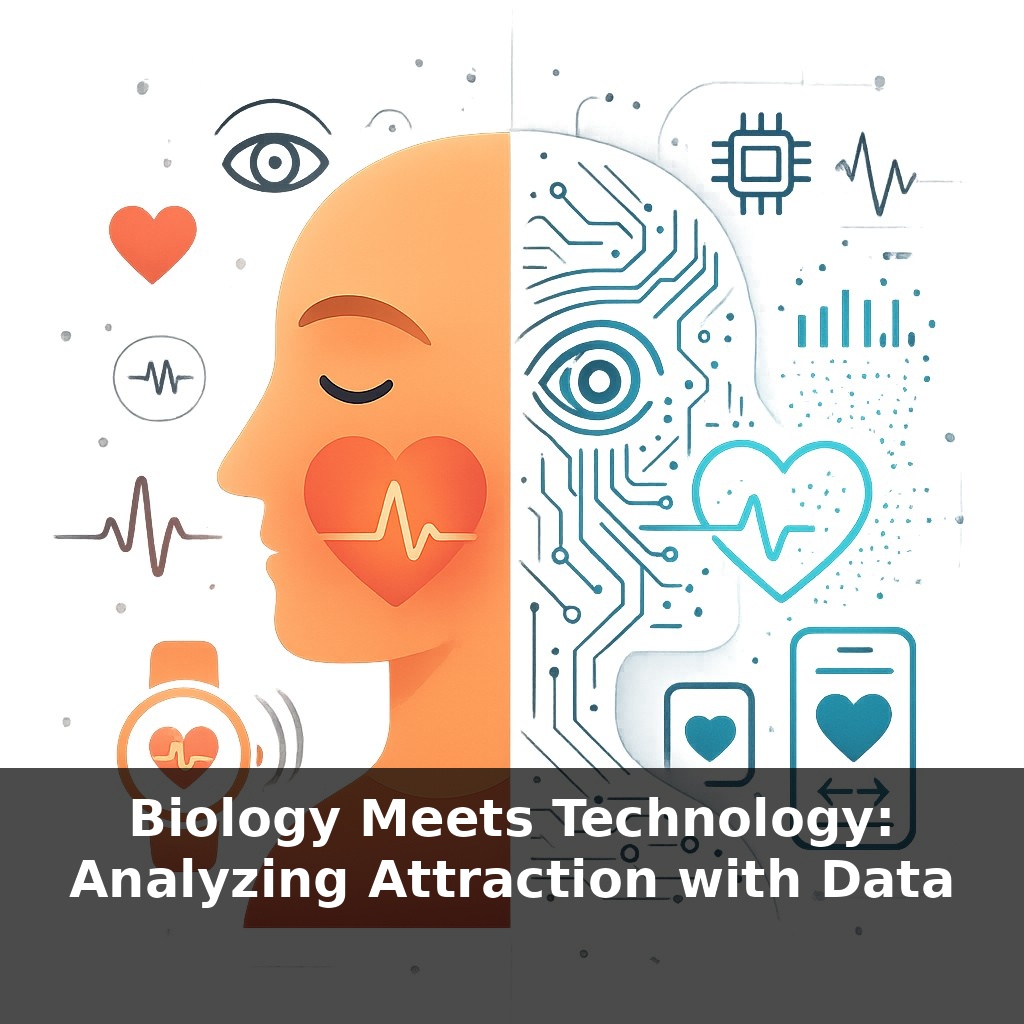
A dating app knows your heart sped up before you do. In some experiments, tiny jumps in heart rate line up with secret crushes in most people tested. You’re swiping, they’re measuring pulses and pupils—so here’s the puzzle: can data really detect desire better than you can?
That tiny spike your smartwatch logs on a date is only the beginning. Today’s attraction tech stacks dozens of signals: micro-pauses in your voice, how long your eyes linger, even subtle changes in skin temperature. Layer on hormone snapshots, genetic markers like HLA differences, and the trails of your swipes and chats, and algorithms start sketching a “you-shaped” blueprint of what—and who—you respond to. Some platforms already claim lower divorce rates or higher “match quality” using these models, while others quietly tweak features in real time, like Swipe Surge, to catch you when you’re most reactive. But as the data get richer, the questions get sharper: Who owns your arousal patterns? Can a compatibility score become a self-fulfilling prophecy? And how much unpredictability are you willing to trade for an optimized shot at connection?
On the surface, it feels simple: you like who you like. But once your smartwatch, dating app, and even your video calls are quietly harvesting signals, attraction starts to look less like a mystery and more like a data project. Your late-night swiping, how fast you reply, the kinds of profiles you pause on, even the jokes you tend to “like” can all be fed into models that predict who you’ll message back—or ghost. That prediction doesn’t just sit in a lab report; it shapes whose faces you see first, which chats get nudged to the top, and how often you’re tempted to keep looking “for something better.”
When researchers wire people up in the lab, they don’t just stare at one graph. They stack streams: eye movements, tiny shifts in facial muscle activity, voice tone, where your attention drifts on a screen, how your body subtly leans in or away. Each signal on its own is noisy. Together, patterns start to emerge—especially once machine‑learning systems are trained on thousands or millions of past interactions.
A basic model might learn: “Profiles with this style of photo and bio tend to get longer looks and more replies from you.” More advanced systems mix in situational factors: time of day, your recent mood hints from language (“exhausted,” “burnt out”), even whether you’ve just had a string of rejections. The output isn’t a single yes/no prediction; it’s a shifting probability landscape: you’re 62% likely to message this person back, 18% likely to meet in person, 5% likely to sustain a conversation for a month.
Some research goes further, trying to decode mutual attraction within live interactions. Software can analyze turn‑taking in conversation, laughter timing, and how similarly two people move—tiny synchronies in posture and gesture that often rise when people click. One study line suggests that when couples’ behaviors become more rhythmically aligned, they later report feeling more connected. That’s fuel for video‑based “chemistry scoring” tools already being piloted in corporate hiring and, more quietly, in some dating experiments.
Then there’s long‑term compatibility. Platforms that track relationships over years feed back which early patterns predicted staying together or breaking up: how fast people disclosed personal details, how conflict was handled in early chats, whether humor styles matched or complemented. Claims like eHarmony’s low reported divorce rate draw on these retrospective correlations, though independent audits are rare and methodology often opaque.
All of this creates a feedback loop. If an app learns that a certain “type” keeps you engaged, it may over‑serve that pattern, narrowing your options without explicitly saying so. Like a travel site that keeps nudging you toward beach resorts because you booked two in a row, the system optimizes for short‑term clicks, not necessarily long‑term wellbeing.
Layered beneath the convenience are power questions: Who decides which outcomes to optimize for—marriage, swipe volume, time on app? How are biases in the training data—race, age, body type, gender norms—being detected, let alone corrected? And what happens when people begin to adjust their own behavior to “perform” better for the algorithm, curating profiles and even bodily signals to match what they think the system rewards?
Your challenge this week: Treat one dating or social app you use as a mini field study. For seven days, notice and jot down three things each time you log on: 1) what kinds of profiles or content the system puts in front of you first, 2) how your own state (tired, lonely, rushed, confident) might be influencing what you click, and 3) any ways you find yourself shaping your behavior because of what you think “the algorithm wants.” At week’s end, look back and ask: which choices felt genuinely mine, and which felt subtly steered by the system’s guesses about me?
A few concrete examples show how this plays out off the lab bench. One startup pairs wearables with speed‑dating events: participants agree to share physiological data, then get a “highlight reel” of the moments their bodies reacted most strongly. Sometimes the spikes show up with people they barely remember talking to, nudging them to question first impressions. Another team is testing “silent feedback” in video chats: a tiny color band on the screen shifts based on how engaged your facial expressions and speech patterns appear. You never see the raw numbers, but the interface quietly suggests when the vibe is dipping. In a more intimate direction, some fertility apps are experimenting with opt‑in “relationship timelines,” correlating communication patterns with reported satisfaction over months. You don’t just get cycle predictions; you might see that arguments tend to cluster around certain stressors, or that shared activities—not just shared texts—track with feeling close.
An attraction “GPS” could soon guide you through first dates, flag emotional dead ends, even reroute you toward better habits—but who programs the destination? Genomic hints, mood traces from your phone, and subtle shifts in your texting rhythm might be folded into live coaching: nudge to slow down, suggest space, surface red flags earlier. Useful, yet unsettling: when prediction gets this granular, opting out may need to be as visible and easy as turning off location on your map.
As biosensors shrink and platforms quietly learn your patterns, the wild card may be how you respond. You might use these tools like weather reports—checking conditions, but still choosing whether to go out in the storm. The next frontier isn’t just predicting who you’ll like; it’s deciding how much of your inner climate you’re willing to let machines map, store, and potentially monetize.
Before next week, ask yourself: 1) “If I treated my dating life like an experiment, what 1–2 specific variables from the episode (e.g., message length, response time, or first-date setting) would I start tracking today, and what would I predict will change if I tweak them?” 2) “Looking at my recent matches or dates, what patterns in who I’m drawn to (age, interests, communication style, photos, etc.) actually line up—or clash—with the biological attraction cues they discussed, and what might that say about my real priorities?” 3) “If I had to design a ‘Version 2.0’ of my dating app profile using one insight from the episode (like signaling warmth, competence, or shared values more clearly), what’s the first concrete change I’d make before I go to bed tonight?”