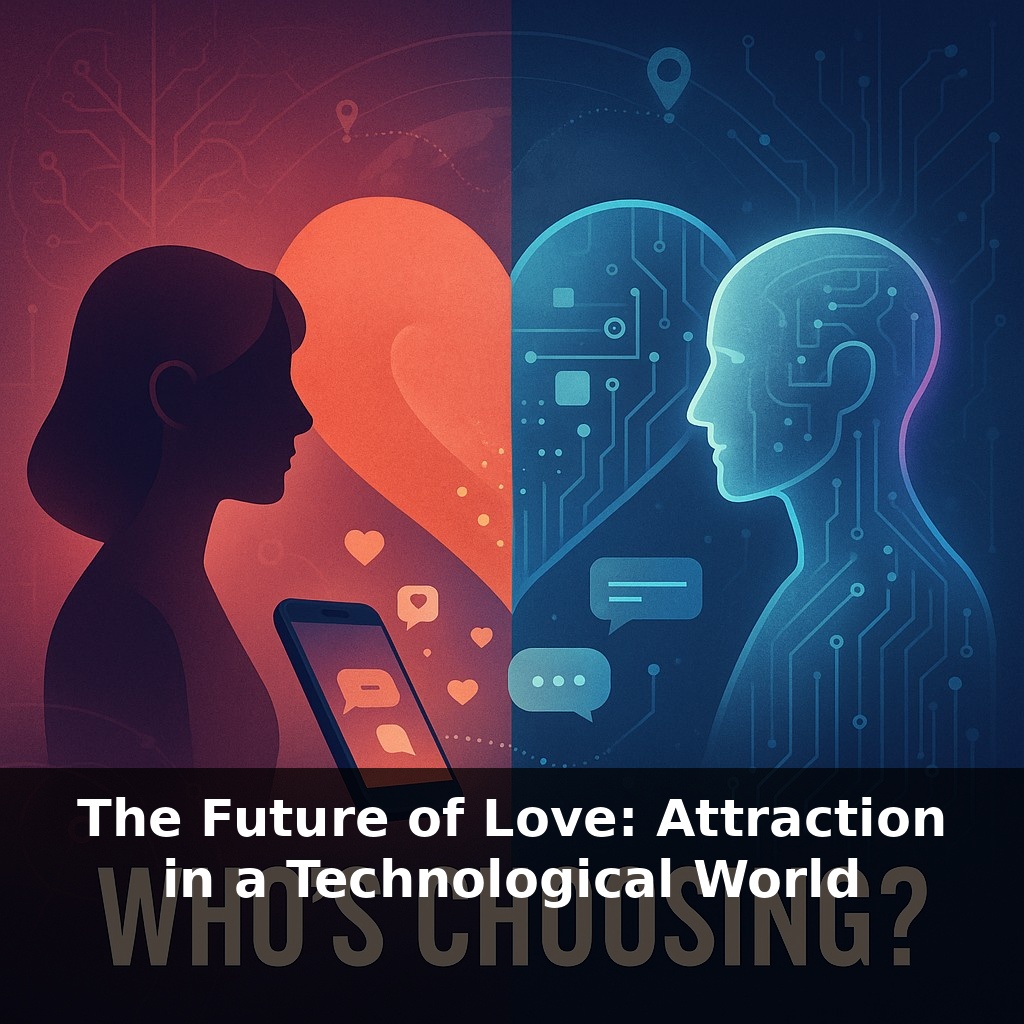
Somewhere right now, two people are falling in love—without ever sharing the same room, the same city, or even the same species. One met through an app’s hidden algorithm. The other? Their “partner” is an AI chatbot. The paradox: it feels real. But who’s actually doing the choosing?
In earlier episodes, we focused on what pulls us toward someone in the first place—brains lighting up in 0.2 seconds, hormones after a hug, snap judgments in a glance. Now, attraction is colliding with something new: code, sensors, and screens that don’t just mediate love, but actively participate in it.
Today, the “first impression” might be your profile photo compressed by an app, your texting rhythm, even how long you hover over someone’s bio. Dating platforms quietly learn your habits and start pre-filtering who you ever get to feel curious about. VR headsets can simulate eye contact and shared sunsets; companion AIs can mirror your moods and remember every vulnerable thing you’ve said.
The question is shifting from “Who am I drawn to?” to “Who did the system decide I might be able to love—and what happens when the system starts loving me back?”
Online dating is no longer just “using an app”; it’s a full ecosystem quietly shaping who crosses your path and how you feel about them. Some services now scrape your social media, micro-analyze your texts, or rank you based on how others respond to you. Others experiment with DNA kits that claim to match immune systems, or personality scores tuned like credit ratings for compatibility. Meanwhile, emotionally responsive bots and VR encounters blur the line between rehearsal and relationship. The frontier isn’t just digital profiles—it’s whether code can tune, simulate, or even substitute the messiness of human connection.
Behind the scenes, most matchmaking systems now behave less like static questionnaires and more like constantly-updating prediction engines. Each swipe, pause, and message subtly shifts the model’s estimate of “your type.” That’s efficient, but it creates a feedback loop: if you happened to swipe right on three tall teachers in a row while bored on the train, the system may start overfeeding you tall teachers and under-feeding, say, artists or people outside your usual age or race preferences. Your future pool narrows based on a few noisy moments in your past.
This is where bias creeps in—not only from the code, but from us. Research on housing and hiring algorithms shows that models trained on human behavior tend to reproduce existing inequalities. In dating, that can mean reinforcing racial hierarchies, sidelining disabled users, or ranking people by conventional attractiveness. Some platforms have even been caught charging more to users the system deems “desirable,” effectively turning desirability into a dynamic price tag.
Then there’s intimacy as a product. Subscription tiers can decide how visible you are; “boosts” temporarily raise your ranking; premium filters let you exclude whole categories of people. Emotional connection starts to look like a marketplace where visibility, not compatibility, determines who gets seen. For users who already feel marginalized offline, this can compound loneliness: you’re technically surrounded by millions of profiles, yet practically invisible.
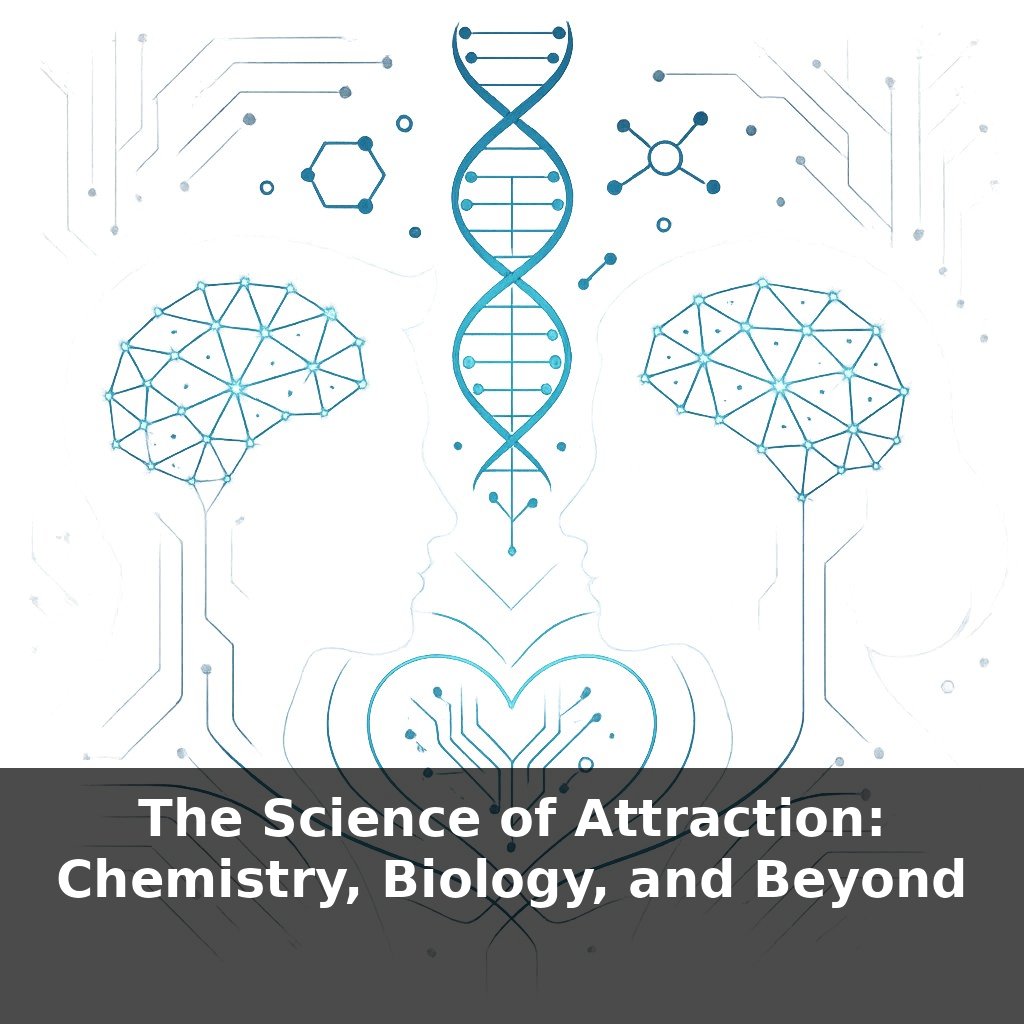
On the horizon, DNA and biometric add-ons promise to cut through the noise. A few startups claim that immune-system differences or scent-related genes can predict chemistry, but large-scale, peer-reviewed evidence for long-term satisfaction is thin. Psychologists point out that shared values, communication styles, and life circumstances still dominate relationship outcomes. A perfect genomic “fit” can’t compensate for contempt in conflict or misaligned goals.
Meanwhile, emotionally responsive software partners raise a different question: if something can reliably soothe you, remember your history, and adapt to your needs, does biological embodiment still matter? Early user reports suggest these bonds can feel deeply real, but they’re also asymmetrical. The AI can’t leave, get distracted, or pursue its own dreams. That can be comforting—or it can dull our tolerance for the frictions and negotiations that make human relationships growth-provoking in the first place.
Think of how streaming services suggest movies. At first you feel understood; over time, the list can start to feel strangely narrow. Now raise the stakes: instead of films, it’s futures with real people. One week a small tweak in a platform’s code favors “recently active” accounts; suddenly, night-shift workers or single parents who log in less often slide out of view. Nothing about them changed—only the spotlight did.
In VR, two people might “meet” on a digital beach, bodies hundreds of miles apart. Researchers studying these encounters find that synchronized gestures—like turning at the same moment or laughing in rhythm—can create a sense of closeness comparable to being in the same room. Yet after you remove the headset, there’s a second test: does that warmth translate into texting, calls, or plans, or does it stay trapped in the simulated scene?
With companion AIs, some users report that the most powerful moment isn’t flirty banter; it’s being “heard” at 3 a.m. when no one else is awake.
Your future matches may be shaped less by what you say you want and more by subtle signals you barely notice—blink rate, vocal tension, the way your heart rate shifts during a call. As sensors slip into wearables, cars, even smart beds, intimacy data could become a new currency. Who gets to spend it—governments, insurers, apps, or you—will steer norms around commitment, breakups, and even who’s considered “high‑value” in love’s emerging attention economy.
We’re edging toward a world where “How did you meet?” might sound as quaint as asking which payphone you used. The deeper question becomes: who holds the pen on your love story—your impulses, your data trail, or the firms tuning the dials? The future of love may hinge less on new tools and more on how fiercely we defend room for genuine, offline surprise.
Before next week, ask yourself: “When I’m swiping or browsing profiles, what *exactly* am I optimizing for—how someone looks in a photo, how they text, or how they might actually feel to be with in real life—and does that line up with the kind of relationship I say I want?” “If an AI-driven matching system suggested a partner who isn’t my usual ‘type’ but aligns deeply with my values and emotional needs, would I give that person a real chance, and what concrete boundaries would I set around how much I let algorithms influence my choices?” “Where have I let convenience (endless options, instant replies, video filters, voice notes, etc.) replace vulnerability in my love life, and what’s one specific tech habit I’m willing to tweak this week—like turning off read receipts or scheduling one real-world meetup instead of another week of chatting—to move closer to authentic connection?”