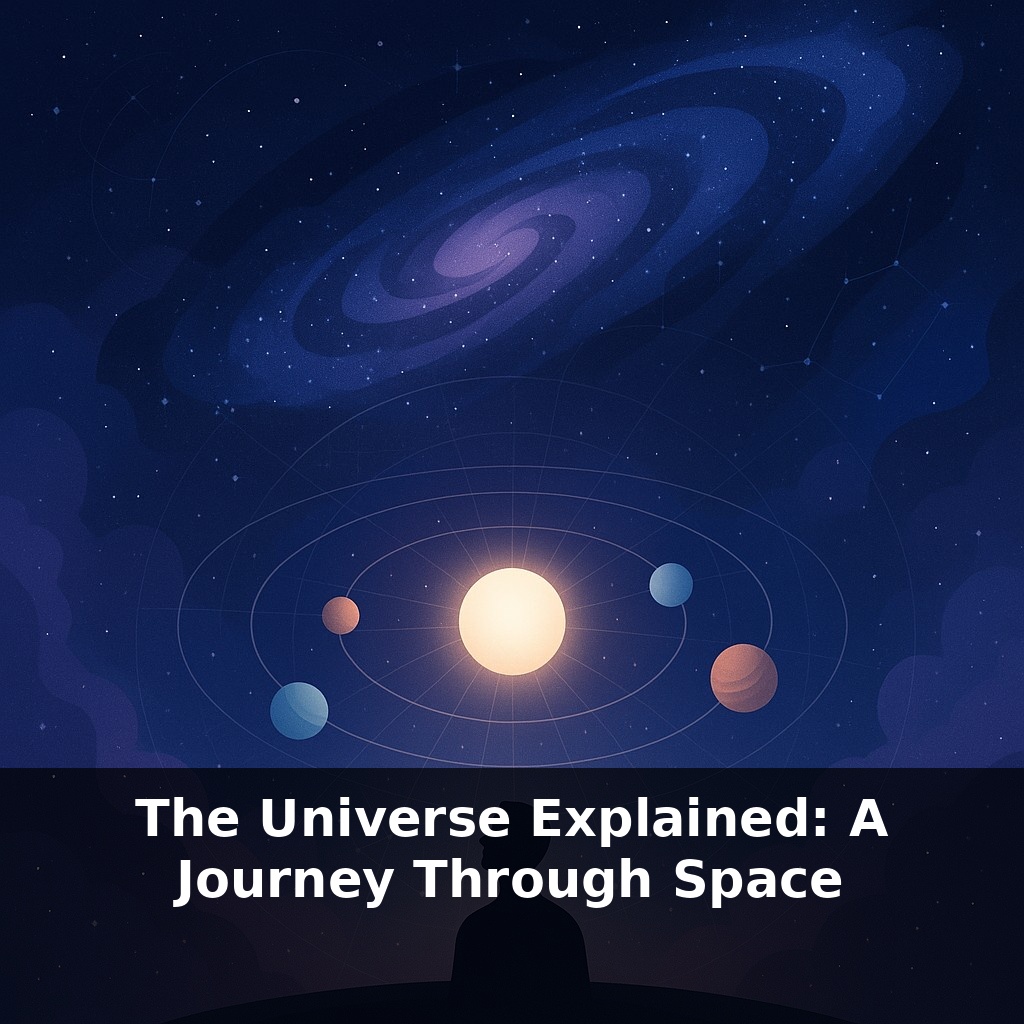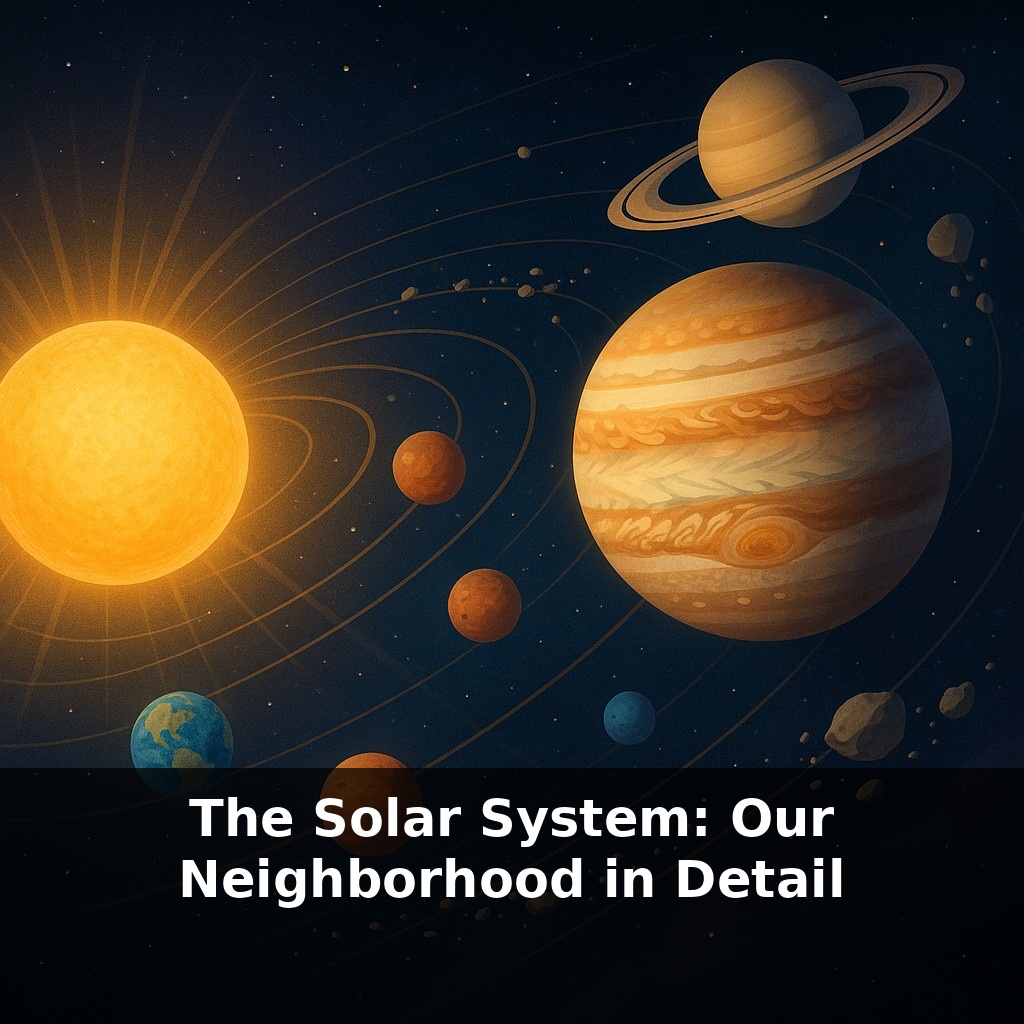
Right now, as you listen, a storm on Jupiter has been raging longer than any country has existed. Our Sun holds almost all the mass in the solar system, yet most of the real drama happens far from its surface. Let’s drop in on our cosmic neighborhood, one strange resident at a time.
Out past that ancient Jovian storm, the solar system starts to look less like a tidy diagram and more like a crowded, evolving ecosystem. Planets migrate, moons get shattered and reassembled, and even sunlight slowly changes over billions of years. When it first formed, our neighborhood was a chaotic construction site: young worlds trading orbits, leftover debris slamming into everything, and newborn Jupiter likely bulldozing material that might have become other planets. Today it seems calmer, but it’s still active. Mercury’s surface bakes and cracks, Venus hides a runaway greenhouse under global cloud, Mars keeps hints of past rivers. Farther out, icy moons stockpile water—Europa, Enceladus, Titan—quietly raising the possibility that the most habitable places may not be planets at all.
We live on one of the least extreme places available. Elsewhere, temperatures melt lead, diamond rain may fall, and ice behaves more like rock than something you’d put in a drink. To make sense of all this variety, astronomers sort worlds by what they’re made of, how much heat they get, and how they interact with everything around them. Orbits, atmospheres, and even magnetic fields act like medical charts, revealing hidden conditions: thin air here, crushing pressure there, and in a few rare cases, ingredients that might support chemistry we’d recognize as friendly to life.
Start with the easy part of the “medical chart”: distance from the Sun. Closer in, worlds get a high dose of radiation and heat; farther out, they live in permanent deep-freeze. But distance alone doesn’t decide a planet’s fate. Venus and Earth soak up similar sunlight, yet one is a pressure cooker and the other has liquid oceans. The difference lives in the details: atmosphere, rotation, even whether a world has oceans or big continents to store and move heat.
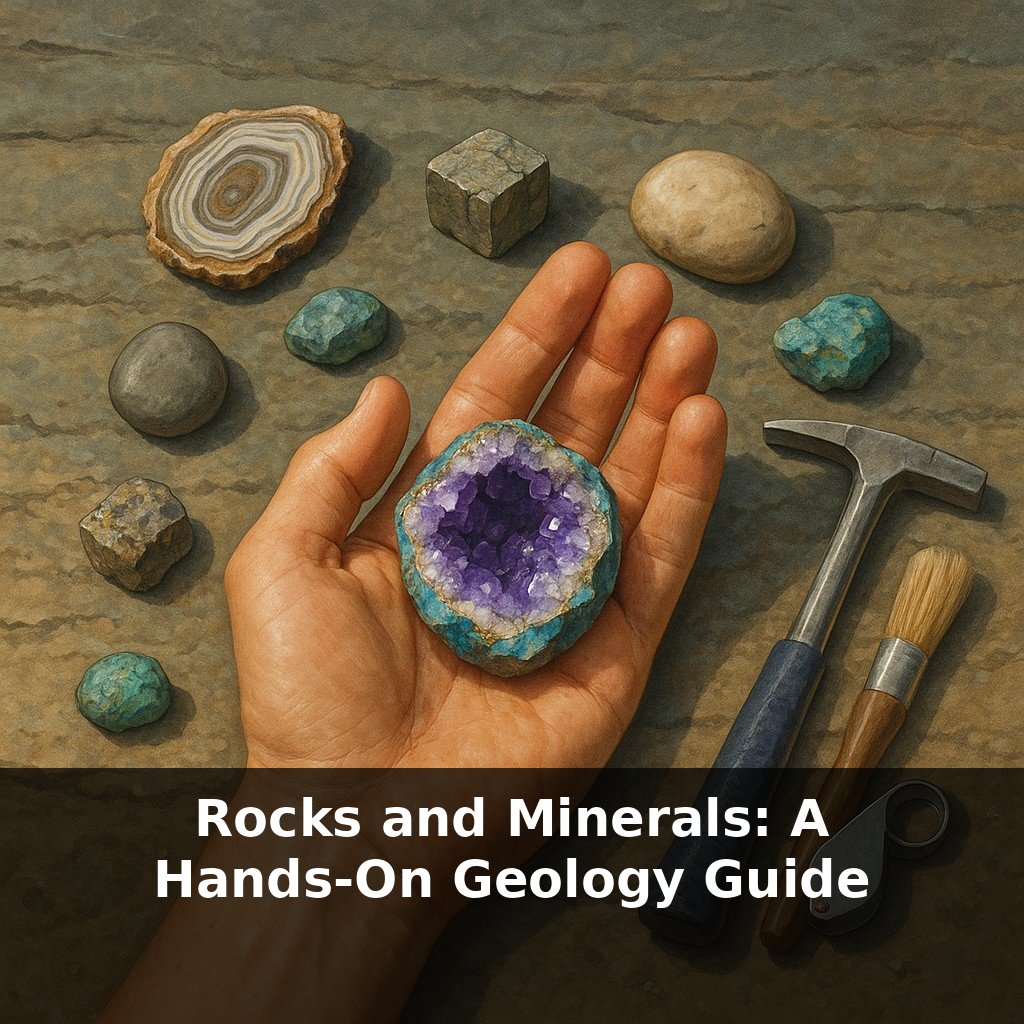
Composition is the next vital sign. The inner planets are dominated by rock and metal, with thin or patchy atmospheres. Beyond them, asteroid families reveal a spectrum: some rich in carbon, some metallic, some loaded with water-bearing minerals. These fragments are like archived lab samples from the early solar system, preserving chemical recipes that larger worlds have long since melted, mixed, or buried.
Farther out still, hydrogen and helium become common enough, and the Sun’s heat weak enough, that truly giant planets can hang onto enormous envelopes of gas. Each giant appears simple from afar—a striped or bland ball—but up close they show layers upon layers: turbulent weather systems, complex magnetic fields, rings made of shattered debris. Their many moons add a second level of structure: rocky, icy, volcanic, ocean-bearing, often in orbital resonances that slowly flex and heat them from within.
On the fringes, small icy bodies dominate. Kuiper Belt Objects and long-period comets spend eons in dark storage. When their paths are nudged inward—by distant stars, by the collective gravity of the giants—they respond dramatically: ices sublimate, tails bloom, and their surfaces reset. They are both leftovers and messengers, carrying clues about regions the major planets never occupied.
Threading through all of this are gravitational relationships: resonances, near misses, slow drifts. A moon’s orbit can decide whether it’s frozen solid or warmed enough to host a hidden sea. A slight tilt in a planet’s axis can turn a bland climate into one with ice ages and monsoons. Over millions of years, these subtle tugs sculpt a neighborhood where stability is never absolute, only long-lived.
Think of each world’s “vital signs” the way a doctor reads different patients in a busy clinic: the same waiting room, wildly different charts. Mercury is like someone who’s lost almost all their skin—hardly any atmosphere—so its temperature swings violently between scorching and freezing with each turn around the Sun. Venus is the opposite: wrapped in suffocating layers, it traps heat so effectively that its surface rivals a furnace, regardless of day or night. Earth’s chart shows a rare balance: just enough air, liquid water, and a magnetic “immune system” to deflect much of the harshest radiation.
Even small bodies add variety. Some asteroids look like loose piles of rubble barely held together; nudge them and their shape might shift. Others are solid, metallic cores—failed building blocks of planets. And the icy worlds beyond the giants often hide geologic “fevers”: internal heating that drives geysers, cracks, or drifting ice plates, hinting that apparently quiet patients may be far more active under the surface than their cold exteriors suggest.
A fuller “chart” of our neighborhood hints at our future. Shifts in orbits, tugs from passing stars, even subtle changes in atmospheric chemistry can redirect a world’s long‑term path. Studying icy moons and distant minor bodies is like reading old lab notes: we test which mixtures of rock, ice, and energy can sustain chemistry that might lead to life, and which tip into sterilizing extremes. That same knowledge feeds into designing habitats that can ride out slow, planetary‑scale mood swings.
We’ve only sampled a few “patients” in this stellar clinic; countless minor worlds remain unexamined case files. Future probes will biopsy comet cores, sniff exoplanet air, and maybe sail dark oceans under ice. Your challenge this week: spot the Moon and a planet, then look up how each formed; treat the sky as a living lab report, not just a backdrop.