“I am thrilled to announce our new initiative, designed to leverage cross‑functional synergies.” Now try: “I’m tired of writing like a robot. I want my words to sound like my actual 3 a.m. brain.” That memo‑voice hurts, right? What if three tiny experiments could crack it open today?
Your “robot voice” isn’t just annoying—it’s expensive. It costs you clarity in project updates, trust in difficult emails, and resonance in anything meant to persuade. Colleagues skim your status report but remember the one Slack message where you finally dropped the armor and said, “Here’s what’s actually blocking us.” That contrast is the gap we’re working on.
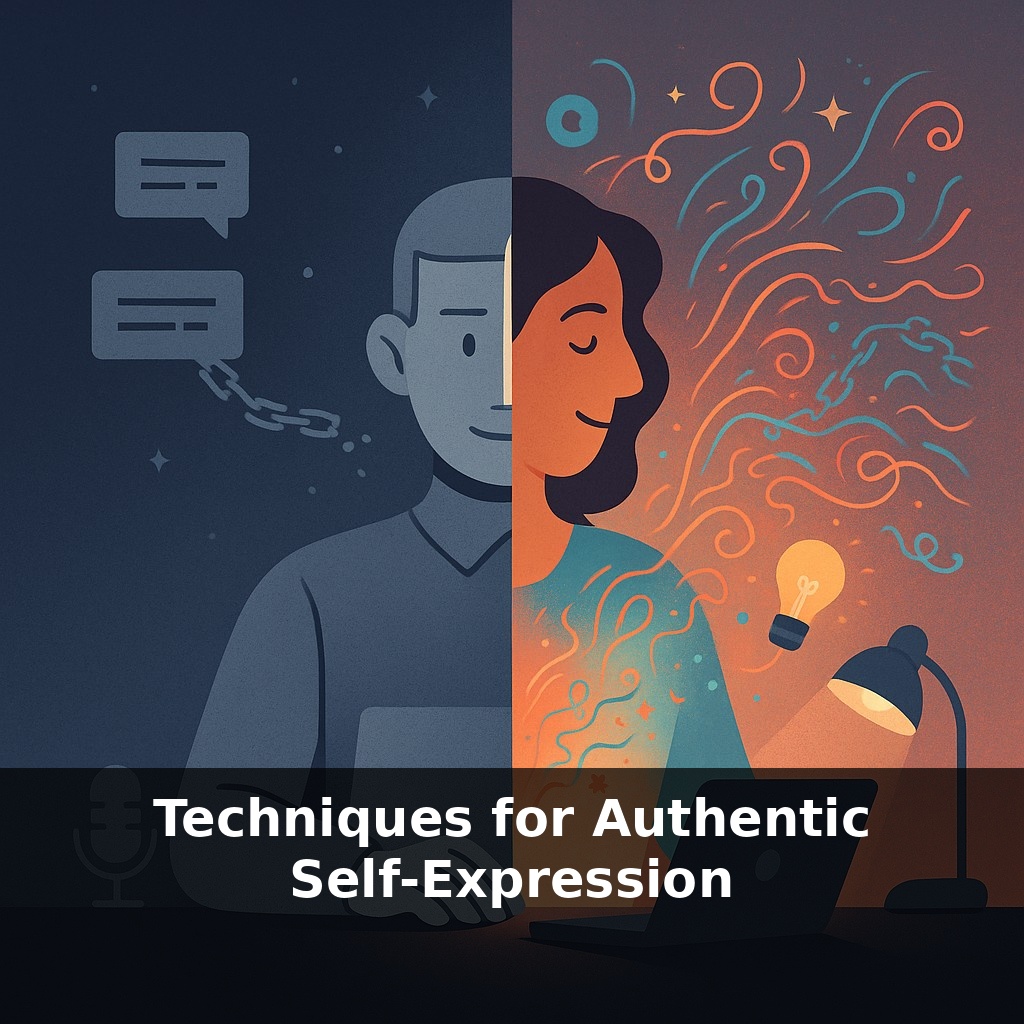
Authentic self‑expression isn’t a mystical talent; it’s a trainable habit made of three moves: how you draft, how you notice yourself while drafting, and how you gently tune the words afterward. In this episode, we’ll turn those into concrete, five‑minute drills you can run between meetings: the version of a progress update you’d never send, the honest paragraph about a recent mistake, the “spicy” rewrite of a safe email. Each exercise is designed to lower the stakes enough that your real voice can finally slip through.
Think about where your writing stiffens most: a performance review, a project recap to leadership, or a “quick” email that somehow takes 25 minutes. Those are usually moments when stakes feel high and self‑censorship spikes. The trick is not to fix those messages directly at first, but to build a parallel, low‑stakes space where you can say the unsayable. For example, leaders I coach keep a hidden “shadow doc” beside big updates, where they first write the uncensored version: “This deadline is bananas and here’s why.” That secret pass often reveals the one honest sentence the real email is missing.
A good starting point is speed. When you write faster than your inner editor can keep up, you temporarily outrun the voice that asks, “Is this smart enough?” That’s where low‑stakes, rapid‑flow practices come in. Pennebaker’s research on expressive writing didn’t involve polished essays; it was people dumping uncensored thoughts for a few minutes a day—and still seeing tangible physical benefits like a 23% drop in doctor visits. You’re not just “journaling for feelings”; you’re strengthening the neural pathways that let you access and articulate what you actually think.
Here’s how that looks in real work scenarios.
Scenario 1: The gnarly project update Before you open the doc you’ll share, spend 5 minutes in a private note titled “What I’d say if no one could fire me.” Set a timer. Goldberg‑style rules: keep your fingers moving, don’t stop to fix, be concrete. Instead of “risks remain,” you might blurt out, “We are pretending this dependency doesn’t exist and it will bite us mid‑Q3.” When you later draft the real update, you’re mining this pass for specific truths, not copying its tone.
Scenario 2: The email after a mistake Right after something goes wrong, your brain is noisy and defensive. Use that. Do a furious free write: “Here’s exactly what happened from my side.” Capture the messy sequence, the tiny tells you’d usually airbrush. Then, step away for 2 minutes. On return, highlight three details that still feel true in your body—those often become the backbone of a clear, accountable explanation that doesn’t sound like PR.
Scenario 3: The personal story for a presentation Instead of hunting for a “perfect story,” list three concrete moments from the last year that still sting or glow: the conflict in a meeting, the late‑night win, the quiet decision no one saw. Pick one and do 10 minutes of uncensored writing focused only on sensory pieces: what you saw on the screen, what the room smelled like, the exact sentence someone said. That specificity is what later lets an audience connect, without you oversharing your entire life.
A quick guardrail: authentic doesn’t mean unfiltered. You’re generating raw material in private so you can choose, with intention, what belongs in public. The goal isn’t more drama; it’s more precision about what matters.
When clients try this, the turning point is usually tiny and concrete. A product manager I worked with started a “trash draft” habit before roadmap emails. Once, she caught herself writing, “We’re slightly delayed.” In her private version, it came out as, “We said yes to everything, and now we’re paying for it.” That line never went to stakeholders, but it nudged her to name one clear tradeoff in the final note. Her team later said, “This is the first update that actually helps us plan.”
Another client, a junior engineer, kept getting feedback that his design docs were “hard to follow.” We added one step: after drafting, he’d record himself explaining the doc to an imaginary intern, then transcribe any phrases that sounded more direct than what he’d written. Within two cycles, his tech lead commented, “Your last doc was way easier to read—did you get an editor?”
The pattern: use low‑risk experiments to surface phrases that feel physically right, then carry a few of those into the writing that counts.
With that foundation of shadow docs and fast, low‑stakes drafts, here’s the bigger shift: regular practice doesn’t just polish your sentences; it slowly rewires your relationship to your own voice. Over a season of showing up, many writers notice less flinching when they reread themselves, and a softer gap between “performed” self and felt self. Have you noticed tiny moments of, “Yes, that actually sounds like me”? Those are the ones to trust.
One boundary to keep: authenticity isn’t total exposure. At work, you might reveal about half of what’s in your private pages; with close friends, maybe a little more; with yourself, everything you can safely face. A University of Essex experiment found that even short, repeated expressive‑writing sessions nudged self‑esteem up by around a tenth—not by sharing more online, but by being more honest on the page first.
Your challenge this week: once a day, reread a small slice of your uncensored writing and ask one question—“Which single sentence here feels most like the real me, and where, if anywhere, is it appropriate to use a softened version of this?” Let that one sentence quietly steer how you show up in an email, a message, or a conversation.
With that foundation, here’s your tiny system: first, free write fast in a private doc. Next, pull one concrete moment from your real life. Then, revise just enough so the words match how that moment actually felt.
Your challenge this week: each day for about a week, use this prompt—“Today, the truest moment was…” Then read one piece aloud, to yourself or a trusted friend, and notice where you sound most like you.