A short meditation before writing can boost creative thinking by roughly a third—yet most of us still charge straight at the blank page. A journalist closes her eyes for ten quiet breaths, opens them, and suddenly the lead appears. How does simple stillness unlock that?
Ten breaths can change a sentence; ten minutes can change the way you approach the page. Today, meditative writing isn’t just for monks with brushes or poets in cabins—it’s built into the schedules of film teams at Pixar, product writers at SAP, and reporters on deadline who slip in a short practice between interviews and drafts. These writers aren’t chasing serenity for its own sake; they’re hunting for more original angles, cleaner structures, and a mind that doesn’t bolt at the first sign of a stubborn paragraph.
We’ll explore how brief, deliberate pauses can bracket your writing sessions: a reset before brainstorming, a recalibration midway through a messy draft, a short cool‑down when you’re revising. Think of it as adding a quiet, invisible “prelude” and “coda” to your work sessions, tuning your attention so the piece in front of you stops competing with everything else calling your name.
Not every pause is helpful. Open-monitoring practices—the kind that simply notice thoughts, sensations, and sounds drifting through—seem especially useful for writers because they mirror the way ideas actually arrive: uneven, nonlinear, often half‑formed. That may be why divergence scores climb after even short sessions in studies, and why some newsroom teams now quietly schedule “mind breaks” before pitch meetings. Rather than forcing inspiration on command, they’re learning to widen the mental spotlight so more odd, promising fragments can step onto the stage and be seen in time to catch them.
Some writers treat these practices as optional warm‑ups; others quietly use them as structural beams inside their process. The shift usually happens the first time you notice that what changes after a short sit isn’t just your *ideas*, but the *texture* of your attention: sentences feel less brittle, choices less panicked, and you can stay with a half‑awkward thought long enough to see what it might become.
One helpful distinction is *when* you place these pockets of awareness. Many newsroom editors now recommend three specific insertion points: before ideation, at the first sign of friction, and after crossing a small milestone. Before ideation, you’re widening the field. At friction, you’re loosening the grip of a particular stuck frame. After a milestone, you’re clearing residue so the next segment doesn’t inherit all the frustration of the last.
Writers at companies like Pixar and SAP often ritualise this timing. A film team might do ten guided minutes right before a “bad ideas only” pitch round, then two unstructured minutes with eyes closed each time the room goes quiet and tension spikes. A corporate content pod might start Monday sprints with a short body‑scan, then repeat a cut‑down version whenever a draft gets kicked back with heavy edits. Over time, these micro‑rituals become cues: “Now we soften focus; now we zoom in again.”
You can also choose *what* to foreground during the practice, depending on the stage of your piece. Early on, anchoring in sound or body sensations tends to favour looser association—useful for finding surprising angles or metaphors. Later, when shaping paragraphs, some writers prefer a very light attention on the breath, which seems to support steadier line‑by‑line decisions without collapsing into tunnel vision. In high‑stakes contexts—deadline op‑eds, launch copy—journalists sometimes pair this with a brief values check (“Who am I serving with this?”) so clarity doesn’t drift into cleverness for its own sake.
None of this requires long retreats or elaborate cushions. The crucial move is deciding that shifting your mental stance is part of the writing job, not a side hobby you squeeze in “if there’s time.”
A novelist in Berlin keeps a stack of sticky notes on her desk, each with a different micro‑practice: “3 breaths + notice sounds,” “scan hands + forearms,” “30 seconds eyes‑closed listening.” When a scene stalls, she pulls one at random, runs it like a tiny drill, then returns to the page without treating it as a big mystical event—more like changing brushes between strokes.
A newsroom in São Paulo experimented with this during election week: before each rewrite, reporters paused for a one‑minute body check, simply marking tension in jaw, shoulders, or stomach on a shared whiteboard. By Friday, they’d mapped clear patterns—deadline pieces lit up neck and eyes, long features clustered in the lower back. That map led them to tailor interventions: stretching for some, breath‑counting for others, a brief gaze out the window for those whose eyes fried first.
Your version might be as modest as a “threshold ritual” at the doorway to your desk: hand on chair, one exhale, a single sentence of intention before you sit.
Studios are already testing “focus rooms” where lights dim, noise shifts, and your keyboard quietly suggests a pause when your typing turns frantic. In a decade, drafting might look less like grinding and more like surfing timed micro‑retreats: two minutes of guided audio between tough paragraphs, a campus lab that lends noise‑canceling “attention pods,” even contracts that measure depth of revision, not just how many lines you ship. Your process becomes a living lab, not a fixed routine.
Let this be less a rule than a laboratory. Test how different textures of quiet change the flavor of your sentences: a pause on the balcony, a slow sip of tea, a single line in a notebook naming what you notice. Over time you’re not just improving pages; you’re training a way of seeing that follows you off the desk and back into your life.
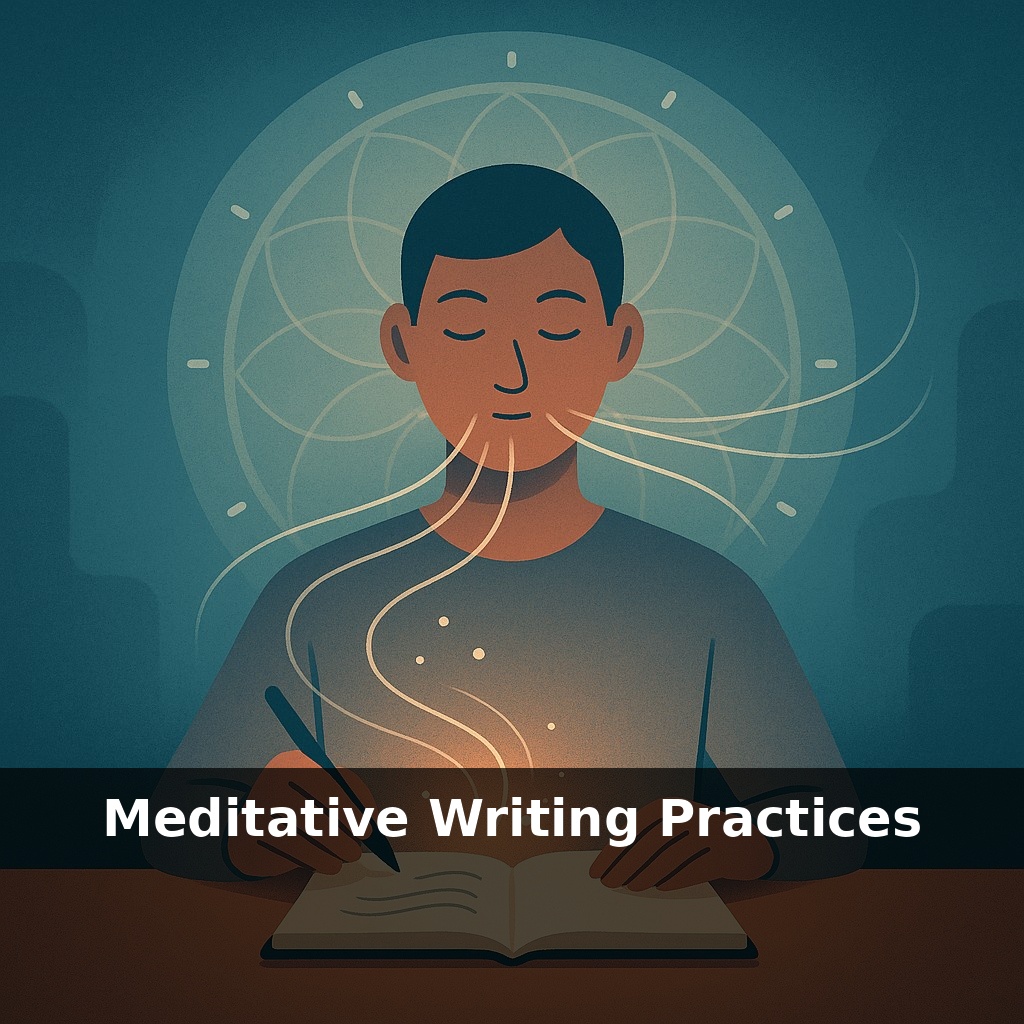
Start with this tiny habit: When you sit down to write and place your hands on the keyboard or pen on the page, first exhale once and silently count four breaths while just noticing the physical sensation of your fingers touching the keys or paper. On the fourth breath, write a single sentence that begins with “Right now, my body feels…”—and stop there if you want to. If your mind races, don’t fix it; just let the next sentence begin with “And my thoughts are…” and cap yourself at two sentences total.