Most viewers decide whether to abandon a video in under three seconds—long before your intro is done. A creator refreshes YouTube Studio and watches one number: how far people make it before dropping off. Same topic, same thumbnail… but one tiny change in structure doubles retention.
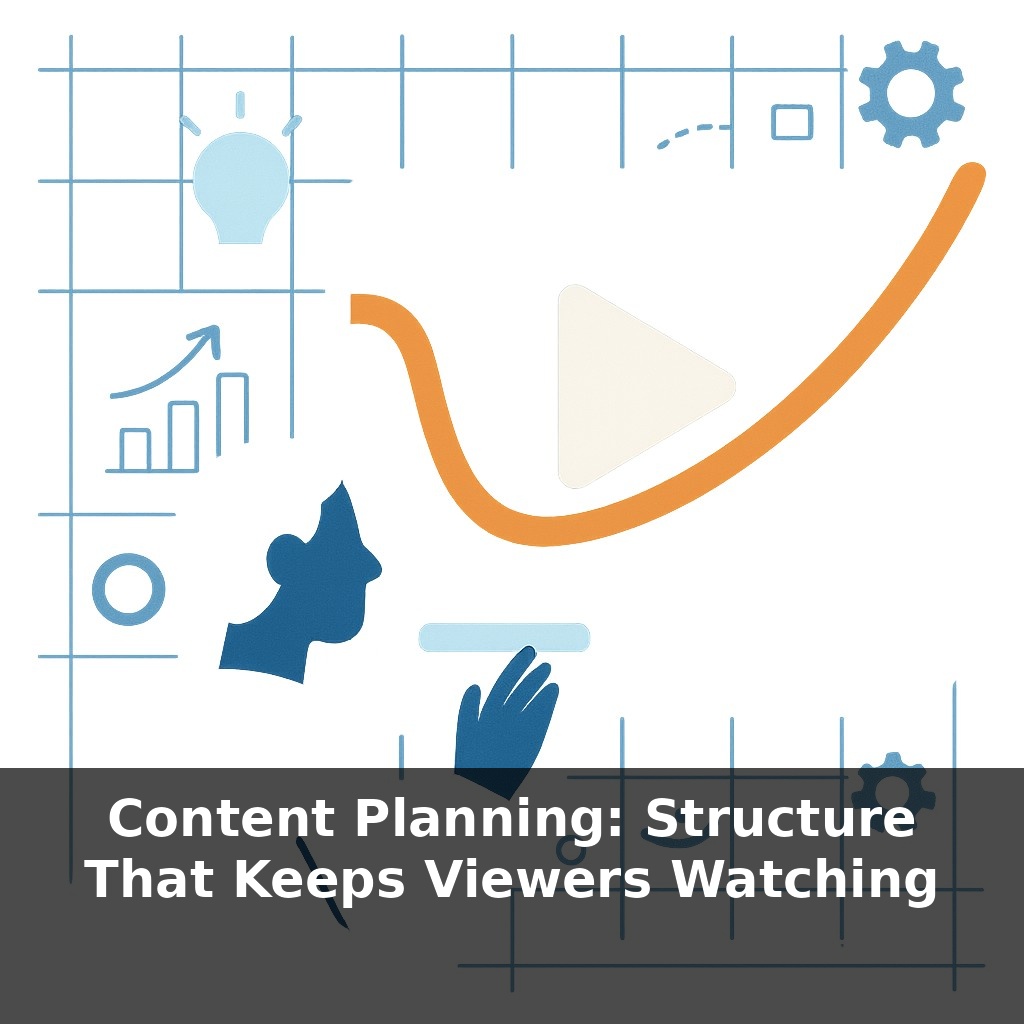
Most creators think “content planning” means filling a page with bullet points, then hitting record. But the channels that quietly pull away from everyone else treat planning like engineering: every second has a job, every beat has a purpose, and nothing is left to chance. They don’t just ask, “What am I going to say?” They ask, “At this exact moment, why would someone keep watching?”
This is where data stops being scary and starts becoming creative fuel. Retention graphs become a storyboard. Audience comments become dialogue notes. Rewatch spikes become clues for future hooks. You’re not guessing what might work; you’re iterating toward what repeatedly does.
In this episode, we’ll turn that idea into a practical planning system: hooks that lock attention, beats that reduce mental friction, and pay-offs that make viewers feel their time was well spent—so they actually stay to see them.
Think about what’s happening in your viewer’s mind before those first few seconds and after the final payoff. Their brain is constantly asking: “Is this worth the effort?” That’s where cognitive ease comes in—the feeling that your video is simple to follow, even when the ideas are big. Planning isn’t just deciding the order of points; it’s designing how each idea hands off to the next with minimal mental friction. Clear narrative arcs, short segments, and plain, “viewer first” language all signal, “You’re safe here, keep going,” so people relax into your story instead of bracing for confusion.
Start planning from the moment your viewer hovers over the thumbnail, not from your first bullet point.
Your opening seconds don’t exist in isolation; they’re the answer to an invisible question your viewer is already asking: “What *exactly* am I getting?” That’s where front‑loading value beats “warming up.” Instead of easing in with context, give them a concrete win immediately—one clear claim, framework, or result they can picture. Then, zoom out and explain. Wistia’s data backs this: when people see a specific preview of value in the first 15 seconds, they’re far more likely to ride with you to the end.
To design that ride, outline around *decisions*, not topics. Ask: “At this timestamp, what choice do I want the viewer to make—stay, lean in, or act?” Then engineer the beat that makes that choice feel obvious. That might be a pattern interruption, a fast visual, or a question that forces a tiny mental bet: “I think I know the answer; let’s see if I’m right.”
Average shot length quietly does a lot of this work. Shorter shots and angle changes reset attention without adding effort, especially on mobile where 2.7 seconds is all you get before people swipe. Look at any high‑performing channel in your niche: the rhythm of their cuts is usually tighter than you remember, because your brain coded it as “easy to follow,” not “heavily edited.”
Cognitive ease also comes from language. Instead of “Today we’re going to discuss audience retention,” try: “By the end of this video, you’ll know how to stop people dropping off in the middle.” Same idea, radically different mental load. MrBeast’s rewrites aren’t about making scripts fancier; they’re about stripping out any phrase that makes the viewer work to understand why they should care *right now*.
Finally, give your video a spine: a simple arc with a setup, escalation, and resolution. TED’s 18‑minute cap forces speakers to compress complex ideas into a single, clear journey. You can do the same at any length: one promise, a few escalating stakes or obstacles, and a payoff that cleanly cashes out the opening hook. When that arc is visible from the first 15 seconds, platforms recognize what viewers already feel—that your video is worth finishing.
Think of a live classroom. The teacher who keeps glancing at students’ faces isn’t just checking if they’re awake; they’re quietly adjusting pace, examples, even the order of ideas based on micro‑reactions. Your planning can work the same way—except your “faces” are tiny behavioral clues buried in analytics and comments.
Use examples like chapter breaks on long history channels: they’re not only navigation tools, they act as mini‑restarts for attention. Or notice how cooking channels preview the finished dish early, then jump back to step one; that out‑of‑order structure gives viewers a reason to sit through the process. Interview shows often drop a surprising answer in the first minute, then circle back later, turning a casual chat into a story people want to see resolved.
Try mapping your next video as if it were a short medical case report: presenting complaint (hook), brief history (setup), tests and results (evidence), diagnosis (core idea), and treatment plan (action steps). Each “section” earns the right to the next.
Tomorrow’s strongest creators will design videos that reshape themselves mid‑watch. AI will notice when a segment usually loses *you* and quietly reorder scenes, shorten explanations, or swap examples, like a DJ reading the room in real time. Brands will treat each viewer’s watch pattern as a fingerprint, adapting offers and story pacing on the fly. The craft won’t vanish—it shifts from “one perfect edit” to building modular beats that can be recombined for thousands of micro‑audiences.
Treat each outline like a weather map: you’re tracking where attention will heat up, cool down, or storm out. As you test new intros, tighter cuts, or rearranged reveals, save what works as modular “blocks” you can reuse. Over time, you’ll build a personal library of proven patterns that turns blank timelines into predictable momentum.
Start with this tiny habit: When you open YouTube or your filming app, type a **3-word hook** for one video idea into a simple “Hook Bank” note (for example: “Stop Wasting B-Roll” or “30-Second Story Formula”). Don’t plan the whole video—just those three words that tease the problem or curiosity. Tomorrow, when you open that same note, add **one bullet** under any hook that answers: “What’s the very next thing I’d say after this hook?” Keep repeating that tiny sequence each time you open the app, and you’ll quietly build a library of strong, structured video starters that keep viewers watching.