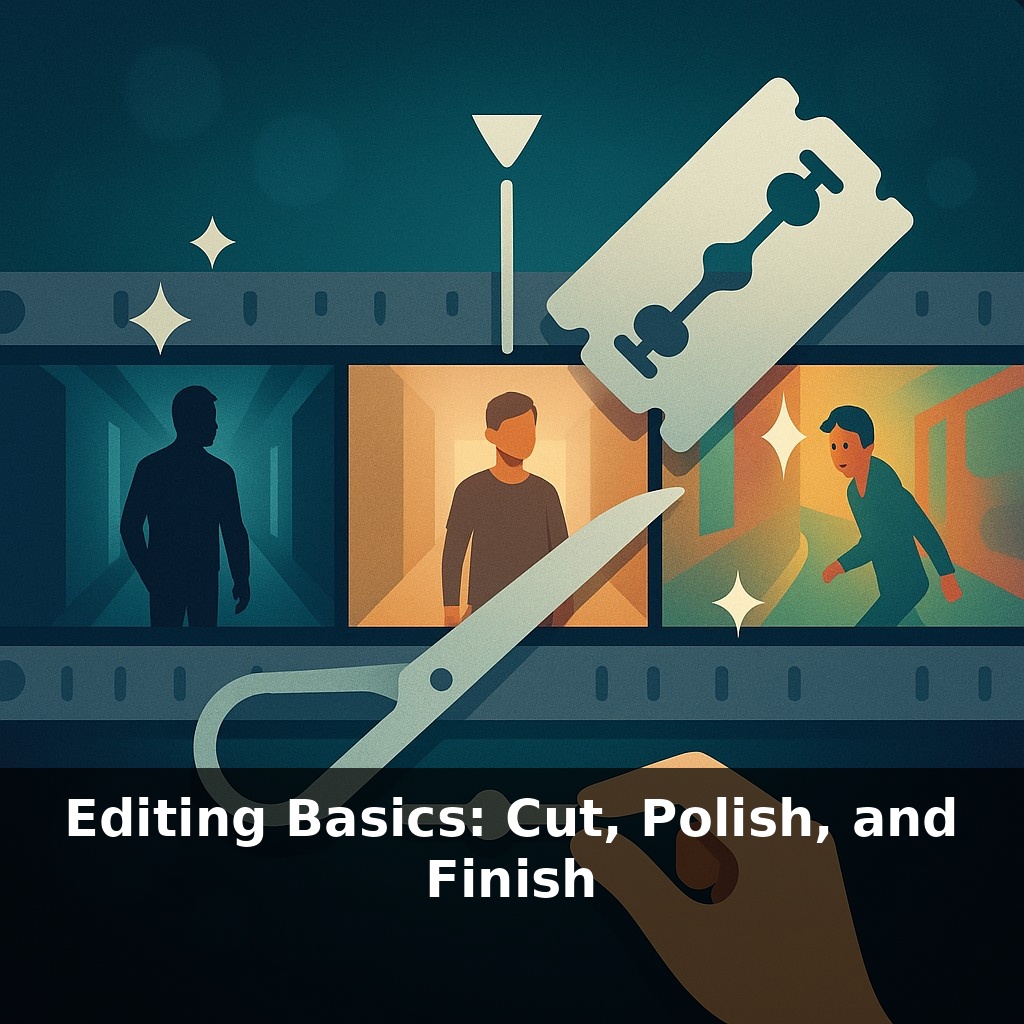
Half the power of a film is created after the camera stops rolling. One editor can turn the same messy footage into a tight thriller, a slow drama, or a confusing flop—without changing a single shot. The difference? How they cut, polish, and finish every frame.
An average Hollywood film has around 1,300 cuts; an action beast like *Mad Max: Fury Road* blasts past 2,700. That’s not trivia—it’s a clue. Those tiny decisions of “where” and “when” to cut shape how fast a story feels, how tense a scene becomes, and even whether your viewer sticks around or swipes away. In this episode, we’re zooming in on the hidden structure under your edits: how shot length sets rhythm, how sequencing shifts meaning, and how simple choices in colour and sound can change the time of day, the mood, or the perceived budget of your video. Instead of just “making it smoother,” you’ll start to think like a builder: which parts of your raw material carry emotion, which carry information, and which are just…taking up space. By the end, you’ll know how to cut with intent—and finish with confidence.
Editing also has its “hidden levers” most beginners ignore: where you *enter* and *exit* a moment, how you bridge gaps, and how you disguise imperfections so the audience never sees the seams. A clumsy jump cut, a breath left hanging, or a sloppy transition can quietly drain energy and make even great footage feel amateur. In this episode, we’ll look at how to tighten dead space without making everything feel rushed, how to use simple visual and audio cues to glide between shots, and how to choose when to cut hard versus when to let a moment breathe.
When you sit down to edit, think in three passes: clarity, energy, and finish. On the first pass, ignore fancy transitions and colour. You’re hunting for clarity: does each moment answer a simple “why is this here?” Question every clip. If you muted the sound, would you still understand what’s happening? If not, either tighten it, replace it, or cut it. This is where you’ll often discover that a reaction shot, a tiny hand movement, or a quiet pause tells the story better than the “main” angle you loved on set.
Second pass: energy. This is where pacing decisions get specific. Instead of a vague goal like “snappy,” decide what each section should feel like: ramping up, cruising, or landing. In a 60‑second video you might choose: 0–15 s = hook and speed, 15–45 s = steady, 45–60 s = deliberate slowdown. Watch just your cut points with eyes half‑closed, listening more than looking. If the audio rhythm stutters or drags, your cuts probably do too. Try tightening breaths between lines, cutting on motion so actions feel continuous, or overlapping sound from the next shot before you see it to keep momentum flowing.
Third pass: finish. Instead of treating colour, sound, and graphics as decoration, use them as problem‑solvers. Light overall grading can help hide exposure shifts between cameras. Targeted noise reduction or room tone can glue together takes recorded at slightly different distances. Subtle EQ on dialogue can make a cheap mic and an expensive one live in the same world. Lower the brightness and saturation slightly on less important shots so key moments pop without shouting “look at me.”
Think of it like cooking: the ingredient list (your footage) doesn’t change, but how finely you chop, when you combine flavours, and how you season at the end determines whether it feels like a snack or a full meal. The magic isn’t that you “fixed it in post,” it’s that you made a series of small, accumulative decisions: where to hide cuts under movement or sound, where to let mistakes breathe because the performance is worth it, and where to sacrifice a pretty shot for a clearer idea.
Your challenge this week: take one messy, unplanned clip—like a vlog rant or a talking‑head ramble—and cut three different 30‑second versions: one focused on pure information, one on emotion, and one on humour. Don’t shoot anything new; only rearrange, trim, and refine what you already have. When you’re done, show them to someone and ask which version they’d actually watch to the end—and why.
A practical way to feel these ideas is to watch how different creators handle almost identical material. Look at three YouTubers all doing “desk setup tours.” One cuts aggressively every second or two, jumping from wide to macro details; another lets the camera linger while they talk softly; a third layers on glitchy overlays and sound hits. Same subject, wildly different emotional impact—because of how they treat silence, movement, and transitions, not just what’s on the desk. Notice where each one *chooses* to break visual continuity: maybe they cut mid‑sentence to a close‑up of a keyboard just as they mention “typing all day,” or use a quick L‑cut to keep their voice running over a shot of cable chaos. Editing here behaves more like weather than architecture: subtle shifts in “pressure” (tempo), “light” (tone), and “wind” (direction of attention) can turn the same sunny room into either a calm Sunday morning or a storm rolling in before a deadline.
AI will soon slice rough assemblies in minutes, but your fingerprints will live in the decisions machines can’t standardise: where to hold a look too long, where an awkward pause becomes a punchline, where a tiny sound shift changes the mood. Treat upcoming tools like sous‑chefs: they can chop, sort and suggest, but you still decide the recipe. As formats splinter—vertical, interactive, 360°—you’re not just finishing videos; you’re designing how attention moves through space and time.
As you practice, notice how your “eye” changes: jump cuts that once felt jarring start to look like commas, and tiny audio swells feel as obvious as seasoning on fries. The more you tweak, the more you’ll predict how a viewer breathes with your edit—where they’ll lean in, when they’ll relax, and which moments they’ll replay without quite knowing why.
Try this experiment: Take a 300–500 word draft you’ve already written and do three timed passes—5 minutes for cuts, 5 for polish, 5 for finishing. On the first pass, delete at least 10% of the words by removing repetition, filler phrases (“in order to,” “really,” “actually”), and any sentence that doesn’t move the point forward. On the second pass, rewrite at least three weak verbs into stronger ones, combine two short sentences into one clear one, and swap one vague adjective for a concrete detail. On the final pass, check only for flow and finish: read it out loud once, fix anything that makes you stumble, and then stop—no more tinkering. Compare the before-and-after versions and note which pass made the biggest visible difference to your piece.