Your next viral video might already exist on your hard drive—and still fail. YouTube reaches billions, yet most uploads never escape a tiny circle of views. Why do some rough, simple clips explode while polished masterpieces vanish almost instantly? Let’s pull that apart.
2.7 billion people open YouTube every month, yet the average video still dies with barely any views. That gap is not about talent alone—it’s about distribution. The internet doesn’t reward “best”; it rewards “best matched” to a viewer at a specific moment on a specific platform.
You’re not just posting a file; you’re entering a negotiation with two gatekeepers at once: the human thumb and the recommendation system. Thumbnails, titles, opening seconds, captions, and even where else you share the link all become signals: “This is worth someone’s time.”
Think of it less like shouting into a crowded room and more like walking into several different rooms, each with its own language, customs, and dress code. TikTok, YouTube, Instagram, LinkedIn—each expects something slightly different, even if the core idea of your video stays the same.
Most creators stop thinking once they hit “publish,” but that’s when the real work begins. Algorithms don’t just see a video; they see patterns of behaviour around it. Do people tap fast? Watch to the end? Share it? Comment within minutes or ignore it all day? Each small action is a vote that either pushes your video outward or lets it sink. In practice, that means planning your release like timing a dish in the oven: you choose the right temperature (platform), seasoning (format), and serving moment (audience habits) so that when it lands, it’s still hot enough for people to care and for systems to notice.
Titles, thumbnails, and descriptions are not decorations; they’re your sales pitch to strangers who don’t know you yet. The same idea can underperform or overperform purely based on how clearly you answer a silent question: “Who is this for, and why now?”
Start with titles. The goal is not cleverness; it’s clarity plus curiosity. A strong title usually has three elements: a specific outcome (“Edit videos 2x faster”), a hook (“…using this free tool”), and a hint of tension or contrast (“…that most pros ignore”). Weak titles either say nothing (“My new project”) or try too hard to be mysterious without context.
Thumbnails do similar work visually. Faces with visible emotion, clear contrast between foreground and background, and one dominant focal point tend to pull the eye. Overstuffed text, cluttered layouts, or six tiny elements all fighting for attention make it easier for people to scroll past. That 30% higher click‑through with custom thumbnails isn’t magic; it’s the compound effect of grabbing attention for an extra split‑second thousands of times.
Then there’s what happens *after* the click. Algorithms heavily weight how long people stay and whether they come back for more, so structure becomes part of promotion. Front‑load payoff: show the result quickly, then rewind to explain. Use chapter markers on longer videos so viewers can jump to what they care about instead of abandoning. On short‑form, shave away the “throat clearing” and land people in the middle of something already happening.
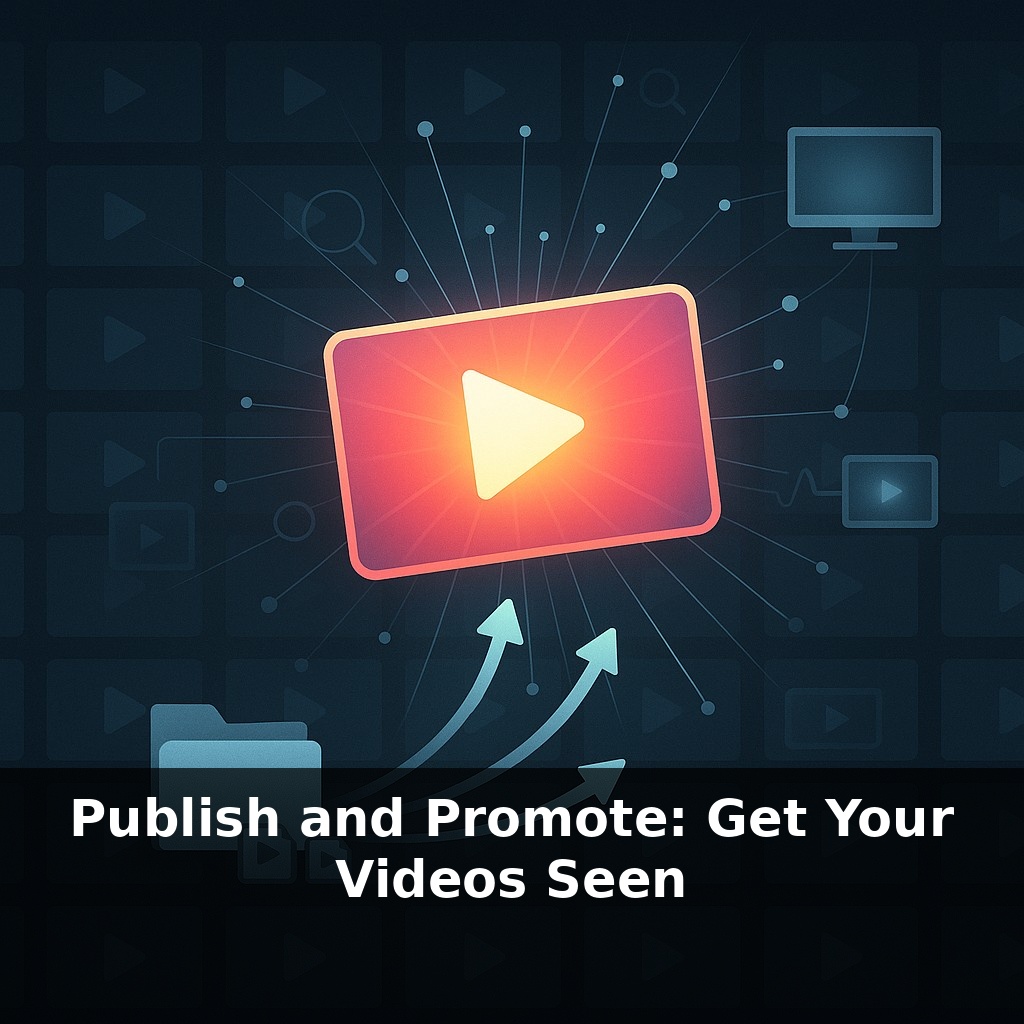
Distribution across platforms is less about copy‑paste and more about translation. The same raw footage can become: a vertical teaser on TikTok, a tighter highlight on Instagram, a full breakdown on YouTube, and a key insight quote on LinkedIn. You’re not diluting; you’re tailoring.
Captions and accessibility features are quiet force multipliers. They help people who watch on mute, people who don’t share your first language, and people who process information better when they both hear and read it. That extra 12% watch‑time on Facebook signals to the system, “People stick around for this,” which in turn earns you more opportunities to be shown.
A practical way to think about publishing is like cooking for different guests: same core dish, different plating and seasoning based on who’s at the table. A finance expert, for example, might record one deep-dive walkthrough. From that single session, they slice a 40‑second “aha” moment for TikTok, a snappy myth‑busting reel for Instagram, a graph‑backed explanation for LinkedIn, and the full, nuanced breakdown for YouTube. Each version respects how people behave there instead of forcing one size to fit all.
Real creators do this constantly. A stand‑up comic tests a bit on TikTok, watches which lines spike comments, then expands only the strongest parts into a longer special. A fitness coach posts a quick form tip, turns the best audience question into a follow‑up short, then compiles the most common struggles into a structured program video. Publishing stops being a single event and becomes an iterative loop: release, watch how people react in each place, refine, and re‑release in smarter ways.
Algorithms will soon behave less like judges and more like concierges, quietly assembling a personal “channel” for each viewer across apps and devices. Your work might auto‑split into snackable cuts, dubbed into new languages, and paired with interactive layers—polls, quizzes, even instant purchases—without extra editing. Think of it like weather systems: pockets of audience interest forming, moving, and colliding, and your job is learning to surf those shifting fronts rather than chase one perfect storm.
In the end, publishing and promotion are less about chasing one lucky break and more about building steady habits: test, tweak, and repurpose. Treat each post like a small scientific trial—change one element, watch the numbers, adjust your recipe. Over time, these quiet experiments stack, and your catalogue starts working like a network of little beacons, pulling new people in.
To go deeper, here are 3 next steps: (1) Optimize one existing video for search using TubeBuddy or vidIQ: research 3–5 long-tail keywords around your topic, update the title, description, tags, and add 3–5 keyword-rich chapters. (2) Turn that same video into a “promo pack” with Repurpose.io or Opus Clip: auto-generate 3–5 vertical clips, then schedule them to Instagram Reels, TikTok, and YouTube Shorts using Buffer or Later. (3) Build a simple promo checklist in Notion or Google Docs using insights from *YouTube Formula* by Derral Eves: include upload steps (thumbnail via Canva, end screens, pinned comment), 2–3 Facebook or Reddit communities where you’ll share each new video, and an email teaser template you’ll send via MailerLite or ConvertKit every time you publish.