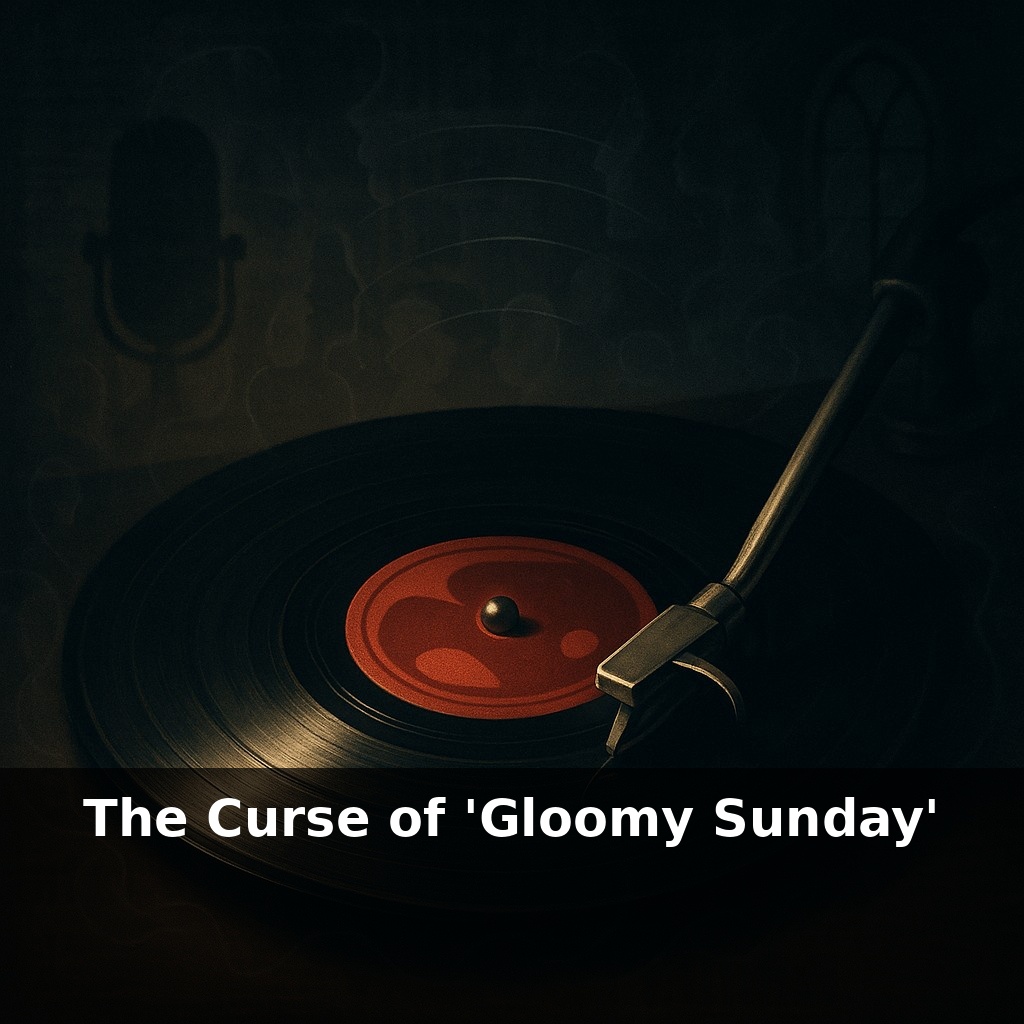
A song once blamed for dozens of deaths was banned by the BBC for over half a century—yet people still requested it in secret. Tonight, we drop the needle right in the middle of that rumor: the “Hungarian Suicide Song” that terrified radio stations but fascinated listeners.
By the time Billie Holiday recorded “Gloomy Sunday” in 1941, the song was already traveling with a reputation—whispered about in nightclub corners, clipped from foreign newspapers, smuggled across borders like contraband sheet music. Holiday didn’t treat it as a cursed object; she treated it as raw material, bending its melancholy into something strangely controlled, like a storm kept inside a glass jar. While censors worried about vulnerable listeners, arrangers and producers were preoccupied with something else: how to frame this dangerous little melody so it could live on the airwaves. They experimented with tempo, orchestration, even which verses to include, the way an architect reinforces a fragile historic building for earthquakes. Underneath the folklore, you can see a quieter story forming—how artists, labels, and broadcasters reshaped a “forbidden” song into an enduring standard.
Instead of treating the curse as supernatural, producers approached it like a publicity hazard fused to a potential hit. Trade magazines quietly debated whether the story would boost sales or trigger boycotts. Publicists trimmed press releases the way film editors cut risky scenes, hinting at the song’s notoriety without naming the rumored deaths. Meanwhile, psychologists and moral crusaders weighed in through opinion columns, warning that certain listeners might be “suggestible.” Record labels didn’t just ship discs; they shipped a script about how the song should be heard, discussed, and even feared.
On paper, “Szomorú vasárnap” didn’t look dangerous at all. It began life as a fairly modest composition by Rezső Seress, a struggling songwriter in early‑1930s Budapest, hustling melodies to survive a collapsing economy. The first Hungarian lyrics he tried were more political than tragic and went nowhere. It was only when poet László Jávor rewrote the words as a grief‑saturated love song that something clicked: the tune finally matched the mood of a city crowded with loss, unemployment, and rising authoritarianism.
Newspapers did the rest. Throughout the mid‑1930s, European tabloids started stitching together scattered tragedies into a single, ominous storyline: a young woman with the sheet music on her piano, a waiter humming the tune before jumping into the Danube, a note quoting one line of the lyric. Each case was real; the connection between them was not. Editors learned that any death framed with the song’s title sold papers. Soon, foreign correspondents were exporting those clippings, and the reputation traveled faster than the records.
By the time the song crossed into English, publishers were already split. Some wanted to lean into the scandal; others treated the legend like a live wire, dangerous to touch directly. Sam M. Lewis’s English lyric quietly dialed back the most morbid elements and introduced an almost cinematic twist: the final verse reveals the suicide as a dream. That change wasn’t just artistic; it gave singers and radio programmers a built‑in safety valve—a way to inhabit despair and then gently close the door.
Once the track reached American listeners, researchers, police, and later pop historians went hunting for evidence that the rumors were true. They didn’t find a statistical spike, but they did find a pattern: people in crisis sometimes reached for whatever cultural object felt like it matched their pain. A newspaper headline, a sad film, a torch song—it could be anything. The myth around “Szomorú vasárnap” simply offered journalists a neat headline and anxious officials a convenient scapegoat at a time when war, depression, and displacement were far harder to confront than a three‑minute recording.
In practice, the “curse” behaved less like dark magic and more like a stress test for the entire music ecosystem. When studio executives saw newspapers latch onto the myth, they reacted the way software teams do after a security breach: patch the vulnerable parts of the product, then re‑launch. Some labels quietly commissioned instrumental takes, betting that audiences who had read about the song would still lean in—curiosity without the sharpest edges. Singers in cabarets treated it as a set‑piece: introduced with a joking disclaimer, or tucked late in the night when only regulars remained. Film supervisors circled it too, tempted by its notoriety but wary of watchdog groups; a cue sheet listing the title could trigger extra scrutiny from censors or sponsors. Even music retailers adapted. In some cities, the sheet music lived under the counter, available only “if you knew to ask,” transforming a standard business transaction into a small act of shared secrecy between seller and listener.
As recommendation feeds keep resurfacing old tracks, a future “Gloomy Sunday” moment could be triggered by nothing more than a viral playlist name. One moody compilation shared by the right influencer can act like a shortcut around traditional gatekeepers, clustering fragile listeners in the same sonic space. Your “For You” tab becomes a mood mirror and a quiet amplifier. This puts subtle pressure on platforms to act less like jukeboxes and more like urban planners, steering traffic away from emotional bottlenecks.
In the end, the panic around one bleak ballad says less about notes on a staff and more about us: how we stockpile fears, outsource blame, and pass on spooky liner‑notes like family recipes. As streams replace jukeboxes, the unfinished question lingers: are we tuning in to songs, or letting songs quietly retune us?
Before next week, ask yourself: 1) “When I notice myself getting pulled into the mystique of dark stories like the ‘Gloomy Sunday’ suicide legend, what exact thoughts or feelings am I chasing—and is there a safer way (a specific book, playlist, or person) I could turn to instead?” 2) “If I played or listened to ‘Gloomy Sunday’ today, how would I honestly expect it to affect my mood, and what boundaries (time limit, listening partner, follow-up activity) could I set to protect my mental state?” 3) “Looking at my recent media habits, which song, show, or online rabbit hole has a similar ‘cursed’ or fatalistic vibe, and what’s one concrete swap I’m willing to test this week—a different genre, creator, or podcast episode—that still feels emotionally real but doesn’t leave me heavier afterward?”