A songwriter earns about $3,000 for a million streams of a hit you think belongs to someone else. The singer’s face is on the playlist cover, but the words in your head at 2 a.m.? Those might belong to a ghost. Tonight, we’re following the trail of their invisible signatures.
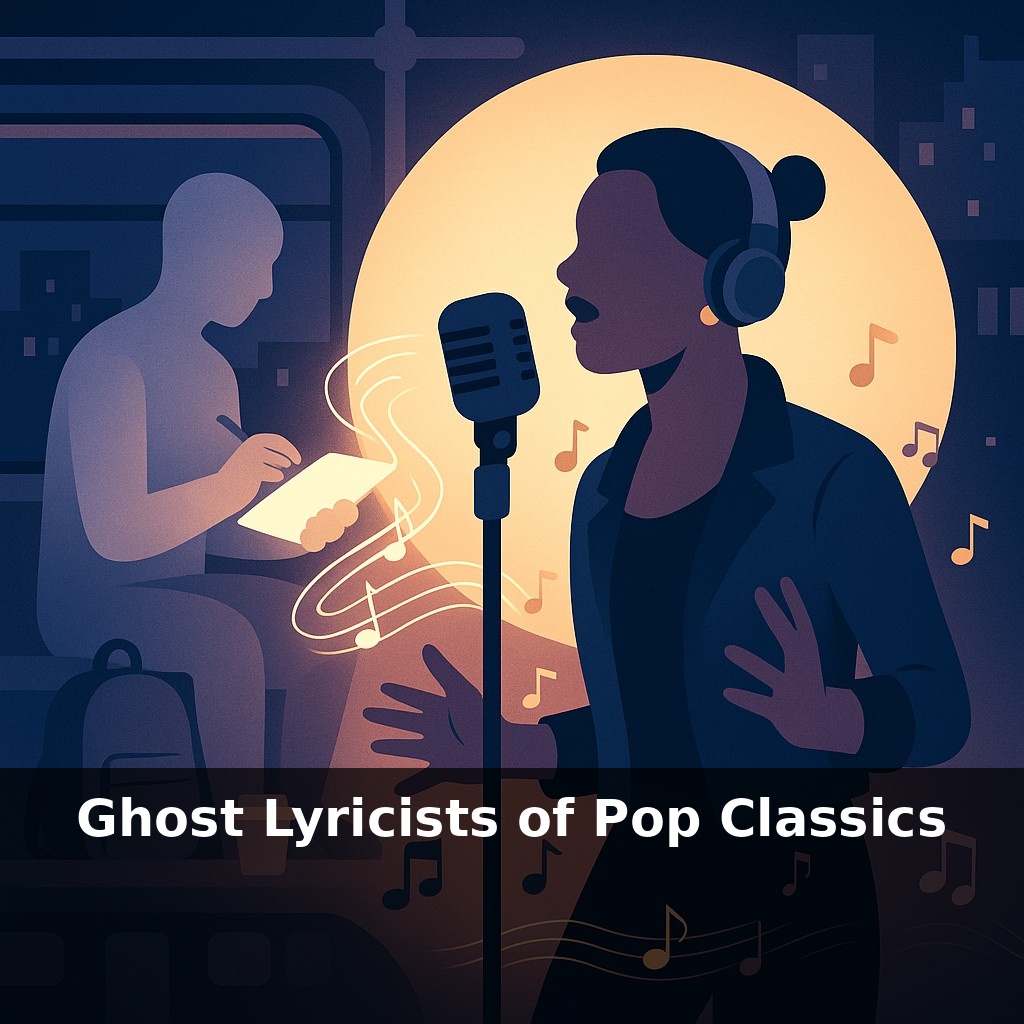
Some of the most famous “confessional” pop anthems—the ones fans swear could only have been written from the singer’s diary—were actually drafted by someone who went home on the subway afterward, unrecognized. In the studio, that someone might adjust a single verb to fit the rhythm, or overhaul the entire chorus in ten minutes between takes. One change and the emotional center of the song shifts; one uncredited line and a career’s worth of royalties disappears. Behind every glossy album campaign there’s a spreadsheet of publishing splits, performance rights, and NDAs deciding whose names survive the marketing meeting. The tension is constant: the industry needs clear, star-centered stories to sell, but the songs themselves are increasingly built by committees, Zoom sessions, and writers’ rooms you’ll never see on the tour poster.
Long before streaming dashboards and surprise album drops, this system was already in motion. In the Tin Pan Alley days, lyricists sat in cramped offices churning out verses the way coders now push updates—constant revisions, little glory. The Brill Building turned the process into an assembly line: one room shaping chords, another polishing hooks, publishers downstairs deciding which name went on the label. Today, the tools have changed—shared docs, metadata fields, in-app credits—but the core question hasn’t: who gets to be the “author” when a hit is built like a skyscraper, floor by floor, by many hands?
Max Martin’s name rarely trends on social media, yet his pen has quietly steered the sound of multiple generations. Twenty‑five No.1 singles, each tied to a different public image, branding campaign, and “authentic” narrative, all flowing from the same small circle of writers in Stockholm and Los Angeles. That gap—between who we *see* and who actually chooses the words we chant in stadiums—sits at the center of modern pop.
Inside a typical writing camp for a big artist, half a dozen lyricists might be spread across studios in the same building. One room chases a breakup anthem, another experiments with a single verse the label thinks “has potential,” a third tweaks pre‑chorus syllables so they hit the beat just right. By midnight, fragments from these different rooms are stitched together into a “final” lyric attributed to three people on the credits, even though ten touched it. Not everyone gets listed. Some signed work‑for‑hire agreements. Some traded their names away for an upfront fee, betting against themselves.
Newer metadata standards promise to map this tangle in real time. When Spotify added in‑app credits, suddenly you could tap a song and see the cluster of names behind it—and many listeners did. That spike in searches wasn’t just curiosity; it quietly created leverage. If fans discover that the same writer shaped songs for rival pop idols, that writer becomes a brand, someone labels feel pressured to keep happy.
Yet nearly 60% of professionals say they’ve taken deals where those future royalties vanish. For them, a buy‑out can feel like selling lottery tickets at a discount to pay this month’s rent. One hit could have funded a decade; instead, the money flows to whoever owns the remaining shares. In that sense, a modern song can resemble a venture‑backed startup: early contributors may walk away with a one‑time payout while late‑stage stakeholders collect recurring revenue for years.
Layered onto this are ethics and ego. Some artists insist on lyric credit as a condition of recording, arguing they’re reshaping lines in performance. Some writers quietly accept reduced percentages to keep the cutthroat ecosystem moving. Others push back, using social media or songwriter advocacy groups to surface stories that contracts tried to bury.
All of this means that when you press play, you’re not just hearing a melody—you’re hearing the outcome of invisible negotiations over ownership, identity, and who history will remember as the voice of the song.
When a star steps into a session now, the dynamic can feel closer to a high‑stakes product sprint than a lone artist with a notebook. One writer might specialize in conversational slang, another in tightening rhyme schemes so they’re easy to chant, another in crafting a single quotable line that can live as a TikTok caption. A top‑liner will sometimes be flown in just to fix eight shaky words before the hook hits—changing nothing but pronouns and tense—because that tiny shift can flip a track from “nice” to “this is my life.” In some K‑pop camps, teams build alternate lyric versions for different languages on the same day, each tailored to local memes and rhythms. And there are hybrid roles: artists who quietly act as uncredited editors for peers, punching up verses between tour dates in exchange for backstage favors, future features, or an off‑the‑books promise that “next time, your name goes on the record.”
As credits get harder to hide, the next power struggle may be over *who* gets highlighted, not just listed. Fans could filter playlists by favorite lyricists the way gamers filter by map designers, forcing platforms to re‑shape discovery around “who wrote this line?” rather than “who sang it?” At the same time, AI co‑writing tools might normalize songs with a dozen micro‑contributors, blurring the line between feature and footnote and pressuring law, platforms, and fan culture to decide where authorship really begins.
As credits surface, listening can become a kind of crate‑digging: you follow a favorite name across genres the way some fans track a striker across different clubs. Suddenly a ballad, a dance banger, and a film theme feel connected. Your playlist turns into a map of voices behind the voice—and the next “discovery” might be someone you’ve been hearing for years.
Start with this tiny habit: When you hit play on a favorite pop song that you know had a ghost lyricist behind it, pause for just one line and whisper to yourself what you *think* the ghost writer was trying to make the listener feel in that moment—nothing fancy, just a quick guess like “this line is pure jealousy” or “this is the quiet heartbreak part.” Then, during the next chorus, swap one word in your head with a different emotion word (like changing “love” to “regret” or “power” to “shame”) and notice how the whole line’s meaning shifts. If you’re walking or commuting, do this for just one verse and one chorus, then you’re done for the day. Over time you’ll start listening like a ghost lyricist yourself, without adding any extra time to your routine.