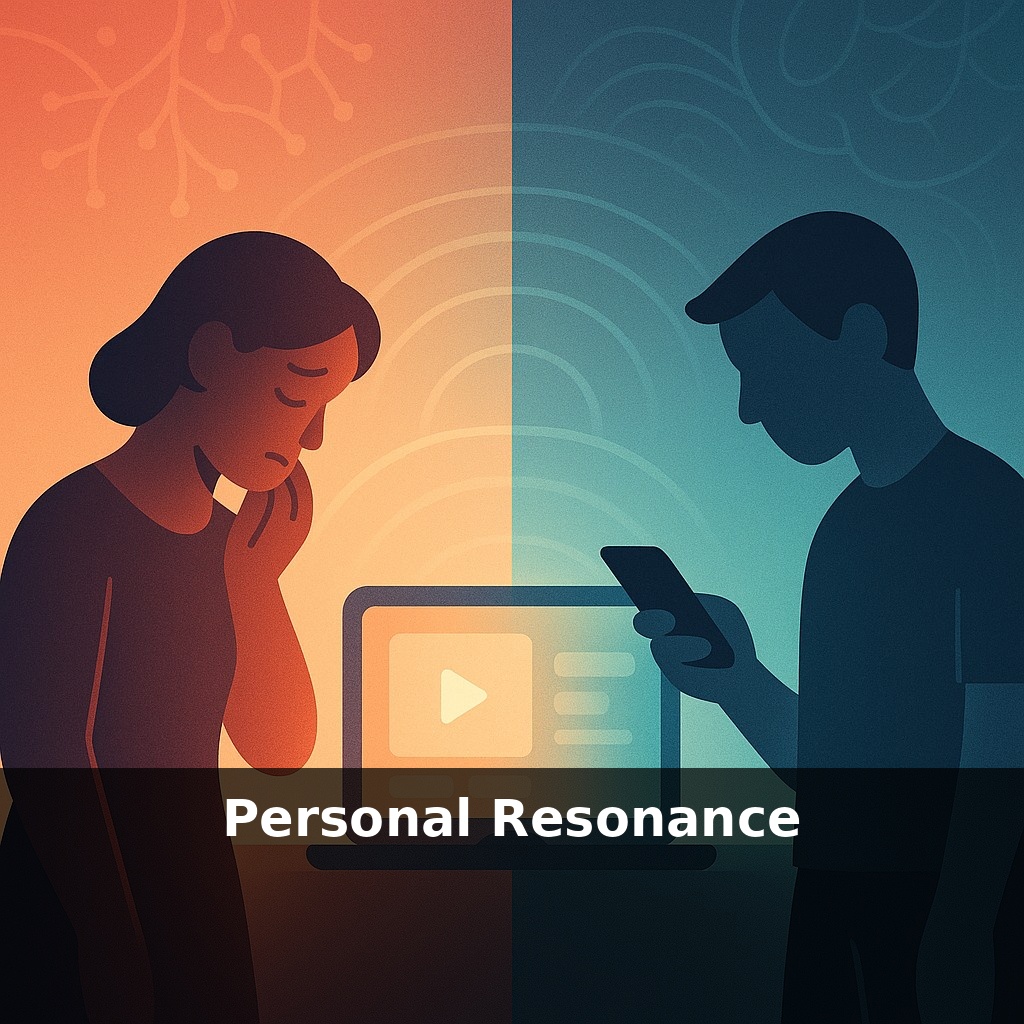
A streaming survey found most viewers choose shows where they feel personally seen. Now, think of two friends leaving the same movie: one in tears, one checking their phone. Same scenes, same soundtrack, totally different impact. That gap—right there—is where this episode lives.
Neurologist Antonio Damasio once wrote, “We are not thinking machines that feel; we are feeling machines that think.” Movies plug straight into that feeling-first system—but they don’t do it the same way for everyone. While one viewer is quietly reliving a breakup during a rom‑com, another is replaying a childhood argument in the very same scene. Under the surface, your brain is pulling old files: songs tied to first loves, family stories, cultural myths, even that awkward school play you’d rather forget. These aren’t distractions; they’re the raw material your mind uses to build the film you experience. In this episode, we’ll unpack how your memories and identity sneak into the theater with you, why certain scenes feel “too real,” and how recognizing this can actually change what you choose to watch next.
Neuroscientists now trace this “you-shaped” movie experience to specific brain systems. While the plot unfolds, your default mode network quietly weaves the story into your ongoing sense of self, and limbic regions flag moments that match your emotional history. That’s one reason neurocinematics studies only find about 45–50% synchrony across viewers in these areas: half your brain activity is marching with the crowd, half with your past. Outside the lab, that shows up when a throwaway side character feels more compelling than the hero—because they brush against your own unfinished business.
Some of this individuality comes down to what psychologists call “schemas”—the mental templates you’ve built from years of patterns. If your schema for “father” is warm and safe, a strict movie dad might read as comic relief. If your schema is tense or absent, the same character can feel threatening or hollow. Your brain isn’t passively receiving a story; it’s constantly asking, “What does this remind me of?” and updating those templates in real time.
Personality traits quietly steer this process. High‑sensation‑seeking viewers often lean into jump scares and chaos, showing stronger physiological spikes during action scenes. More introverted or anxious viewers may react just as intensely to a quiet conversation or a lingering silence. This isn’t taste in the trivial sense—it’s rooted in baseline arousal systems and how your nervous system prefers to regulate itself.
Then there’s timing. Watch a breakup film right after being dumped, and mundane lines suddenly feel devastating. See the same movie five years later, happily coupled, and your brain tags it as “melodrama.” Studies tracking viewers over repeat screenings find that emotional intensity can swing dramatically depending on current stress, sleep, even hormones. The film hasn’t changed; the organism watching it has.
Culture also scripts resonance in ways we rarely notice. A family dinner scene might look comforting to someone from a collectivist background and suffocating to someone raised on independence and personal space. Music cues built on particular folk scales, holiday rituals, or historical references can register as deeply moving to some audiences and almost invisible to others. That 70% of viewers seeking representation aren’t just chasing surface similarity—they’re tracking whether the emotional rules on screen match the rules they grew up with.
Importantly, this variability is measurable. Heart rate, skin conductance, and even facial micro‑expressions diverge sharply between viewers at key story beats, and about a third of that spread links back to major life events: bereavement, migration, illness, first big success. Think of an audience less as a single crowd and more as an orchestra: the same score is playing, but each instrument emphasizes different notes, creating slightly different versions of the same symphony inside each person.
Think about the last time a movie “hit too close to home” for you but left your friend shrugging. Maybe a throwaway subplot about a parent’s illness had you quietly tense, because you’ve just started visiting hospitals, while your friend fixated on the career drama instead. Or you might find yourself strangely moved by a minor character who switches languages mid‑sentence—not because the script spotlights them, but because it echoes the way you talk to your own family.
Filmmakers sometimes lean into this by planting scenes that work on multiple possible “channels.” A single montage of someone packing a suitcase can register as adventure, exile, or escape, depending on whether relocating, fleeing, or studying abroad is part of your history. Editors know these sequences won’t land the same way for everyone, but they keep them because they invite the audience’s lives to fill in the gaps, turning a generic moment into something that feels oddly specific—if your story happens to rhyme with what’s on screen.
A personalised film future cuts both ways. Adaptive stories that read your smartwatch could soothe anxiety like a custom playlist, or nudge focus in a classroom the way a good teacher shifts tone. Therapists might “prescribe” scenes the way doctors adjust medicine, tuning intensity to your history. But the same tools could overfit you—like a GPS that never lets you leave your own neighbourhood—locking you into moods, beliefs, and demographics that keep you watching, not growing.
Your challenge this week: pick one film you know well and rewatch just a single scene in a different mood, place, or language setting—tired vs rested, alone vs with someone else, dubbed vs subtitled. Notice what shifts: lines that suddenly sting, jokes that fall flat, details you’d swear weren’t there. Then ask: which version feels most like “me,” and why?