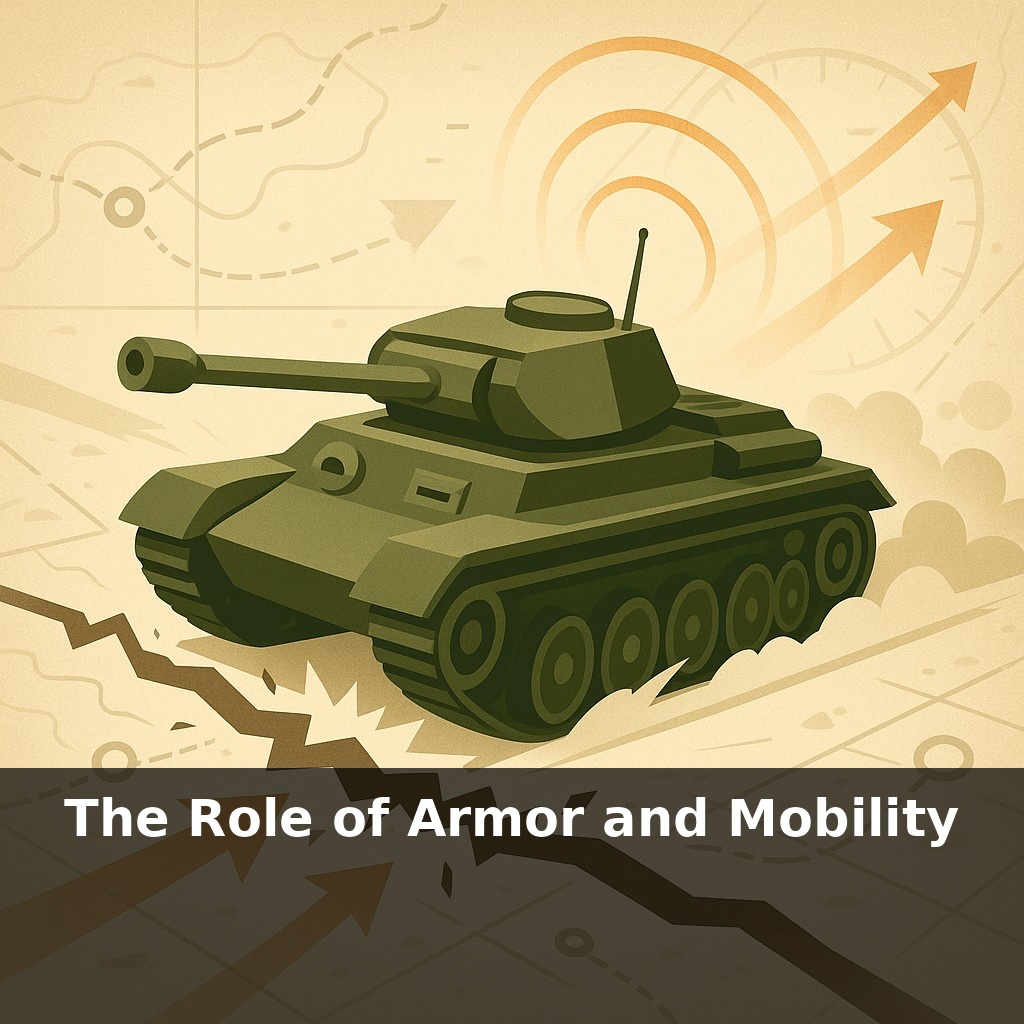
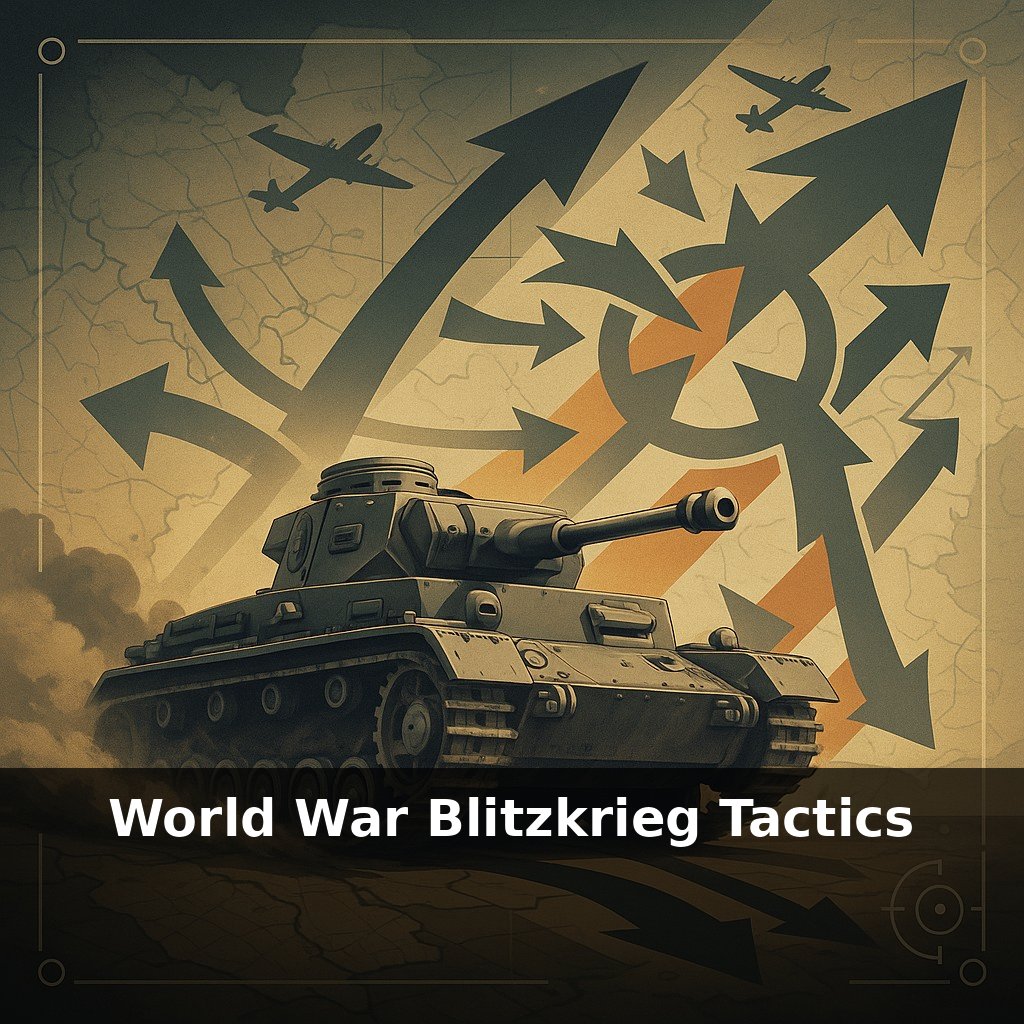
Tanks didn’t win early World War Two battles just by being tougher; they won by being better listeners. Radios, speed, and timing turned metal boxes into a single, fast-moving punch. Today, we’ll dig into how armor and mobility together shattered slower, stronger enemies.
Early Blitzkrieg commanders didn’t just move faster; they changed what “front lines” meant. Instead of grinding forward yard by yard, they aimed to punch narrow holes, then race deep enough that maps became guesswork and headquarters lost track of who was where. That shift turned geography into a weapon: rivers, forests, and roads mattered less as barriers and more as launch ramps or trapdoors.
Armor now functioned like a roaming storm front: concentrated in one area, then suddenly breaking through and spreading disruption far behind enemy lines. Traditional defenders, built around fixed positions and prepared fire plans, were tuned to fight a slow, predictable hurricane season. Blitzkrieg arrived more like a sudden, violent squall line—appearing where doctrine said it “shouldn’t” be, hitting before warnings could spread, and forcing commanders to react on the fly instead of on the staff table.
Commanders who understood this new reality stopped treating the battlefield as a flat board and started seeing it as layered depth. Above ground, columns moved; below that, fuel stocks, repair crews, and map tables determined how far those columns could really go. A unit that looked strong on paper might be brittle if its supply route ran along a single vulnerable road or bridge. German planners learned to probe for these hidden seams, then drive through them before the enemy could reshuffle. In this series, we’ll trace how that mindset reshaped campaigns, not just individual clashes.
A Panzer III could roll down a road at roughly 40 km/h, yet that number alone tells you very little. What mattered was how long that pace could be sustained, over what terrain, and with which units keeping up. Early German planners discovered that a formation wasn’t limited by the fastest vehicle in its order of battle, but by the slowest critical element that had to arrive on time—often fuel trucks, engineers, or bridging units. That’s why they concentrated their best-protected, most reliable vehicles in a small number of Panzer divisions, instead of spreading them thin across the army. Only about a third of German armored vehicles sat in these favored formations, but those were the fists that actually struck.
In practice, this meant building self-contained groups: tanks to break into defended areas, mechanized infantry to clear resistance and hold key junctions, artillery to suppress anything that could slow the advance, and air support to blind or paralyze enemy reserves. On paper, opponents often had more armored fighting vehicles; in the field, they were scattered, mismatched in tempo, and slow to reorient. During the Ardennes offensive of 1940, XIX Panzer Corps covered about 320 km in a week not because each vehicle was spectacularly fast, but because the whole system—maintenance, fuel, reconnaissance, orders—kept moving in step.
The contrast with French forces was stark. Many French units relied on visual signals or motorcycle couriers to redirect their heavier but less integrated armored elements. Even where individual machines were well protected, the absence of widespread wireless sets in most vehicles meant that once battle chaos began, coordination degraded rapidly. By the time higher headquarters understood where German spearheads were, those spearheads had already shifted, exploiting bridges, crossings, and road nets that hadn’t been recognized as critical vulnerabilities.
Modern heavy armor like the M1 Abrams carries this logic further: its high power-to-weight ratio isn’t a luxury; it’s what allows heavily protected vehicles to maneuver quickly enough to avoid becoming static targets, while still staying synchronized with supporting arms across large distances. The core problem remains: not just how hard you can hit, but whether your whole team can arrive at the decisive spot before the opponent reorganizes.
In 1940, some German spearheads reached key bridges so quickly that local defenders were still following peacetime traffic rules—military police directing columns, civilians on the roads, toll barriers up. The breakthrough didn’t feel like a “decisive battle”; it felt like a schedule gone wrong. That’s the quiet power of well-organized movement: the critical moment arrives before anyone labels it “critical.”
Think of it like a fast-moving weather front crossing a region. Farmers don’t lose crops because a single gust is strong; they lose them when a pattern of shifting winds, pressure changes, and sudden temperature drops catches them mid‑harvest. In campaigns, those “pressure changes” are route choices, refuel timings, and which crossroads get seized first.
Concrete example: when one French counterattack in 1940 finally assembled a solid tank force, its fuel train was still dispersed, maps were outdated, and liaison units hadn’t caught up. On contact, the units fought well—but couldn’t exploit success, because the deeper “storm system” behind them never formed.
Future campaigns may hinge less on who fields the heaviest vehicles and more on who keeps their “system of movement” hardest to predict. Active protection suites, drone screens and real‑time mapping turn the battlespace into something like shifting tidepools: channels open and close in minutes, not days. Forces that can quietly reroute logistics, spoof sensors and re‑task units on the fly won’t just punch gaps; they’ll make defenders doubt where the real gap is until it’s too late.
In the end, the real contest isn’t just metal versus metal, but which side treats movement like a living map that’s constantly redrawn. Think of campaign plans less as train timetables and more as branching river systems: channels split, rejoin, and flood new banks. Those who learn to ride those shifting currents first will write tomorrow’s doctrines.
Here’s your challenge this week: Pick one “armor” behavior you use a lot—like over-preparing, staying silent in meetings, or defaulting to sarcasm—and deliberately leave it “off” in one low-stakes situation today (for example, a team check-in, a family conversation, or a text thread with friends). Before you go in, choose one “mobility” move you’ll use instead—like asking one genuine question, sharing one honest concern, or trying one new idea even if it might flop. Afterward, rate yourself from 1–10 on how much armor you used versus how much mobility you allowed, and adjust the next conversation in the opposite direction (less armor, more mobility) based on that score.