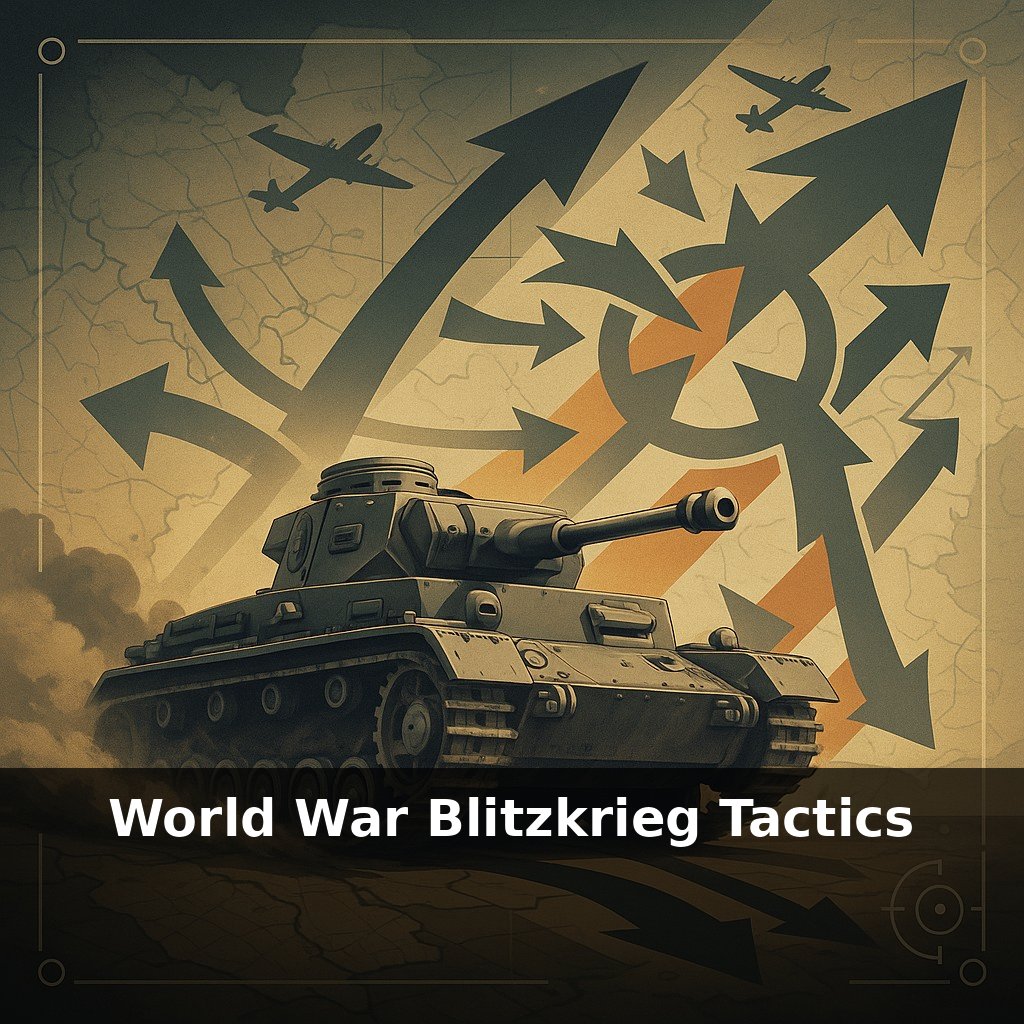
A German tank officer once said their best weapon wasn’t armor or guns—it was the radio. In this episode, we drop into a battlefield where seconds matter, and where voices crackling over the air turned scattered machines into a single, devastating punch.
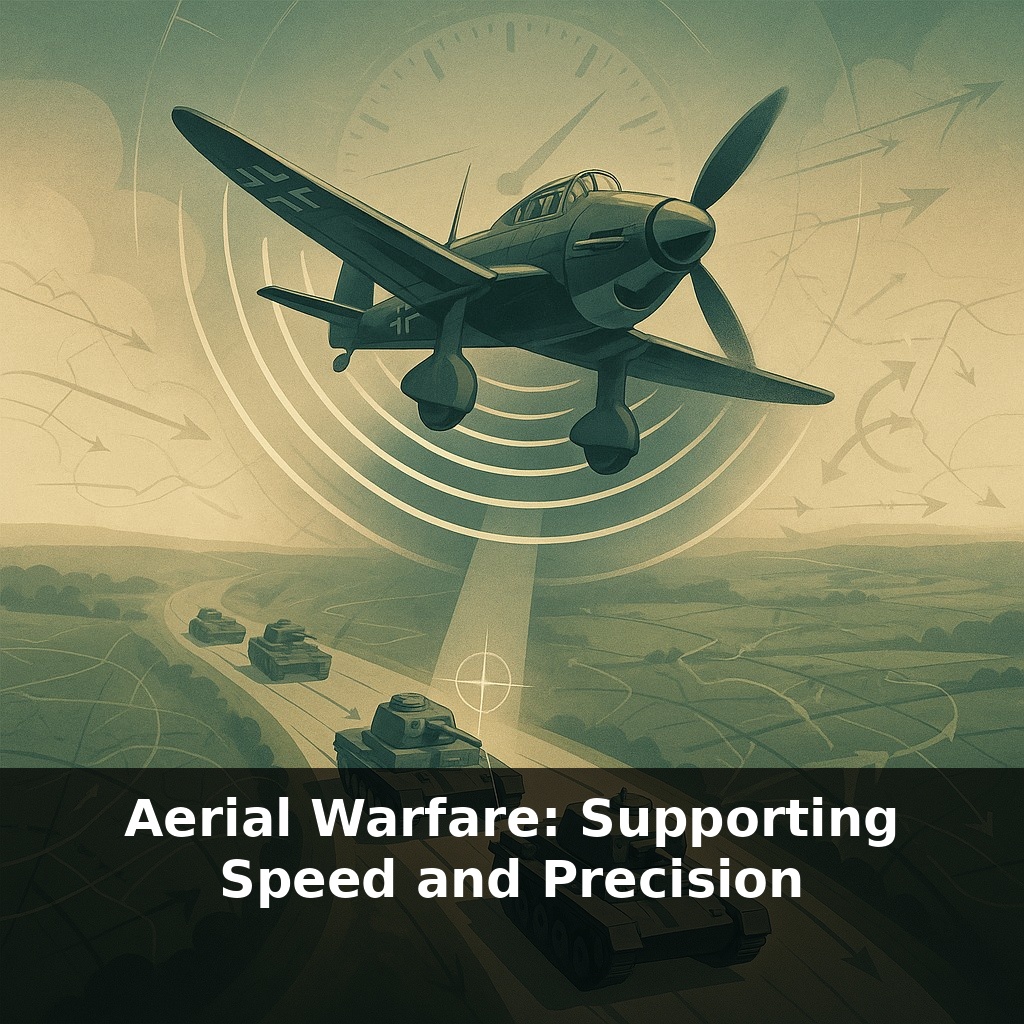
At first glance, Blitzkrieg looks like a story of tanks: steel wedges punching holes in stunned enemy lines. But beneath that image was a different engine of speed—aircraft flying tight, almost choreographed schedules over advancing columns. The Luftwaffe wasn’t just bombing targets; it was synchronizing time itself for German ground forces, turning minutes into a weapon. When Stukas dove, it was rarely random or “area” destruction. They hit road junctions, reserve assembly areas, and key strongpoints just ahead of the leading units, trimming away resistance like a gardener clipping branches to open a clear path. This demanded ruthless punctuality: flights stacked in altitude, queued by priority, redirected on the fly as reports came in. Success depended less on individual bravery and more on an emerging art: using air power as the precision tempo-setter for an entire offensive.
Yet the real shock in 1940 wasn’t just that attacks were fast—it was how *continuous* they felt to those on the receiving end. French and British units reported that once German columns began to move, pressure never seemed to lift: artillery bursts, low-flying bombers, then armor silhouettes appearing through smoke. Instead of set-piece offensives separated by lulls, operations blurred into rolling waves that eroded morale as much as fortifications. Commanders who expected time to regroup, reposition, or counterattack found that every pause was already “booked” by something incoming from above.
At Sedan in May 1940, French observers counted roughly one bomb every two seconds falling on a narrow segment of their line. That density wasn’t about sheer destruction; it was about carving an exact opening, in an exact place, for an exact moment. The goal was not to level everything, but to punch a psychological and tactical “window” wide enough for the leading German units to burst through before it could close.
What made this possible was how differently the German air arm thought about targets. Instead of asking, “What can we destroy?” planners asked, “What must briefly cease to function?” Bridges didn’t need to vanish; they just had to be unusable long enough to trap reserves on the far bank. Road junctions didn’t all have to be cratered; a single wrecked convoy in the right spot could choke an entire corps’ movement. Headquarters didn’t need to be obliterated; jamming their routes, cutting messengers, and terrifying staff could be enough to halt coherent orders.
That mindset fit the tools at hand. The Ju 87 Stuka was slow, vulnerable, and almost obsolete on paper by 1940 standards—yet over France it was brutally effective because it could place bombs within tens of meters of pillboxes, bunkers, or river crossings. Fighter-bombers added flexibility, darting ahead to hit fleeting targets such as columns caught on the march or artillery redeploying. Reconnaissance crews, flying unglamorous missions, mapped where dust clouds, traffic jams, and gun flashes revealed the real weak spots.
When local air superiority was achieved, ground formations could move at a pace that strained maps and fuel logs—40 to 50 kilometers a day across enemy territory. The vertical and horizontal elements essentially shared a single operational “plan of attack,” updated hour by hour. One could think of it like a storm front rolling across a landscape: bombers as the thunderheads breaking resistance at key ridges, fast fighters as wind gusts probing ahead, ground units as the rain line steadily pushing forward into every gap the sky opened. The power lay not in any category alone, but in how all of them shaped the same moving edge.
In practice, this “flying artillery” often worked in layers. A corps commander might mark out a narrow corridor—say, a valley mouth or a town seam between two divisions—where he needed resistance to sag for just half a day. Schedules would stagger dive-bombers against strongpoints, then fighter-bombers against roads feeding that sector, then reconnaissance flights to confirm whether defenders were thinning or rerouting. If new obstacles appeared—reserve tanks assembling behind a woodline, for instance—the next wave could be retasked to blunt that threat before it solidified. The aim was to turn key areas into temporary “soft zones” that moved forward over hours. One historian compared the effect to an orchestra playing a rising crescendo along a staff line: different instruments entering and fading, but all climbing in the same direction, making the front feel less like a line and more like a sliding, amplified point of maximum strain.
Your challenge this week: map one modern project you know to this layered, time-boxed model.
Future forces are chasing the same effect, but with code instead of cockpit crews. Cheap drones can “hover” decisions over a target area, handing off tracking like a flock of birds shifting formation with the wind. AI helps sort what matters, letting commanders shift focus in seconds rather than hours. As more sensors join the mesh, the real contest may be less about who fires first, and more about who can keep its decision chain shortest when everything starts to move.
In the end, speed from above was less about motion and more about shaping options. By briefly erasing safe routes, quiet rear areas, and predictable lulls, attackers forced defenders into narrower and narrower choices. Modern forces chase a similar effect in software: shrinking the space where an opponent can move freely, like a tide quietly closing around a sandbar.
Start with this tiny habit: When you hear or read about any current conflict or military operation in the news, pause for 10 seconds and quickly picture the “kill chain” steps—find, fix, track, target, engage, assess—and ask yourself which one is likely the bottleneck. Then, quietly say one tweak that could improve speed *or* precision at that step (e.g., “better drone ISR here” or “clearer ROE for pilots there”). If you’re at your desk or on your phone, spend 30 more seconds googling just one specific tech or tactic mentioned in the episode—like JDAMs, SEAD, or AWACS—and learn one concrete detail about how it supports precision or tempo.