A German tank division in 1940 often had fewer modern tanks than its opponents—yet it moved faster, hit harder, and broke entire armies. In this episode, we drop into those chaotic first days of the campaign and ask: how did “less” hardware create “more” power?
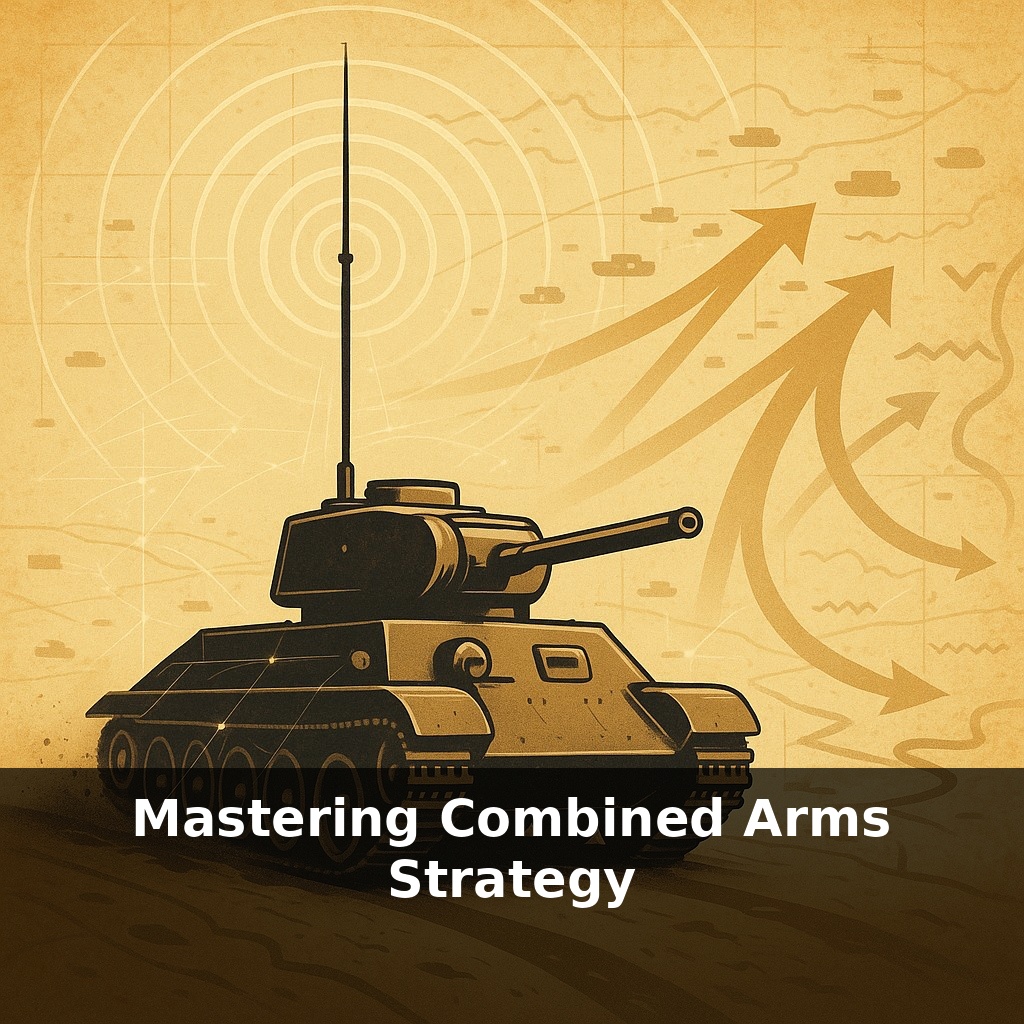
“Less armor, more antennas.” That was the real revolution. By 1940, over 90% of German armored vehicles carried radios—turning scattered units into a single, responsive organism. While opponents still relied on messengers and field phones, German commanders could redirect entire thrusts in minutes, like a flock of birds wheeling in unison when a predator appears.
This is where combined arms truly begins: not with bigger guns, but with shared awareness. When artillery, aircraft, engineers, and armor all hear the same “conversation,” they stop acting like separate projects and start behaving like one adaptable system. In the next moments of this series, we’ll zoom in on how that system was wired together—how air units learned to think in kilometers, not altitudes, and how ground units learned to “order” fire and air support almost as easily as shifting a gear.
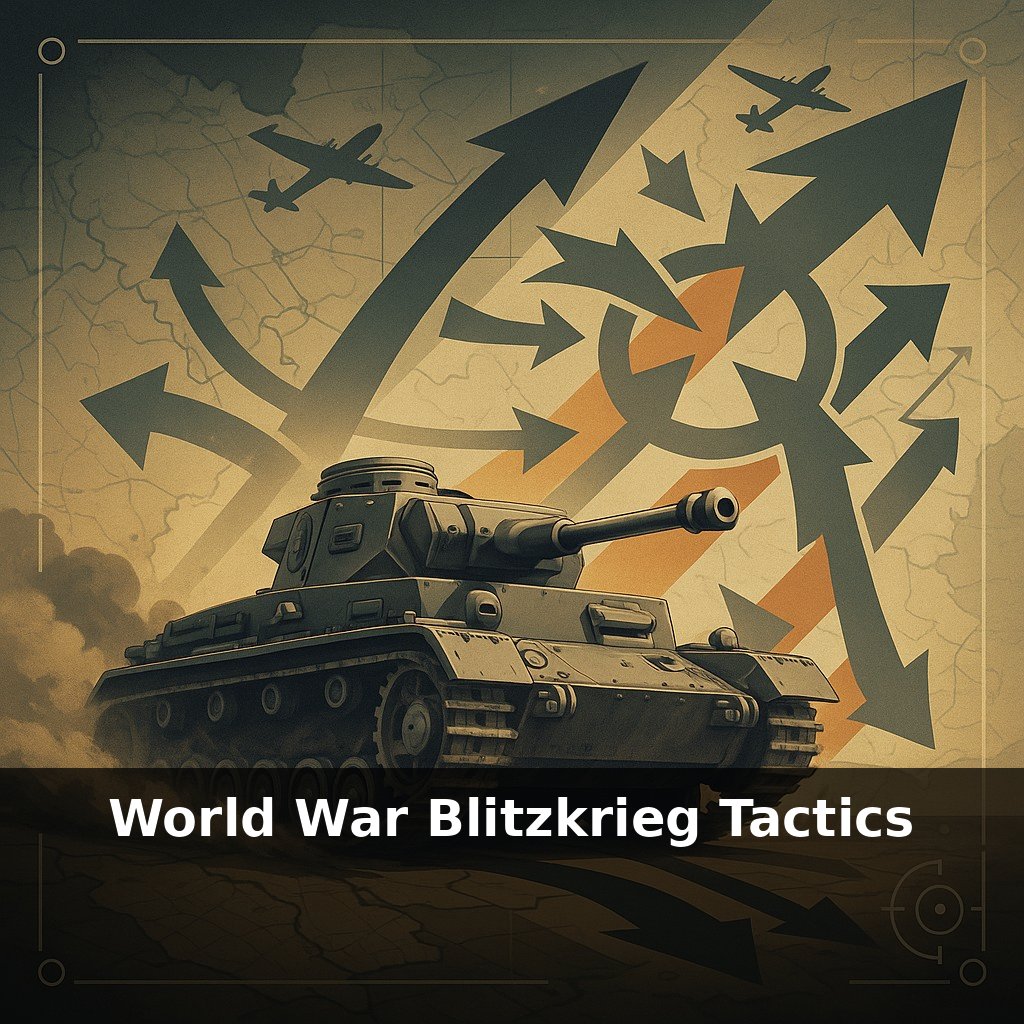
On paper, the German army still looked fairly conventional in 1940: infantry divisions, artillery regiments, air wings with their own chains of command. The magic happened in the seams—where those pieces were forced to cooperate under time pressure. That’s where staff officers began designing operations as if every asset were on a single, shared timeline. Think of it less as “armor supported by aircraft” and more as a rolling schedule: minute 0–30 suppression, 30–45 crossing, 45–90 exploitation, all pre-briefed yet flexible enough to be rewritten on the fly.
“Blitzkrieg” looked chaotic to those on the receiving end: tanks bursting through gaps, aircraft appearing over critical bridges at just the wrong moment, artillery hammering one sector then abruptly shifting to another. Inside the German system, though, this was closer to choreography than chaos.
The real engine was planning backwards from decision points, not forwards from unit capabilities. Staffs started with a question: *Where* does the enemy absolutely **must not** be allowed to organize a coherent defense—and *when*? Only then did they assign roles. If a river line had to be broken by H‑hour + 90 minutes, you didn’t start by asking, “What can our artillery do?” You started by fixing that deadline on the clock and working in reverse: by H + 60, the far bank must be suppressed; by H + 30, assault elements must be in boats; before H‑0, engineer teams must have lanes cleared to assembly areas.
Each branch received not just a mission, but a time-stamped place in a wider sequence. A Luftwaffe group commander, for example, would be told: “Your job isn’t to destroy X batteries in isolation; your job is to erase enemy resistance on grid square Y between 06:10 and 06:25 so engineers can work without being shelled.” Success was measured less in bomb craters and more in whether the sappers reported “no effective fire.”
This time-centric design changed how units thought. Armor leaders no longer asked, “Where are my Stukas?” but, “What window do I have before enemy reserves from Division Z can arrive?” Air officers likewise learned to treat ground symbols on a map as moving problems: if a French counterattack could reach a crossroads in 40 minutes, then fighters and bombers had to shape that fight 41 minutes *before* it started, not react when it appeared.
The Meuse crossing is often remembered for sheer firepower, but its deeper lesson is this disciplined layering of effects. Hundreds of guns and aircraft weren’t just pointed at a river; they were assigned distinct slices of *time* and *space* with built‑in handoffs. As soon as artillery lifted from one bank, air units were already diving onto suspected strongpoints behind it, and assault troops were already climbing into boats—minimizing the intervals when defenders could recover their nerve, reorganize, and shoot back.
On the ground, this looked less like a straight punch and more like a sequence of overlapping jabs, feints, and blocks. A Panzer regiment might deliberately advance just far enough to provoke an enemy artillery response—its “forward” battalion halting on exposed high ground, not to seize it permanently, but to trigger hostile fire missions that had been painstakingly mapped from intercepted signals and prior reconnaissance. The moment those batteries revealed themselves, Luftwaffe liaison officers pushed pre‑cleared coordinates up the chain; dive‑bombers or heavy guns were already on call, turning what looked like a careless overextension into a trap.
Elsewhere, infantry didn’t simply follow armor; they often moved on parallel axes through rougher terrain, tasked to peel away anti‑tank teams and machine‑gun nests that might stall the next armored thrust. Engineers, too, gained offensive roles: laying deliberate minefields behind a probing French counterattack, channeling it toward kill zones where anti‑tank guns and fast‑moving reserves waited. Everyone’s maneuver was bait for someone else’s blow.
16,000 shells in half an hour was impressive; the real revolution was treating time itself as a weapon. Future forces will push this further: AI may stitch together cyber jabs, drone strikes, and electronic blinds in milliseconds, the way a sudden storm layers wind, rain, and lightning. The risk isn’t just overkill, but losing human judgment in the rush. Commanders will need to decide which decisions stay slow and deeply human, even inside a battlespace accelerating around them.
When that timing clicks, operations feel less like pushing pieces and more like surfing a rising wave: momentum does some of the work for you. But waves can also dump riders who hesitate or overreach. The next step isn’t adding more tools; it’s learning when *not* to act—when holding fire, pausing, or masking strength creates the better opening.
Start with this tiny habit: When you sit down to plan a game or scenario, quietly say to yourself, “What’s my bait and what’s my hammer?” and then add just one supporting element to each. For the “bait,” pick a single unit you’ll deliberately expose (like a light infantry squad or recon drone) and write one short sentence about how you’ll keep it alive long enough to draw fire. For the “hammer,” choose one specific follow-up asset (like artillery, air support, or armor) and note exactly what trigger—such as “first enemy overwatch shot fired”—will make you commit it. Over time, this 20-second check-in will wire your brain to automatically think in combined arms terms instead of relying on a single “hero” unit.