By the time you finish this episode, an AI somewhere will have drafted emails, coded features, and analyzed emotions on millions of faces—without a single person typing a prompt. Now here’s the twist: the most powerful AIs of the next decade may talk less and notice more.
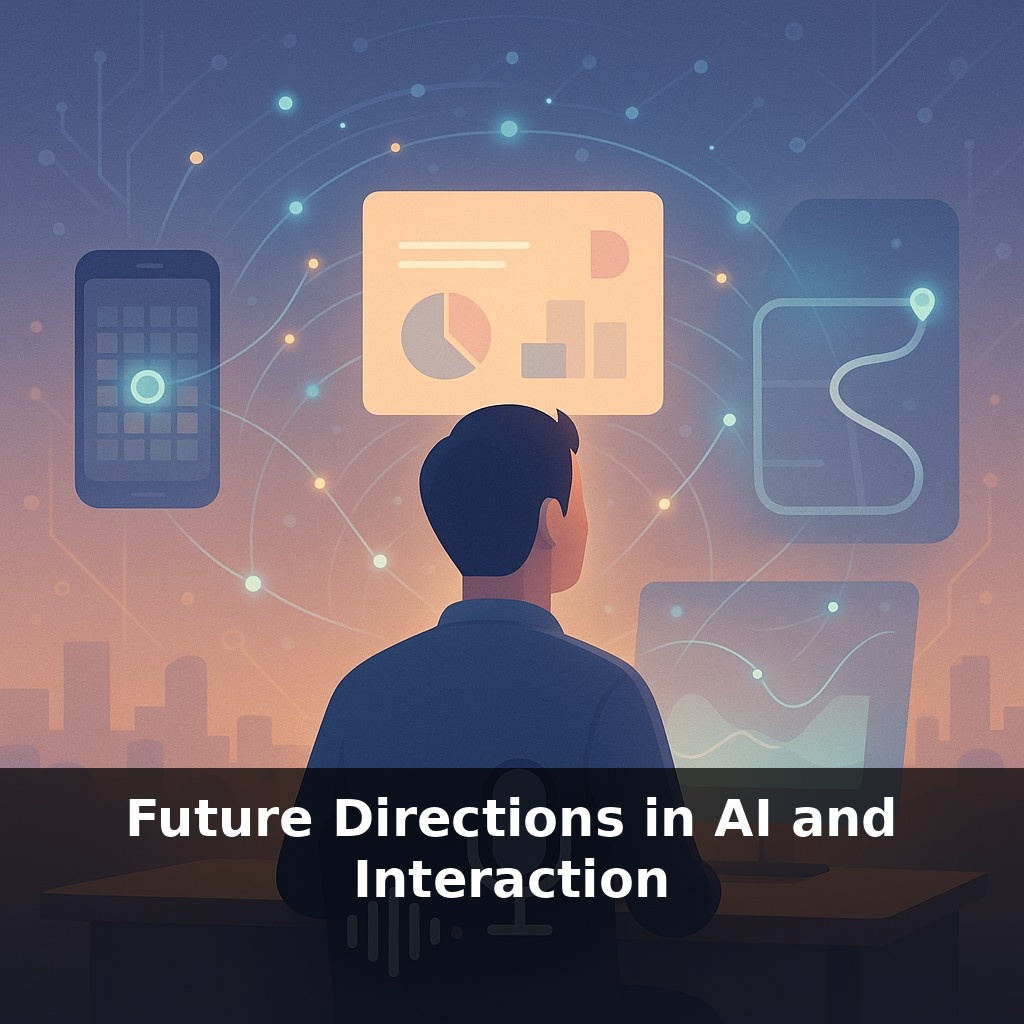
Your calendar pings, your car reroutes, your slide deck quietly improves itself—none of it triggered by you “asking” an AI to help. That’s the shift we’re heading into: systems that don’t just wait for prompts, but anticipate needs across your day like a well-run stage crew, moving props before you even step into the spotlight.
This next wave isn’t about a single super-intelligence; it’s about a mesh of specialized models woven into tools you already use. The spreadsheet that notices your stress in a meeting and simplifies the view. The design app that learns your visual “accent” the way autocorrect learned your slang. The collaboration platform that can “read the room” across video, chat, and shared documents, and then propose three concrete next steps instead of dumping more data on you.
In this episode, we’ll explore how that mesh is being built—and who stays in control as it tightens.
Now zoom out from your calendar and car to the infrastructure underneath. Three tectonic plates are grinding together: gigantic foundation models scaling toward trillions of parameters; chips that look less like shrunken CPUs and more like artificial nervous systems; and quantum prototypes quietly learning party tricks that classical machines struggle to mimic. On top of that, sensors and models are spilling out of the cloud and into cameras, earbuds, wearables, even industrial robots—running locally, negotiating with each other, and syncing only what they must. The “AI layer” stops being a destination and becomes ambient background radiation.
Here’s the strange part: as the underlying systems get wilder—quantum circuits, neuromorphic spikes, federated swarms—the surface of interaction may feel calmer and more human. The real shift isn’t that models get bigger; it’s that they start sharing *context* with each other and with you.
Think in three layers.
First, perception. Multimodal models aren’t just labeling images or transcribing speech; they’re synchronizing cues. Your tone sharpens on a call, your typing pauses in a shared doc, your smartwatch registers a heart‑rate jump. None of these signals alone means much. Together, they form a living “situation model” that tools can reference: not just *what* you’re doing, but *how* it seems to be going.
Second, memory. Long‑context models and edge devices will quietly build evolving profiles of workflows, not personalities: how you debug, negotiate, brainstorm, or review. Instead of an abstract “user model,” you get a lattice of micro‑habits. That lattice is where Emotion AI becomes most useful—not to guess your secrets, but to tune timing and intensity: when to interrupt, when to wait, when to surface a gentle nudge instead of a bold recommendation.
Third, delegation. Agents stop being single bots and become small committees. One watches compliance constraints, another tracks deadlines, another optimizes for clarity over cleverness. They argue in milliseconds, then hand you a synthesized suggestion with traceable reasons. Neuromorphic chips push some of this micro‑deliberation into phones, cars, meeting rooms; quantum accelerators may help with the gnarlier optimization pieces in the cloud.
The paradox is that “frictionless” interaction will only work if we *add* a bit of deliberate friction in the right places. Clear consent rituals for new data types. Visible “why am I seeing this?” panels that aren’t buried in menus. Easy ways to say: “For this task, prioritize my gut over your stats.”
Your challenge this week: look at one tool you use daily and map where a context‑aware agent *should* step in—and where it absolutely shouldn’t. Design the boundary before the software does it for you.
Think of a morning where your tools don’t just “help,” they negotiate on your behalf. You open a document; a background agent has already skimmed last quarter’s notes, cross‑checked them against today’s market feed, and drafted three versions: conservative, bold, and “tell‑it‑straight.” At the same time, your calendar agent has quietly reshuffled two low‑stakes meetings so you get an uninterrupted 90‑minute deep‑work block right when you’re usually most focused.
In a hospital, a similar stack could monitor subtle shifts in a ward: edge devices tracking equipment usage, staff movement, and patient signals. Instead of spamming alerts, an agent might surface one prioritized question to the charge nurse: “Do you want to reassign one nurse from Room 12 to the new admission in Room 4?” The system doesn’t override; it proposes, with just enough context to make the human call faster and safer.
Your weekly playlist might evolve the same way—less “Because you listened to X” and more “Because it’s 11 p.m. before a big day tomorrow.”
As these systems mature, you may find your tools less like software and more like a shifting “room” you work inside—lights, acoustics, and layout subtly adapting as your tasks change. Contracts might become living documents that re‑negotiate minor terms as conditions shift. City services could route power or transit based on neighborhood “moods,” raising hard questions about whose comfort, productivity, or safety gets optimized when priorities collide.
Soon, the real creative act won’t be “using” AI, but choosing which decisions you keep for yourself. The knobs you set—how much context it can pull, when it may interrupt, what it should *never* optimize—will age like architectural choices in a city. We’re not just passengers here; we’re quietly drafting the building code for shared judgment.
Try this experiment: For one full day, route a single real task (like drafting an email sequence, planning a study schedule, or designing a prototype feature) through an AI “copilot” workflow instead of doing it solo. First, talk to the AI only via voice as if it were a collaborator in the room—no typing—then switch halfway through to only text-based interaction and finish the task. Compare how your ideas changed: Did you brainstorm more freely with voice? Did you get more precise with text? Before you decide which felt “better,” actually ship the final result to its real audience (send the email, use the schedule, share the prototype) and notice which version produced clearer responses or better outcomes.