The loudest moment of a rocket launch is so intense it can shake bolts loose from steel—yet the astronauts inside often describe that same instant as calm, focused, even beautiful. How can a body under crushing force feel awe instead of fear? Let’s step onto the launch pad.
By the time astronauts feel that first shove into their seats, the launch has already been unfolding for hours. It starts in a quiet room, not on the roaring pad: medical checks, final briefings, a last chance to call family. The ritual of suiting up turns abstract risk into something tangible—gloves sealed, zippers locked, helmet clicked shut. Heart rates often rise here, long before engines ever light, as the brain quietly rehearses everything that can’t be allowed to go wrong.
Then comes the slow elevator ride and cramped climb into the capsule, a careful ballet of checklists and connections. Outside, the rocket is fully fueled and sweating oxygen; inside, it feels more like waiting in a dim, overstuffed airplane cabin that just happens to be sitting on a controlled explosion. The countdown clock shrinks, the cabin grows smaller, and attention narrows until only one thought remains: there is no way off this ride but up.
As the final minutes drain away, the spacecraft becomes its own tiny world. Screens glow with timelines and numbers; outside, an army of silent systems is already working for a crew that can’t see any of it—valves cycling, guidance aligning, tanks flexing as supercold propellant boils and vents into the air. Inside, voices grow more clipped, almost musical in their rhythm, as each “go” locks another piece of the sequence into place. The capsule is no longer just a vehicle; it’s a promise that, if every line of code and bolt holds, this sealed room will soon be falling around Earth instead of resting on it.
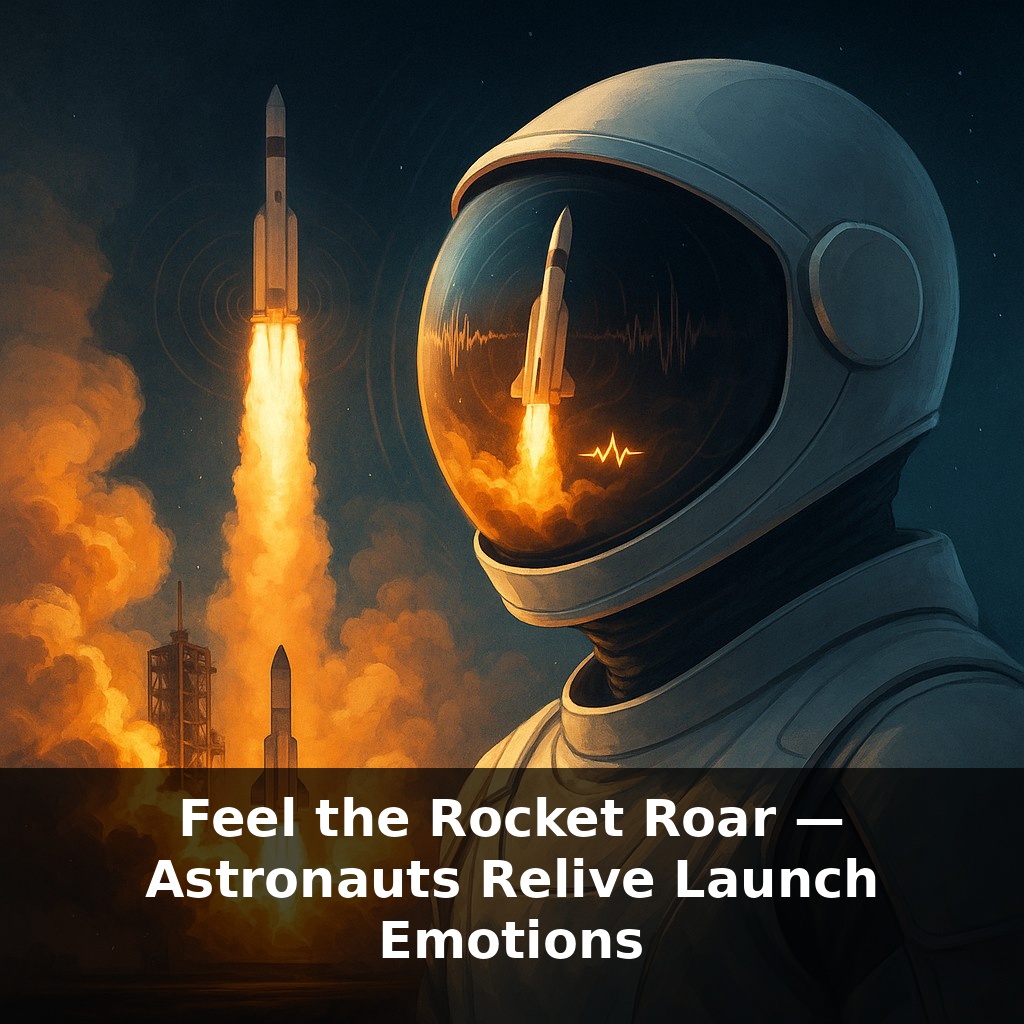
For the crew, the moment of ignition doesn’t feel like a single bang; it arrives as a rising pressure in the chest, a low growl that thickens into a full‑body vibration. The straps bite a little deeper. Numbers on the displays race, but eyesight often tunnels to just a few key cues: engine performance, attitude, next call. Biomedical sensors show what voices don’t—heart rates jumping into the 120–150 bpm range even as replies to ground sound steady and rehearsed.
In the first minute, gravity feels greedy. As velocity climbs, the seat pushes harder, building toward roughly three times normal weight during the Falcon 9’s ascent. Breathing still works, but each inhale takes more intent, like drawing air through a heavy filter. Fine hand movements become slower, so crews have already practiced every critical action until it’s more reflex than thought. They don’t fight the force; they work inside it.
Then comes Max‑Q, the narrow band around 11–13 kilometers where the atmosphere pushes back the most. The structure shivers as air claws at every protrusion. Engineers on the ground are watching loads and margins; in the capsule, astronauts feel it as a change in texture—vibration becoming harsher, then smoothing again as the air thins. When throttling eases them through the peak, a tiny part of the mind notes: one more hurdle down.
Modern vehicles like Crew Dragon soften some of the ride. Digital control laws and dampers trim out the wildest motions, turning what used to be sharp jolts into more rounded tremors. Yet no software can mute the raw acceleration when stages separate. There’s a brief, uncanny lull as one set of engines cuts off—loose items seem to float for a heartbeat—followed by a fresh slam as the next stage lights and the climb steepens again.
Through it all, conversation stays clipped and almost boring by design. Call signs, altitudes, “copy.” The emotional reality runs under that surface layer: a growing awareness that the blue outside the tiny window is deepening, that the horizon is starting to curve, that home is already beginning to look like somewhere you visit rather than somewhere you occupy.
The odd thing, many astronauts say, is that the emotional “spikes” don’t always line up with the technical milestones you’d expect. Max‑Q may register as just another call, yet a simple glance at a family photo Velcroed beside a display can send a sharper jolt than any vibration. One shuttle veteran described the last few seconds before liftoff as being “already halfway in orbit”—not physically, but mentally, because years of simulations had trained every instinct to run ahead of the vehicle, predicting each call before it came.
On Dragon and Soyuz alike, crews talk about two distinct launch “voices” in their heads. One is clinical, tracking numbers and procedures. The other is quietly cataloging irretrievable firsts: last view of workers stepping away from the hatch, last time Earth’s air presses this heavily on their lungs, last moment the ground is closer than the sky. When the G‑load finally eases and straps go slack, that second voice often speaks first: not in poetry, just in a stunned, private sentence—“We actually made it.”
Future launches may feel less punishing and more like a powerful, sustained gust of wind: still serious, but no longer reserved for test‑pilot physiques. As comfort grows, governments and companies could treat access to orbit more like long‑haul air travel—routine, insurable, widely marketed. That shift might funnel money into quieter, cleaner systems and even reshape city‑to‑city travel on Earth, where today’s “red‑eye flight” could become tomorrow’s suborbital hop.
Future crews may replay those eight minutes the way hikers relive a hard climb—every stumble, every breathtaking overlook—knowing the summit changes how all later paths feel. Your challenge this week: notice the “mini‑launches” in your day, the moments just before a big leap, and pay attention to how your mind and body rehearse crossing that invisible edge.