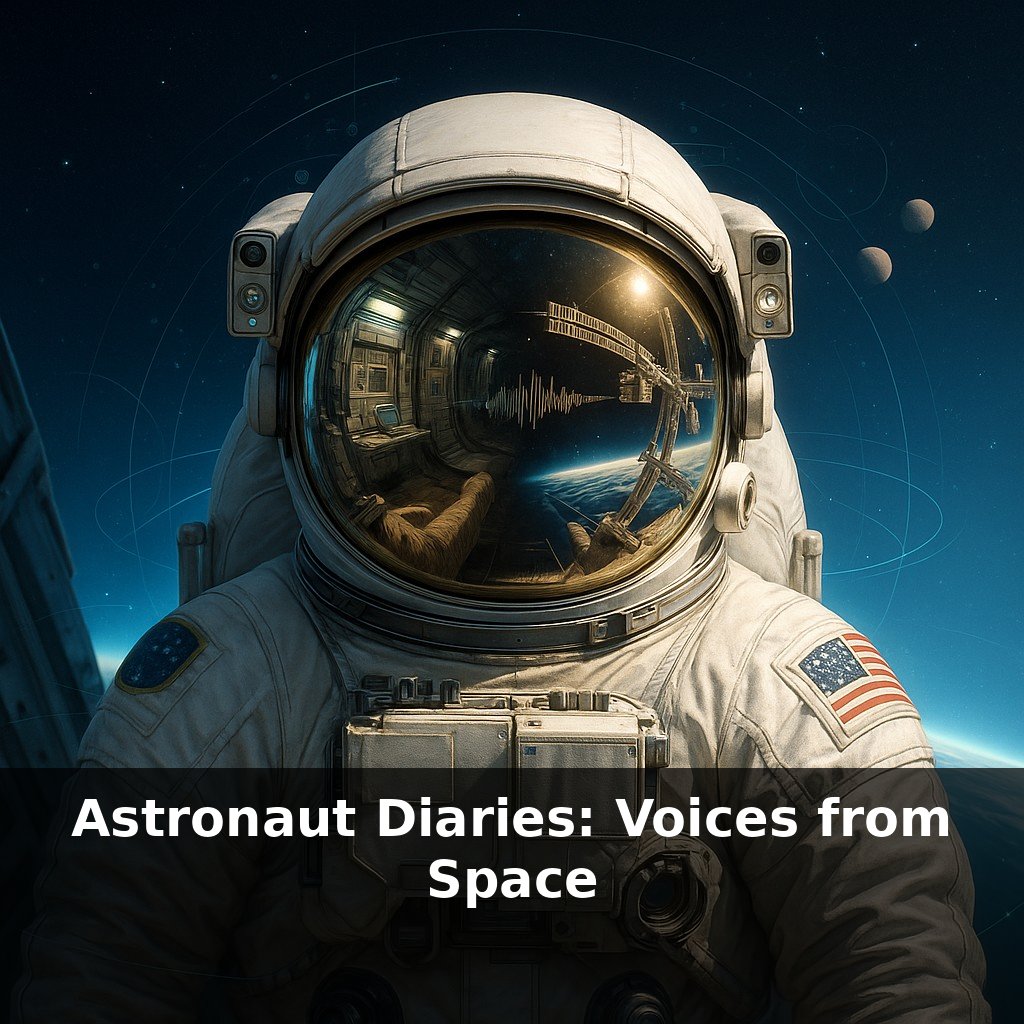
Fire behaves so strangely on the Space Station that astronauts have watched flames keep burning after they “go out.” In one lab module, fuel droplets hover, quietly forming “cool flames” that are invisible to the eye—but could rewrite how we design engines and prevent fires.
On Earth, gravity is the loudest voice in every experiment—stirring fluids, pulling sediments down, flattening flames, even nudging how cells grow—whether scientists like it or not. Aboard the Station, that voice is almost silenced. The same orbit that gave us 16 sunrises in earlier episodes also gives researchers something even more valuable: a laboratory where gravity is dialed way down, but time, temperature, and chemistry are still very real.
In that quiet, subtle effects finally speak up. Protein crystals grow more perfectly, letting companies like Merck see the folds of a cancer drug clearly enough to refine how it’s delivered. Tiny blobs of molten metal float, revealing how new alloys might form. Stem cells drift in nutrient baths, organizing into 3-D structures that hint at future space-grown tissues. The ISS stops being just a home; it becomes a lens, sharpening details Earth keeps slightly blurred.
Up here, experiments don’t just test theories—they expose hidden flaws in our assumptions. Those Keytruda crystals? Their sharper structure didn’t just please chemists; it fed directly into how the drug is packaged and delivered back on Earth. The same goes for combustion and fluids: the oddities we glimpse beside the Cupola windows end up in safer building codes, cleaner engines, and smarter manufacturing. It feels less like a distant outpost and more like a remote research station whose data quietly reshapes everyday tools, from medical infusions to airplane fuel systems, long after each crew returns home.
Out here, some of the most mind‑bending discoveries come from things that look utterly ordinary.
Take ultra‑cold atoms. In one rack, the Cold Atom Lab cools tiny clouds of rubidium and potassium to a fraction of a billionth of a degree above absolute zero. On Earth, even the smallest vibration or sagging table would smear those atoms out. In orbit, with gravity mostly out of the way, they hang together long enough for physicists to watch them act like a single “super‑atom,” a quantum fluid where waves and particles blur. That isn’t just a physics party trick: the same techniques could one day lead to navigation systems that don’t need GPS, or gravitational sensors sensitive enough to map underground water or magma from orbit.
A few modules away, another team is less interested in atoms than in arteries. Microgravity subtly changes how blood flows, how clots form, and how vessel walls respond to stress. By watching cells and tiny tissue samples over weeks, researchers are probing why some patients on Earth are prone to strokes or heart attacks while others are not. The Station becomes a kind of accelerated testbed for aging and disease, where certain wear‑and‑tear processes speed up just enough to study them within a mission.
Then there’s the workshop side of the ISS. When Made In Space’s printer started turning spools of plastic into wrenches, cable clips, and science gear, it wasn’t just a convenience. Every successful print proved that manufacturing hardware in orbit could be as reliable as shipping it up. Engineers are already thinking beyond plastic: fiber‑optic cables drawn in microgravity can come out purer, with fewer light‑scattering defects, than the ones stretched in terrestrial factories. Better fibers mean faster, cleaner signals back home.
All these threads—quantum clouds, stressed cells, on‑orbit factories—tie into a bigger shift. Low Earth orbit is slowly turning from a destination into an ecosystem, where government labs, startups, and universities treat microgravity as a tool rather than a novelty. Just as a quiet mountain observatory reveals stars city skies wash out, the Station reveals details in matter and life that Earth’s constant pull keeps slightly hidden.
On some days, the Station feels less like a lab and more like a music studio, where we’re learning to “mix” nature’s faint background tracks. Turn down one instrument—gravity—and suddenly other sounds stand out. In fluid racks, fuel tanks for future satellites are mimicked by spinning spheres of propellant; watching how they slosh and settle helps engineers design spacecraft that don’t waste a drop. Nearby, tiny metal droplets solidify without sagging, revealing how to cast turbine blades or phone components with fewer microscopic flaws.
Biologists use this same stripped‑down environment to push living systems to their limits. Certain bacteria become more resilient up here, helping hospitals anticipate how microbes might evolve resistance on Earth. Cancer cells sometimes spread differently, hinting at weak points in their growth patterns. Even plant roots, deprived of “down,” fan out in surprising ways that could teach us how to grow food in cities with less soil, water, and space.
Your challenge this week: follow a single everyday object—your phone, a pill bottle, a lightbulb—and trace how many steps in its design might someday be tested, or already have been refined, off the planet.
By the time commercial stations arrive, “space‑grade” might quietly shape daily life the way “cloud‑based” did. Ultra‑precise quantum sensors tested in orbit could guide planes through storms like lighthouses piercing fog. Space‑hardened cells and tissues may give hospitals treatments tuned as carefully as noise‑canceling headphones. Even supply chains could shift: some drugs, fibers, or chips might be “grown” above us, then shipped down like rare vintages from an orbital vineyard.
Soon, orbit may feel less like a distant frontier and more like an upstairs workshop for Earth—a quiet loft where we prototype cleaner engines, hardier crops, sharper medicines, then lower them back down like carefully wrapped gifts. We’re only just tuning the first instruments; whole symphonies of space‑born ideas are still waiting in the wings.
Before next week, ask yourself: 1) “If I could run one microgravity experiment like the ones mentioned—whether it’s about protein crystal growth, fluid behavior, or combustion—what specific question would I want answered, and why does it matter to me or my work?” 2) “Looking at a real challenge on Earth I care about (like medical treatments, clean energy, or climate monitoring), how might studying it in space—where gravity, radiation, or isolation are different—reveal something we could never see in a normal lab?” 3) “What’s one concrete way I can plug into this kind of space-enabled science this week—subscribing to NASA or ESA microgravity research updates, exploring ISS experiment databases, or reaching out to a university lab doing space-related research—and what exactly do I want to learn from that first step?”