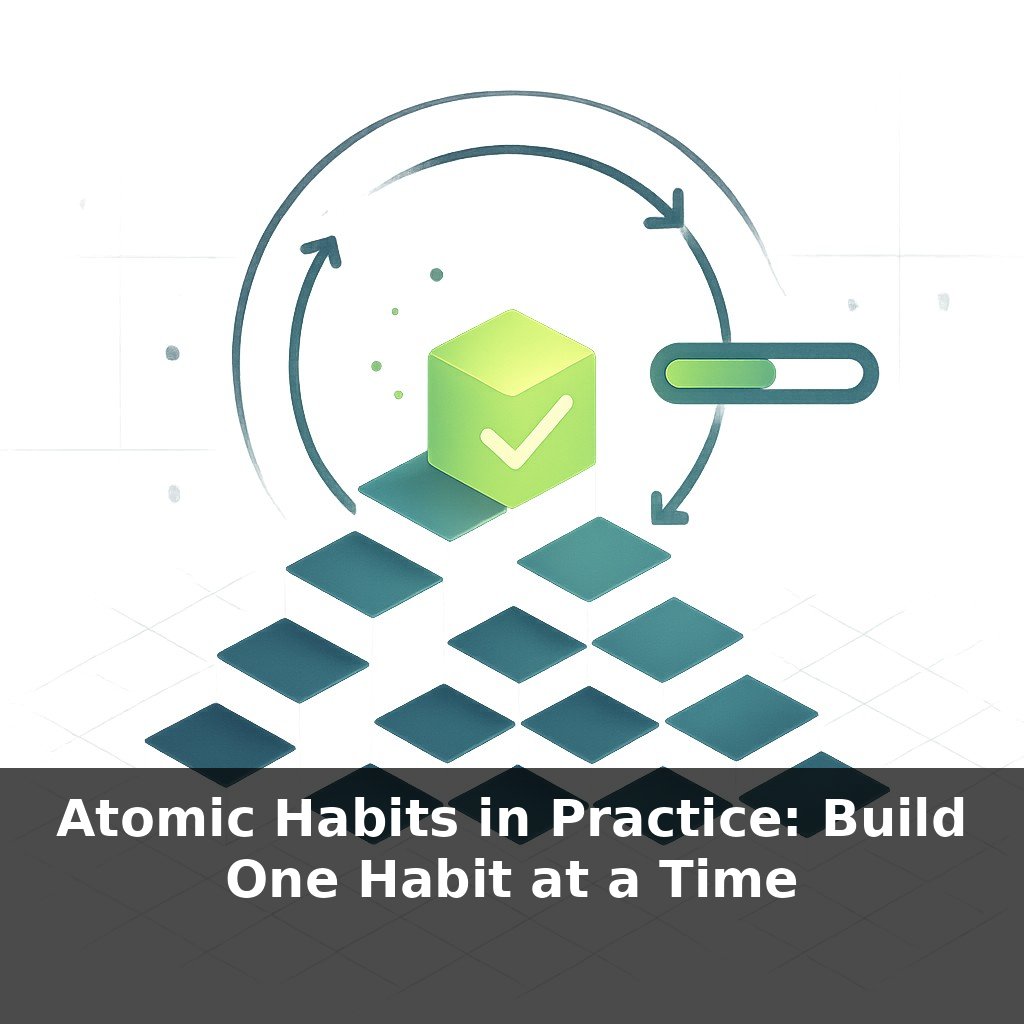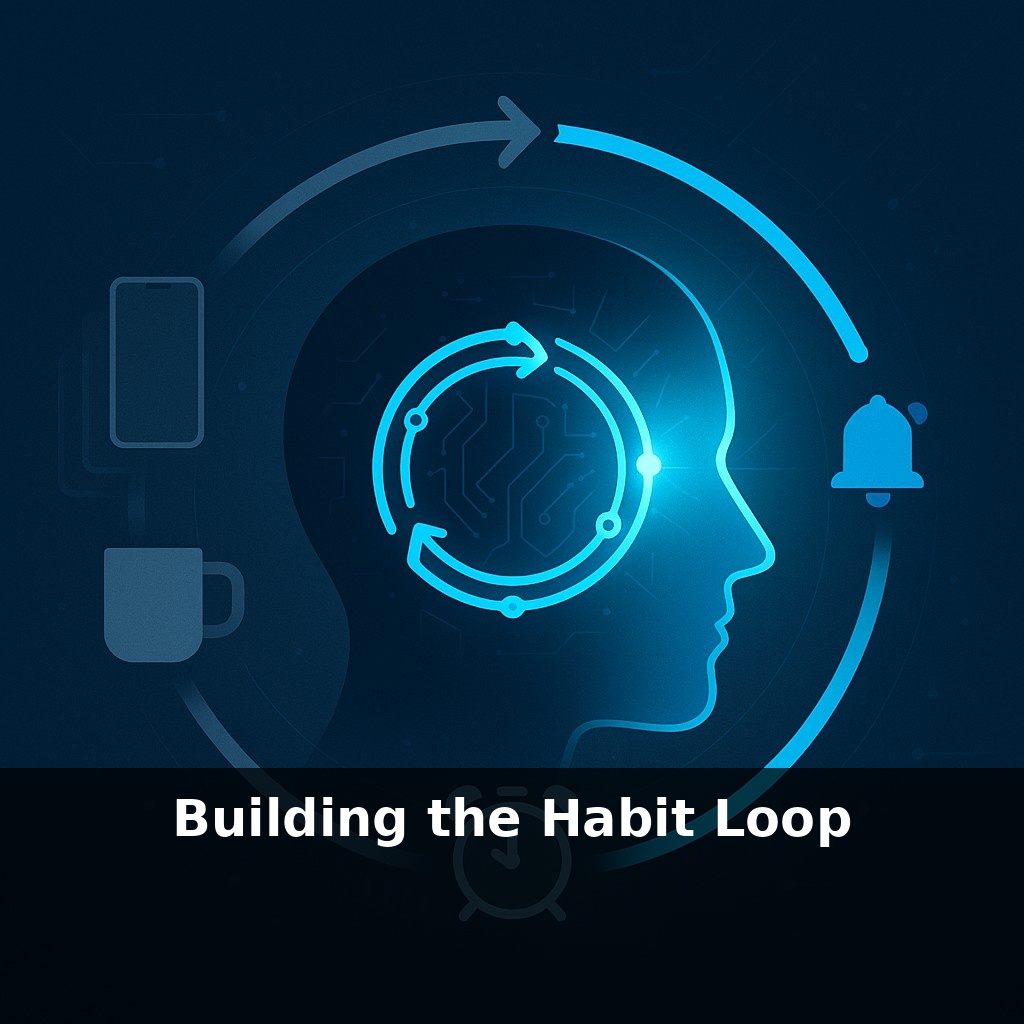
Right now, as you’re listening, almost half of what you did today ran on autopilot, without a real decision. You checked your phone, opened the same apps, followed the same tiny scripts. The twist is, those “mindless” loops can be redesigned—on purpose.
Sixty‑six days. That’s the average time it takes for a new behavior to feel automatic—not exciting, not inspiring, just “what you do now.” But that number hides a crucial detail: short, simple habits can click in under three weeks, while complex ones can take more than 200 days. The difference usually isn’t willpower; it’s how well you’ve engineered the habit loop: cue, routine, reward.
You’ve already learned how to spot cues, shape routines, and choose rewards. Now we’re going to snap those pieces together so the behavior runs with almost no negotiation. Neuroscience puts this pattern in the basal ganglia, but in practice, you control it on your calendar and in your environment.
In this episode, you’ll build **one** tight loop: make the cue obvious, the routine nearly effortless, and the reward instantly satisfying. Then you’ll stress‑test it in real life.
Here’s what the research adds now: how “tight” your loop is often matters more than how “motivated” you feel. In one study, people who linked a specific cue to a tiny behavior and immediate payoff repeated it about 30% more often than those relying on vague goals and delayed rewards. Think in numbers: choose a behavior that takes under 2 minutes, attach it to a cue that already happens at least once a day (like making coffee), and lock in a reward you feel within 10 seconds. You’re not chasing inspiration; you’re building a loop that almost can’t help but run.
Most people stop at “I want to…”, then wonder why nothing sticks. To actually get a loop running, you need a **blueprint** precise enough that your brain doesn’t have to negotiate each time.
Start with **one** behavior. Not a morning routine. Not “get fit.” One action.
1. **Pin the cue to a timestamp or event**
Vague: “Sometime in the morning.”
Precise: “At 7:10 a.m., when my coffee machine finishes, I…”
You’re looking for something that already happens **7 days a week** with >90% reliability. Examples with concrete timing:
- 6:30 a.m. alarm turns off - 12:00 p.m. calendar reminder “Lunch” appears - 9:00 p.m. dishwasher beeps
Write it like code: `IF [this specific thing happens], THEN I will [do action].`
2. **Shrink the routine until it’s almost silly**
You want a version that survives your worst day. Use hard numbers:
- 1 push‑up, not “a quick workout” - 30 seconds of journaling, not “write a page” - Open budgeting app and check **today’s** spending only, not “do my finances”
Check it against three tests:
- Can you do it in **≤120 seconds**? - Would you still do it if you slept 4 hours? - On a scale from 0–10, is your confidence at **9 or 10** that you’ll actually do it daily?
If any answer is no, cut it in half.
3. **Attach a reward you feel in under 10 seconds**
Skip vague satisfaction. Tie the action to something concrete and immediate:
- After 1 push‑up, **mark one X** on a wall calendar - After 30 seconds of journaling, **play 20 seconds of your favorite song** - After checking today’s spending, **send a 3‑word “Done ✅” text to an accountability buddy** (social micro‑reward)
Quantify it: if your action happens once per day, your reward should also occur **once per day, within 10 seconds** of the behavior, at least for the first **30 repetitions**.
4. **Program “failure handling” in advance**
Decide, with numbers, what counts as staying alive:
- You’re allowed **1 miss**, never **2 days in a row** - If you forget, do a “make‑up rep” within **4 waking hours** of when you remember (even if it’s just the 10‑second version)
5. **Lock it into your environment**
Change something physical within the next **5 minutes**:
- Place the yoga mat **within 1 meter** of your bed - Put the journal **on top of your phone** at night - Tape your 2‑line implementation intention to the coffee machine
Your goal this week isn’t progress; it’s installation: get this one loop to run **at least 5 out of 7 days** with zero debating.
A useful way to pressure‑test this is to look at how real teams do it. When Slack’s early engineers wanted faster bug fixes, they didn’t announce “Let’s be more responsive.” They created a precise loop: every new bug tagged “P1” in Jira triggered an automatic Slack ping to a #bug‑fix channel during office hours. The routine was a 60‑second triage message (“own it, ask a clarifying question, or downgrade with reason”). The reward was public recognition: a rotating “fix of the day” shout‑out pinned in the channel, plus a running counter of consecutive days without an unassigned P1. Within 30 days, their average first response time dropped from ~90 minutes to ~18, without adding headcount or mandates. Notice the structure: 1 clear trigger source, 1 micro‑action that fit inside existing workflows, and 1 visible scoreboard everyone could see. Steal that pattern for your own habit: trigger source, 60‑second action, visible daily score.
As your loop stabilizes, think in terms of “ports” where tech can plug in. Three high‑leverage upgrades: (1) Precision timing: smart lights or phone Focus modes that switch at the exact minute your cue should fire, so drift is impossible. (2) Real‑time feedback: a rolling 30‑day streak counter visible on your home screen. (3) Escalating stakes: commit $20 to a friend and lose $2 every day your loop fails. Use only one upgrade per month to avoid overload.
Your challenge this week: run a 7‑day “loop audit.” Each night, score your new habit from 0–3: 0 = didn’t happen, 1 = forced, 2 = smooth, 3 = effortless. If your average is <14, change **one** element: sharpen the trigger time by 5 minutes, cut the action by 50 %, or upgrade the payoff (e.g., $1 into a fun fund) and repeat the test.