Cultural Diplomacy: Bridging or Dividing Nations?
📝 Transcript
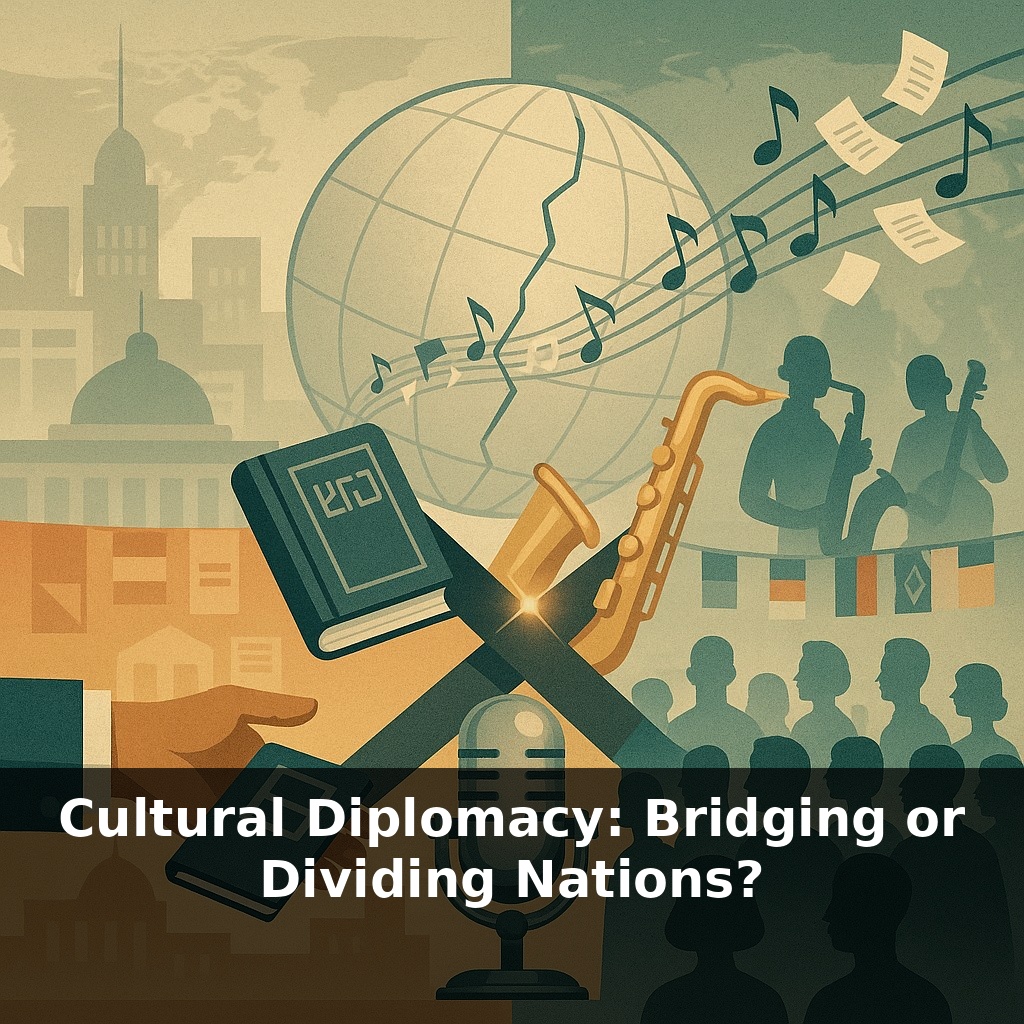
A secret print run of “Doctor Zhivago” slips into Soviet readers’ hands at a world’s fair. A jazz band on a State Department tour takes the stage in a newly independent nation. In each case, one question hangs in the air: is this art, or carefully crafted foreign policy?
“During the Cold War we exported Louis Armstrong, not just Lucky Strikes,” one diplomat joked—only half kidding. Governments started tracking applause and exhibition attendance the way they counted tanks. A packed concert hall or a long line outside a pavilion became a kind of political poll: whose story about the world felt more convincing?
Yet the same concert that melted suspicion in one city could harden it in another. Some audiences heard freedom in a saxophone solo; others heard cultural arrogance, like someone rearranging your living room without asking. Cultural diplomacy didn’t float above politics—it sank roots into local histories, colonial wounds, and economic grievances.
In this episode, we’ll follow those roots: moments when culture opened doors that seemed sealed shut—and moments when it quietly reinforced the very walls it claimed to dissolve.
By the late 1950s, planners on both sides were thinking less like censors and more like producers. They mapped tours and exhibitions the way campaign strategists map swing states, asking: which audiences are undecided, and what stories might tip them? A bookstall at a world’s fair, a film festival slot in a newly independent capital, a university exchange—each became a lever. Yet the same program could land differently: a jazz workshop might feel like genuine curiosity in Accra, but like political theater in Prague. Context, not content alone, decided whether a gesture built bridges or sharpened lines.
In Moscow’s Gorky Park in 1959, Soviet visitors lined up for hours to step into an American model kitchen and poke at a shiny new dishwasher. For U.S. planners, that dishwasher wasn’t just an appliance; it was a prop in a live debate about whose future looked more comfortable. Across the pavilion, abstract paintings by Pollock and de Kooning did quieter work, hinting that a system confident enough to tolerate wild, unruly art must be more open than its rival.
But the same displays could flip meaning once they left the exhibition hall. Soviet critics mocked the “kitchen of capitalism” as a bribe—proof, they argued, that Washington thought citizens could be bought with gadgets instead of justice. A tool meant to humanize Americans risked confirming suspicions that the U.S. cared more about consumerism than equality.
This double edge ran through Cold War book programs too. When Pasternak’s “Doctor Zhivago” circulated in Russian, some readers felt seen in its moral ambiguity, sensing a shared human struggle beyond slogans. Others experienced that same novel as an intrusion: why should a foreign agency decide which banned stories they were ready to read?
Newly independent states added another layer. In Bandung, Accra, New Delhi, cultural delegations arrived in waves, each bearing films, orchestras, and touring troupes. Leaders there quickly realized they were not just audiences but producers. India sponsored dance tours that blended classical forms with modern themes; Yugoslavia hosted film festivals that welcomed both East and West, signaling a nonaligned identity without saying so on any banner.
Smaller nations learned to treat their own culture like a negotiable asset, not a passive showcase. Estonia’s later bet on digital festivals and e-governance, or Rwanda’s push for pan-African film, followed this earlier pattern: use distinctiveness as leverage. Like a traveler who chooses carefully which souvenirs to gift and which to keep, states curated how much of themselves to put on display—and to whom.
The result was a strange symmetry. Superpowers tried to look universal; smaller countries tried to look unmistakably themselves. Between those two ambitions, “bridge” and “border” often grew from the same performance, book, or film, depending on who claimed the right to interpret it.
A useful way to see this double edge is in how specific projects aged over time. The State Department’s jazz tours, for instance, didn’t just leave memories of concerts; they left bootleg tapes that local musicians bent into new styles, from West African highlife horn lines to Eastern European fusion experiments. The original “message” blurred as the music was recycled for local aims. Something similar happened when Japanese animation spread in the 1980s and 1990s: it began as a curiosity, then quietly shaped visual vocabularies from Brazil to France, giving Japanese studios economic leverage but also inspiring competitors. Cultural flows behave a bit like river deltas in nature: a single strong current splits into many channels, some nourishing fields the original planners never saw, others eroding banks they meant to protect. Confucius Institutes on African campuses, Korean drama festivals in the Middle East, Turkish soap operas in the Balkans—all show how initial sponsorship can seed tastes that later escape any sponsor’s script.
A single livestreamed concert or viral drama now jumps borders faster than any envoy. As platforms sort viewers into algorithmic “nations,” states test new levers: esports teams backed like Olympic squads, museum shows rebuilt in VR, influencers briefed like junior attachés. These tactics can cross-pollinate tastes or harden filters—more like custom playlists than shared anthems. Whether they bridge or divide may hinge on who controls the “skip” button: governments, tech firms, or the audiences remixing it all.
Today, stadium tours, fan translations, and meme subcultures often outrun any ministry’s script, like side streets branching from an official highway. A K‑pop fandom raising disaster funds or gamers boycotting a sponsor can redirect narratives overnight. The open question isn’t whether culture has power—but who gets to plug the amplifier in, and who controls the volume.
Before next week, ask yourself: What’s one concrete way I can “host” my own mini cultural exchange—like inviting someone from a different background to share a film, song, or story from their culture—and what am I actually curious to learn from them (not just “be polite” about)? When I consume culture from another country (music, food, fashion, social media), am I treating it like fast entertainment or as a doorway into real people’s histories, struggles, and values—and what’s one thing I could do differently next time (e.g., looking up the artist’s context or the tradition behind it)? In my own online posts and conversations, are my jokes, memes, or opinions about other cultures helping humanize them—or quietly reinforcing the kind of stereotypes the episode warned can turn “soft power” into soft prejudice?
From this course
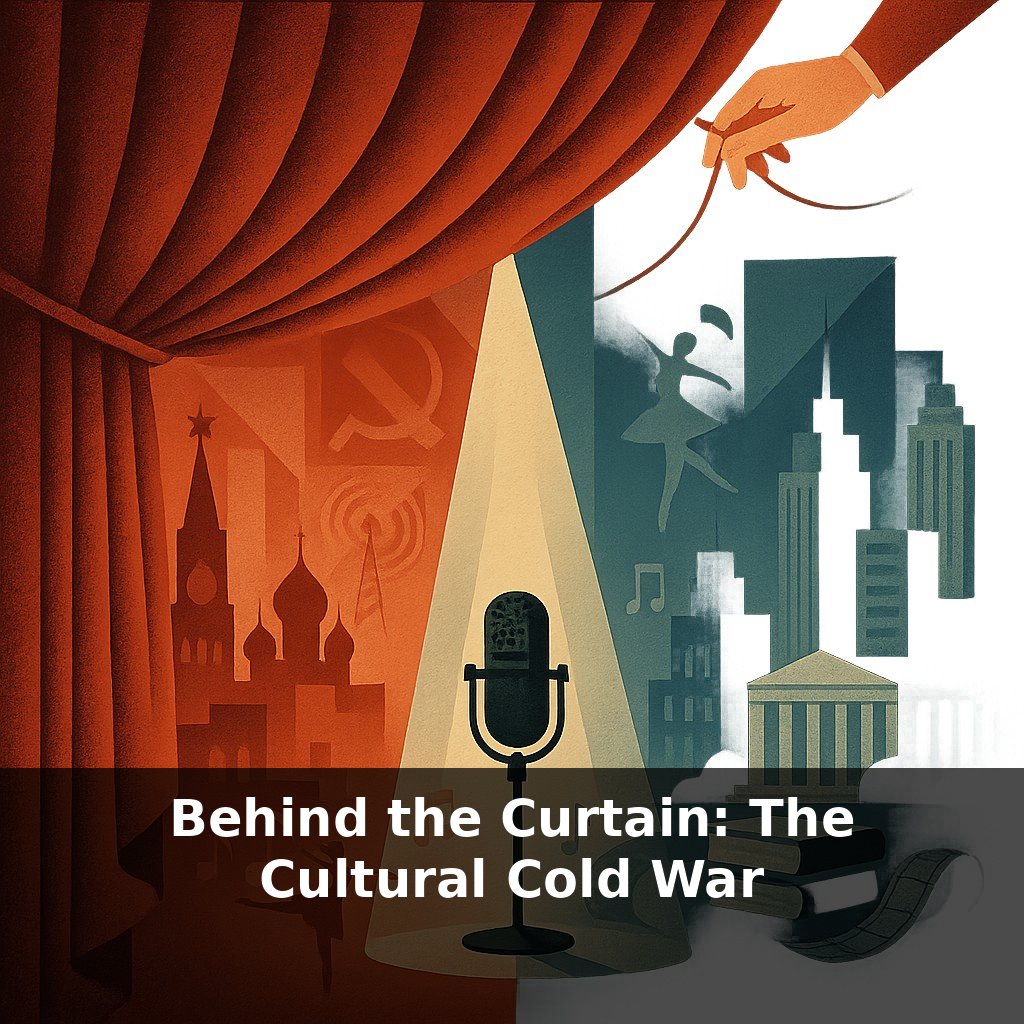
Behind the Curtain: The Cultural Cold War
6 episodesUnlock all episodes
Full access to 6 episodes and everything on OwlUp.
Subscribe — $1.99/monthLess than a coffee ☕ · Cancel anytime