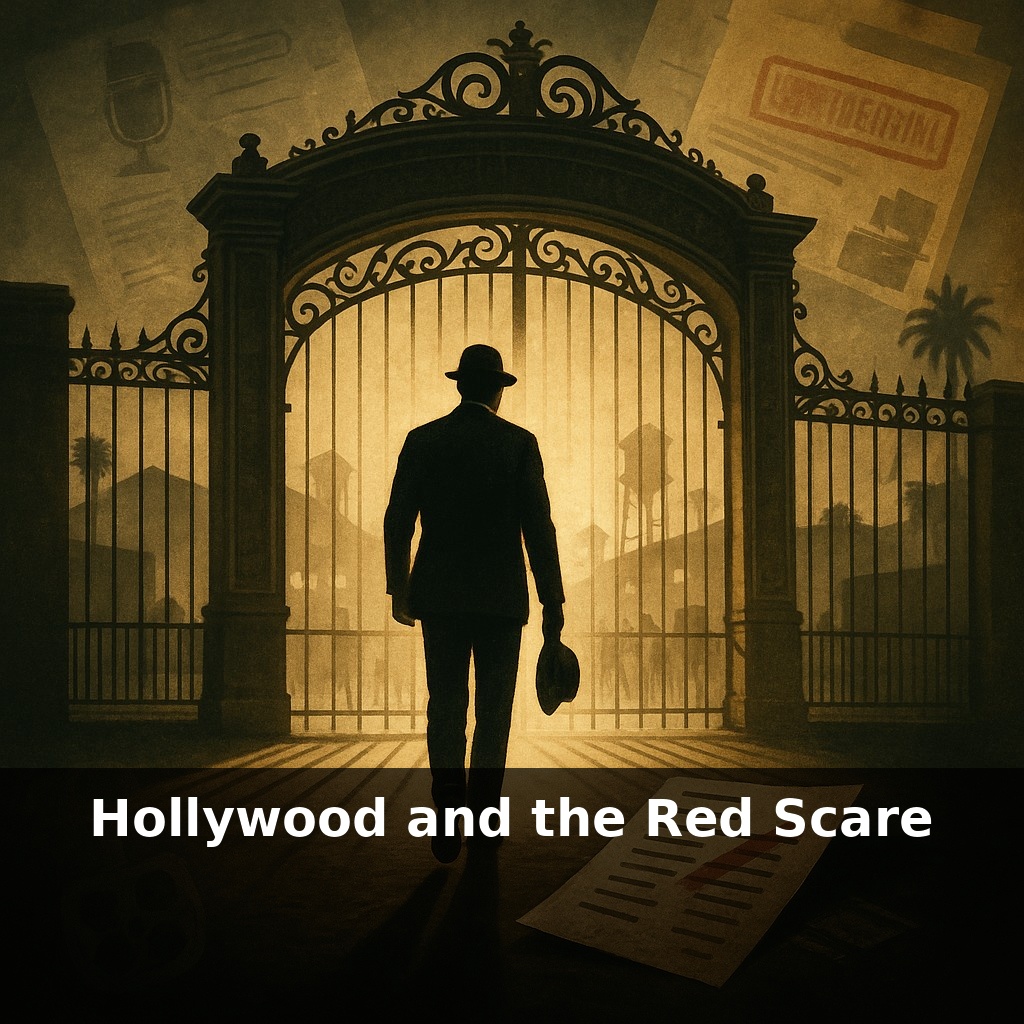
An actor walks into a studio office and walks out with no job, no explanation, and no future in Hollywood—without ever being charged with a crime. During the Red Scare, the real drama wasn’t on the screen. It was in secret lists, closed-door hearings, and silent careers.
Three hundred to five hundred Hollywood professionals disappeared from the credits in a little over a decade—erased not by audiences or box office failure, but by suspicion. On paper, studios were still chasing hits and selling escapism. In practice, they were learning to navigate Washington like a second box office, where ideological approval mattered almost as much as ticket sales. Scripts were quietly routed past FBI desks, notes came back like studio coverage, and projects lived or died on whether they felt “safe” for the times.
This wasn’t just about who could work; it was about what stories could be told. Anti‑communist films, once a niche, started to look like reliable investments—politically and financially. A nomination for a film like _I Was a Communist for the F.B.I._ signaled that the industry’s safest bet might be to align with the mood in Washington, even at the cost of narrowing its own imagination.
Studios didn’t act alone. Trade groups, columnists, and even church organizations helped police the boundaries of “acceptable” storytelling, issuing endorsements or denunciations that could sway bookings across the country. Labor unions split over whether to resist or cooperate, turning sets and writers’ rooms into miniature political conventions. Meanwhile, foreign audiences saw a different cut of America: exports were curated to showcase freedom while sidestepping the awkward fact that some of the freest voices at home had gone quiet. In this climate, neutrality itself began to look suspicious, on‑screen and off.
If you follow just one person through this period, the system comes into focus. Take a mid‑level screenwriter in 1947: not famous enough to be defended in the press, not obscure enough to slide under the radar. They might never be called to testify, never see an FBI file with their name on it—yet one syndicated columnist’s hint, or a whisper within a guild meeting, could mean their agent stopped returning calls. No studio memo announced the decision; the phone simply stayed quiet.
At the top of the industry, studio heads tried to present this as “self‑regulation.” The 1947 Waldorf Statement—drafted after a meeting of major studio executives at New York’s Waldorf‑Astoria Hotel—publicly pledged not to employ certain “uncooperative” figures. That document functioned as a signal to banks, advertisers, and theater chains: the big players were on board. Smaller producers quickly understood the message. If they hired someone tainted by suspicion, they weren’t just taking a moral stand; they were risking financing, distribution, and reviews.
Professional associations became pressure points. The Screen Writers Guild fractured, with some members arguing that cooperation would protect the union and others insisting that any concession would legitimize political litmus tests. Similar rifts ran through the Screen Actors Guild and the Directors Guild. Elections for union leadership suddenly carried national implications, as candidates were cast as “responsible” partners in the broader anti‑subversive effort or as dangerous radicals.
Meanwhile, content guidelines hardened in less visible ways. FBI notes on a script could translate into a requested character change, a softened critique of American institutions, or an added patriotic speech. Sometimes the changes were minimal; other times they shifted the entire moral center of a story. An ordinary melodrama about corruption might be reworked so that the real villain was an outside agitator rather than a flawed local boss, redirecting blame away from systemic problems and toward ideologies deemed foreign.
Internationally, this selective storytelling created a curated portrait of American life. Films that foregrounded consumer abundance, family stability, or individual redemption were aggressively exported; those raising awkward questions about racism or inequality were less favored for overseas promotion. The result was a feedback loop: Hollywood learned which kinds of narratives drew praise from diplomats and cultural officers, and those narrative templates became easier to sell at home as well.
Not everyone accepted the constraints. Some blacklisted artists wrote under pseudonyms or “fronts,” selling scripts through friends who put their own names on the work. Others shifted to theater, European productions, or television under assumed identities. Their presence was like money moving through a hidden ledger: the creative labor was real, but the official record erased its origins, leaving audiences unaware of who was actually shaping the stories on screen.
A single credit line could act like a travel visa: granted, it opened routes to bigger budgets and international releases; withheld, it stranded a project in development limbo. Consider how a war film proposal might land on three different desks. A producer eager for prestige thinks in awards and foreign sales. A studio lawyer scans for libel or contract issues. A government liaison, formal or informal, scans for ideological “weather.” If the script’s moral fog seems too thick—no clear hero, institutions portrayed as compromised—it might be “suggested” that the storm clouds part before cameras roll.
Some filmmakers learned to write two versions from the start: one bolder draft for themselves, one “clean” draft more likely to clear all the desks. The distance between those drafts is where much of the era’s lost cinema lives—unshot endings, abandoned subplots, characters who never made it out of the notebook. Occasionally, a foreign coproduction or independent outfit would take a risk, but even then, U.S. distribution could vanish overnight if political winds suddenly shifted.
Today, studios run risk assessments on global markets rather than congressional committees, but the pressure feels similar: will this story travel, or trigger a backlash? Algorithms now perform a quiet triage, nudging some themes forward and burying others. As streaming platforms cut deals with states that wield censorship laws like trade tariffs, Hollywood’s old compromises gain new life. The next “blacklist” may not be a memo—just a pattern of projects that never move past the pitch.
Today’s echo is quieter: casting shifts after a viral post, scenes trimmed for overseas censors, plots tweaked to dodge culture‑war crossfire. Creative “red lines” now move like tide marks on a beach—visible only after the water pulls back. Your challenge this week: watch one film and ask, “What tension here feels carefully sidestepped—and why?”