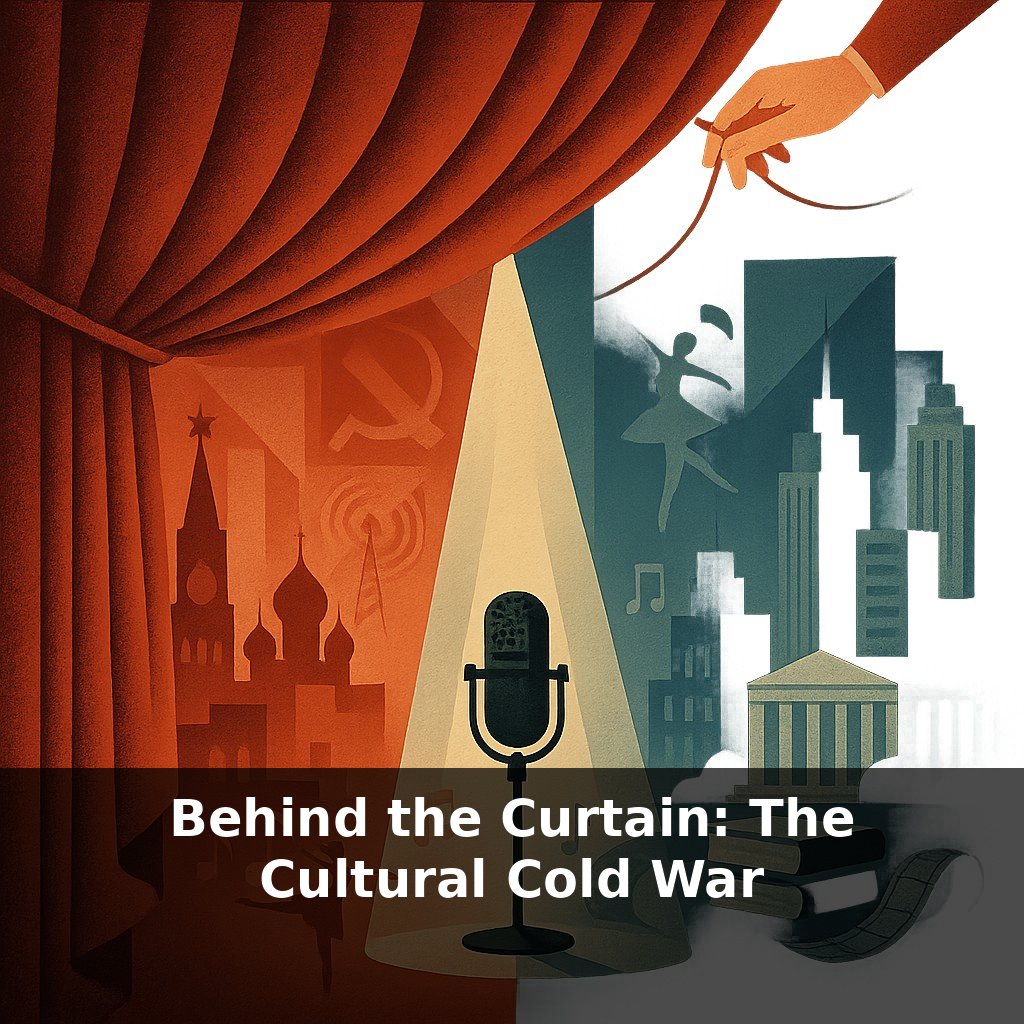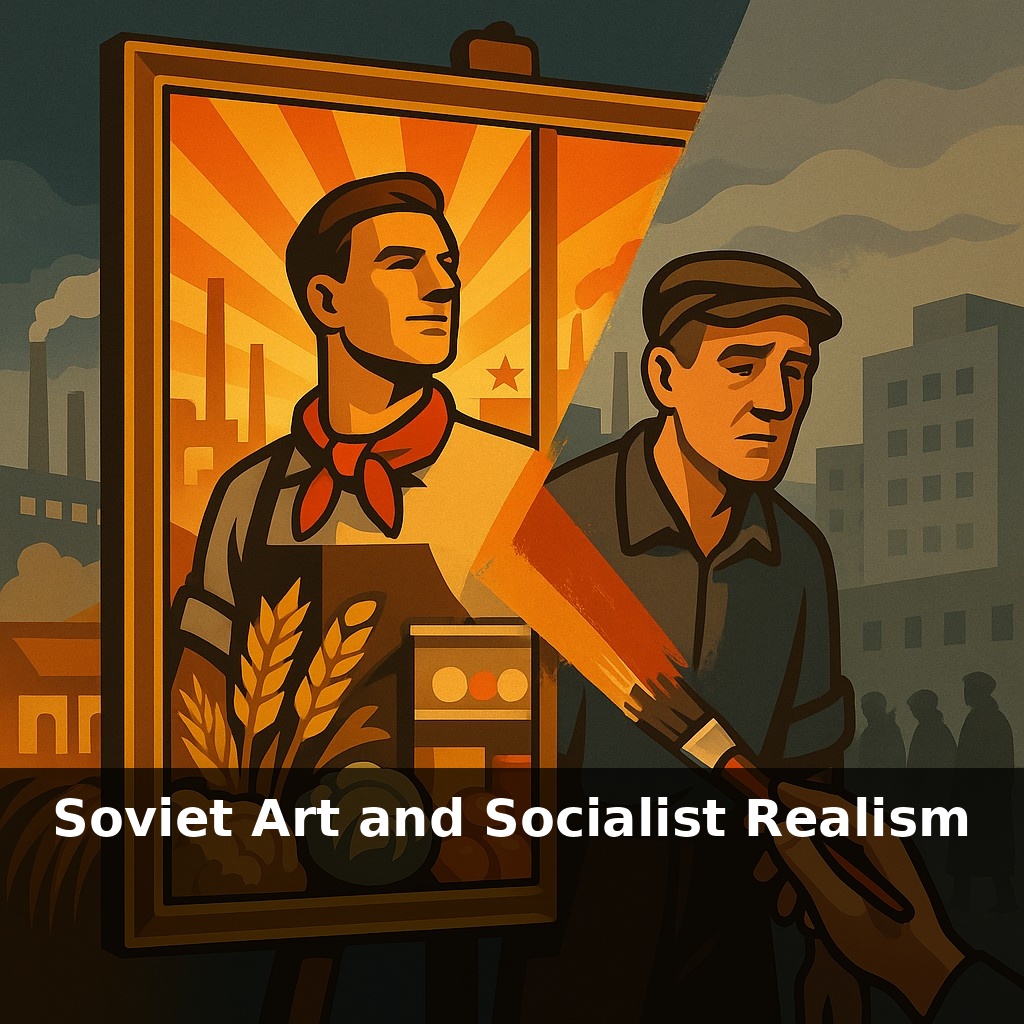
A single style of painting once ruled the world’s largest country. In Soviet galleries, every canvas showed cheerful workers, glowing factories, smiling peasants. But step outside the exhibition hall, and daily life looked very different. How did art become a script everyone had to follow?
By the mid‑20th century, Soviet citizens could walk from a crowded bread line straight into a museum where canvases overflowed with abundance. That gap wasn’t accidental—it was policy. From 1932 onward, the Party didn’t just endorse certain images; it reorganized the entire art world to guarantee that approved visions were the only ones most people ever saw. Membership in artists’ unions, access to studios, paint, exhibitions, even apartments—these became leverage points. Conform, and doors opened; resist, and your career quietly evaporated. This system didn’t just shape what hung on walls, it shaped who got to be an artist at all. Abroad, those same carefully selected works were shipped to world’s fairs and cultural exchanges, where they performed a different job: convincing foreign audiences that the Soviet “tomorrow” had already arrived.
Socialist Realism didn’t appear overnight; it was engineered. In 1932, a decree dissolved every independent artistic group, sweeping painters, sculptors and designers into a single, centralized union. Overnight, informal circles and experimental studios lost their legal status. Within a few years, the system stretched from art schools to tiny provincial “houses of culture,” standardizing what students practiced and what villagers saw on their walls. Think of it like nationalizing not just the factories, but the daydreams: the state managed the raw materials of imagination as tightly as it managed coal or steel.
Walk into a Soviet painting studio in the 1950s and you’d likely find the same scene from Leningrad to Vladivostok: a model in overalls, a red kerchief, maybe a tractor or smokestack in the background. The similarity wasn’t coincidence; it was curriculum. Art schools drilled students in set “types”: the fearless miner, the visionary engineer, the tireless kolkhoz worker. Exams tested not just drawing skill, but ideological reliability. You weren’t just learning anatomy—you were learning which bodies were worth glorifying.
Once trained, artists entered a tightly managed career ladder. Instead of a free market, there were “creative plans” issued from above. Ministries and factories commissioned canvases celebrating five‑year plans, new dams, or space triumphs. Payment followed the hierarchy of themes: a portrait of Lenin could earn more—and travel more widely—than a still life. By 1985, some 23,000 members of the Union of Soviet Artists navigated this system, balancing personal ambitions with official expectations.
This is where the paradox sharpened. Many painters kept two lives: the public canvases destined for exhibitions, and the private works hidden in studios or shown only to trusted friends. Abstract experiments might be slipped into children’s book illustrations or stage designs, where scrutiny was softer. Others negotiated at the margins—pushing color, composition, or mood as far as they dared while keeping the subject matter technically “correct.”
Internationally, the same logic scaled up. For the 1937 Paris World’s Fair, Vera Mukhina’s 24.5‑meter “Worker and Kolkhoz Woman” was more than sculpture; it was a three‑dimensional manifesto, placed literally atop the Soviet pavilion, towering over visitors. Decades later, at the 1959 American National Exhibition in Moscow, vast Soviet murals of contented workers and modern housing estates formed the visual backdrop to the Kitchen Debate. While U.S. appliances promised comfort through consumption, Soviet paintings promised dignity through collective labor.
One useful way to see this system is like a state‑run investment fund: the regime “invested” resources—studios, stipends, exhibition slots—into images expected to yield political returns at home and abroad, and quietly starved any “assets” that looked ideologically risky.
Some of the strangest cracks in the façade appeared in the details. A factory scene might meet every requirement, but look closely and you’d notice a worker’s tired posture, or a sky just a shade too heavy. Viewers learned to “read” these paintings the way investors scan footnotes in a glossy annual report, hunting for hints the headline story leaves out. In provincial towns, painters sometimes volunteered to decorate local clubs or holiday parades, sneaking in bolder colors or quirky faces under the cover of festivity—low‑risk spaces where officials were less vigilant.
Meanwhile, unofficial art circulated like a parallel currency. Small “apartment exhibitions” turned living rooms into pop‑up galleries; a dozen friends might crowd around a nonconformist canvas, passing quiet judgments the way black‑market traders assessed the value of foreign jeans. A few works slipped abroad through visiting diplomats or cultural delegations, acquiring new meanings once they left the system that tried to contain them.
As former Soviet republics remove or re‑label monuments, they’re not just tidying plazas; they’re editing a visual archive. The same logic now plays out online. State‑backed media, influencer “patriots,” even recommendation algorithms can flood feeds with flawless skylines and smiling citizens, turning our screens into curated showcases. With AI image tools, the stakes rise: whoever sets the prompts can tilt how entire generations picture “normal” life, much like planners once decided which murals met the wall.
Today, when a meme, music video or AI‑generated skyline goes viral, it can quietly narrow our sense of what a “good life” looks like—no ministry decree required. Your challenge this week: scroll once a day with the sound off and ask, “Whose future is being sold here—and who’s missing from the frame?” Then note the patterns you start to see.