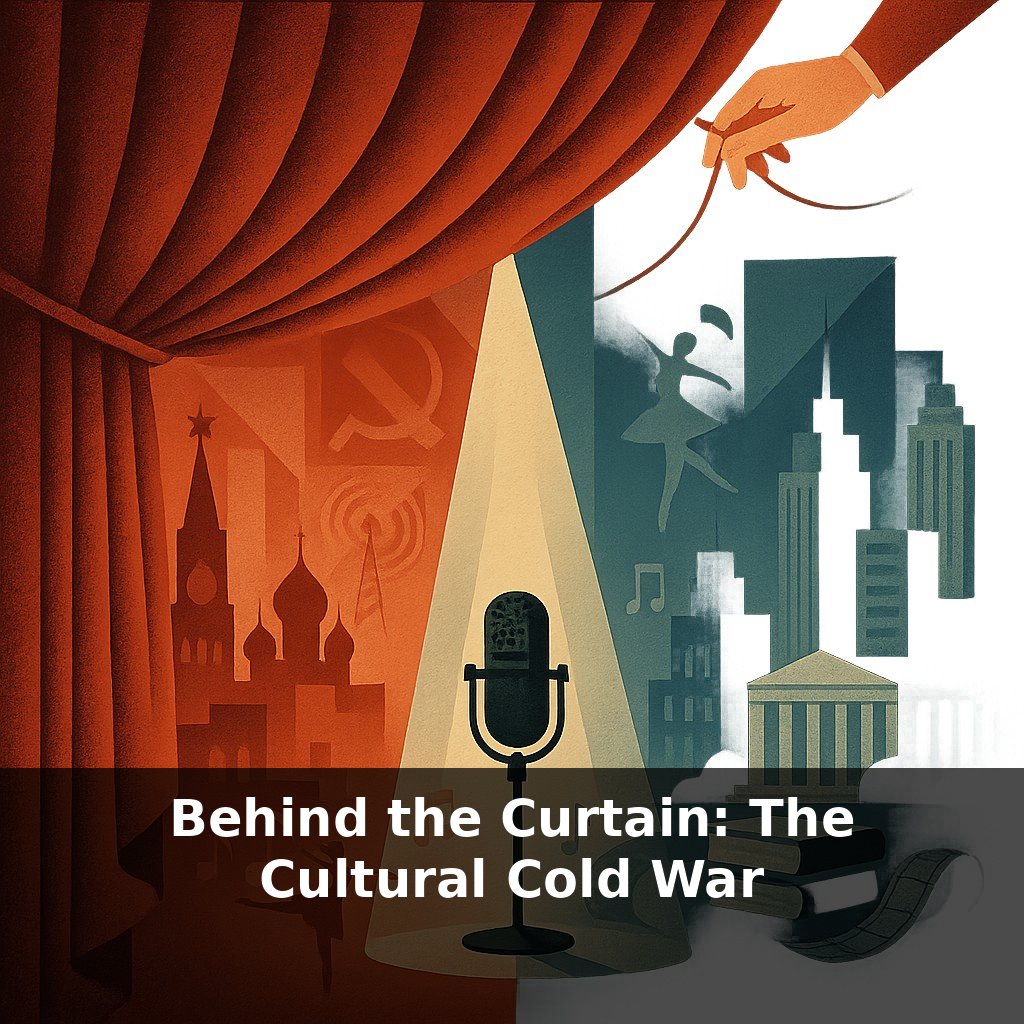
A spy agency once launched a jazz tour. A space program accidentally invented today’s Instagram-ready cosmos. A radio station beamed millions of words a week into living rooms it would never see. The Cold War is over, yet its cultural playbook is still quietly running in the background.
Streaming wars, mega-franchises, glossy astronaut ads—none of these feel like relics of the 20th century, yet many trace back to tactics first tested between Washington and Moscow. When the U.S. State Department quietly bankrolled jazz tours, it wasn’t just exporting music; it was prototyping a model where culture sells a national brand more effectively than any speech. When Radio Free Europe blasted 1.5 million words a week across borders, it rehearsed the logic of today’s algorithmic feeds: constant, persuasive presence beats any single blockbuster event. Even NASA’s decision to release its photos into the public domain seeded the visual language that now colors everything from car commercials to superhero trailers. We’re not just watching the afterglow of that era; we’re living inside business models and aesthetic habits it helped standardize.
Governments and corporations paid close attention to which songs, images, and TV formats crossed borders most smoothly—and quietly kept those templates. Satellite broadcasts that once slipped news past censors evolved into today’s expectation that events are seen live, everywhere. International film festivals, founded as showcase battlegrounds, trained studios to think globally from day one. Even tourism campaigns borrowed the same soft-focus tricks once used in propaganda reels. Like a financial portfolio that’s been rebalanced for decades, our media mix still carries the weight of those early bets on what would win trust, envy, or allegiance.
Walk into a multiplex or open a streaming app and you’re seeing the long tail of choices made by mid‑century bureaucrats and party officials. The habit of pouring money into “event” culture—films, festivals, global broadcasts—trained both states and studios to think in terms of splashy, repeatable spectacles. Cold War rivals learned that if you could make your way of life feel normal, exciting, and endlessly serialized, you didn’t have to argue for it directly. That logic now underpins everything from cinematic universes to year‑round sports coverage.
One legacy sits in the way institutions fund and justify art. During the 1950s and 60s, grants, prizes, and exchange programs were quietly steered toward works that signaled openness, modernity, or discipline, depending on who was paying. Over time, arts councils, foundations, and film boards absorbed those criteria as common sense: “international appeal,” “formal innovation,” “social relevance.” When you see grant guidelines that reward certain topics—human rights, technological optimism, urban modernity—you’re glimpsing an inheritance from those years when culture had to double as a policy document.
Psychologically, the era normalized the idea that information is always contested terrain. Generations raised with jamming, counter‑broadcasts, and rumor campaigns grew into journalists, marketers, and spin doctors who treat audiences less as citizens and more as targets to be segmented and nudged. The tone of today’s brand activism, geopolitical messaging, and even influencer content often echoes that earlier mix of sincerity and calculation: emotional enough to feel authentic, polished enough to stay on script.
You can also see Cold War fingerprints in who gets to speak globally. Networks built to carry summit speeches and propaganda concerts later carried global pop, reality formats, and 24‑hour news. The infrastructure didn’t disappear; it changed clients. Non‑aligned countries that once leveraged film and music to escape superpower shadows now operate their own channels and festivals, competing in the same soft‑power marketplace they helped invent.
The paradox is that strategies designed to make one system look inevitable ended up making the struggle over narratives feel permanent. Even in entertainment, we half‑expect a hidden agenda behind every lavish production or international hit—because for decades, there usually was one.
Think about Eurovision. On the surface it’s campy pop, but its roots in postwar European cooperation trained broadcasters to turn music into a televised map of alliances and aspirations. Today, when K‑pop groups tour Latin America or Afrobeats stars headline European festivals, they’re not just chasing charts; they’re rehearsing a script where tours double as roaming billboards for a broader way of life.
State‑backed streaming platforms like China’s CGTN documentaries or Qatar’s investments in sports rights feel less like “TV” and more like embassies with autoplay. Even fashion weeks in Moscow, Seoul, or Dubai borrow tactics from mid‑century expositions: choreographed modernity, photogenic skylines, carefully invited foreign press.
One travel‑style analogy helps: your passport stamps might change, but the main air routes stay similar for decades. In the same way, the specific shows, bands, or channels may rotate, yet they keep flying along routes first plotted when culture became a diplomatic flight path.
Governments and platforms are quietly testing how far they can push this heritage into VR, AR, and personalized story worlds. Think less about flags on moon rocks, more about flags inside game maps, filters, or “default” avatars. As crises stack up—climate, migration, AI—who funds which stories may steer which futures feel plausible. The risk isn’t only censorship; it’s crowding out slower, weirder voices that don’t fit any soft‑power script yet might hold better answers.
You don’t have to decode all this in one go. Start small: when a show, game, or ad feels “global,” ask who benefits if you believe that story. Follow the credits like a trail of breadcrumbs—funders, sponsors, partner networks. Over time, you’ll see patterns, like faint watermarks, that reveal which futures are being quietly rehearsed for you.
Before next week, ask yourself: 1) Where do I still react to news about Russia, China, or “the West” with Cold War-style thinking—seeing sides, enemies, or inevitable conflict—and what’s one concrete media habit (a specific show, newsletter, or account) I could swap out to get a more nuanced view? 2) Looking at my workplace, school, or community, can I spot one “Cold War leftover” (like secrecy, zero-sum competition, or fear of dissent) and experiment for a week with a different approach—perhaps sharing information more openly or inviting a viewpoint I’d usually avoid? 3) If I imagined explaining today’s geopolitical tensions to a teenager who’s never heard of the Iron Curtain, what one story or example from my own life would I use to show how Cold War culture still shapes how we talk about freedom, security, or “us vs. them”—and what might I realize about my own assumptions as I do that?