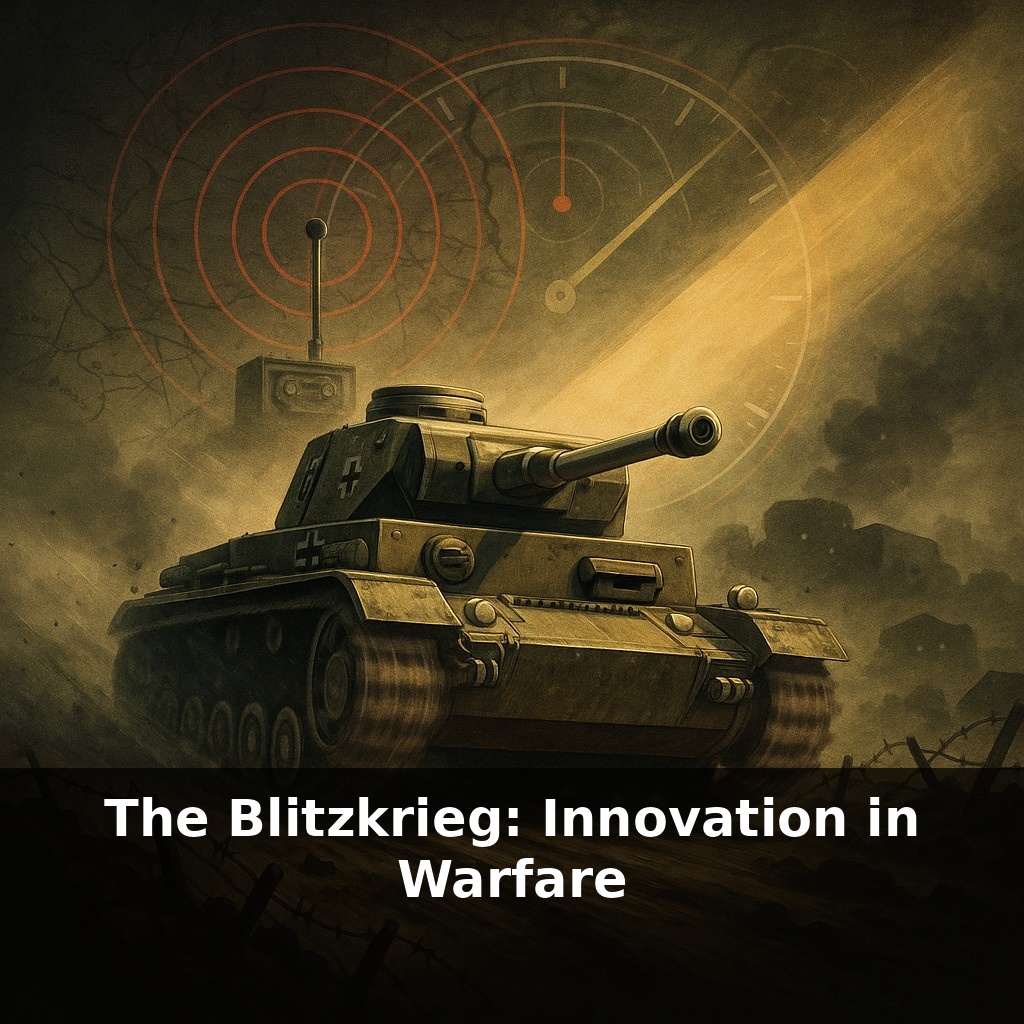
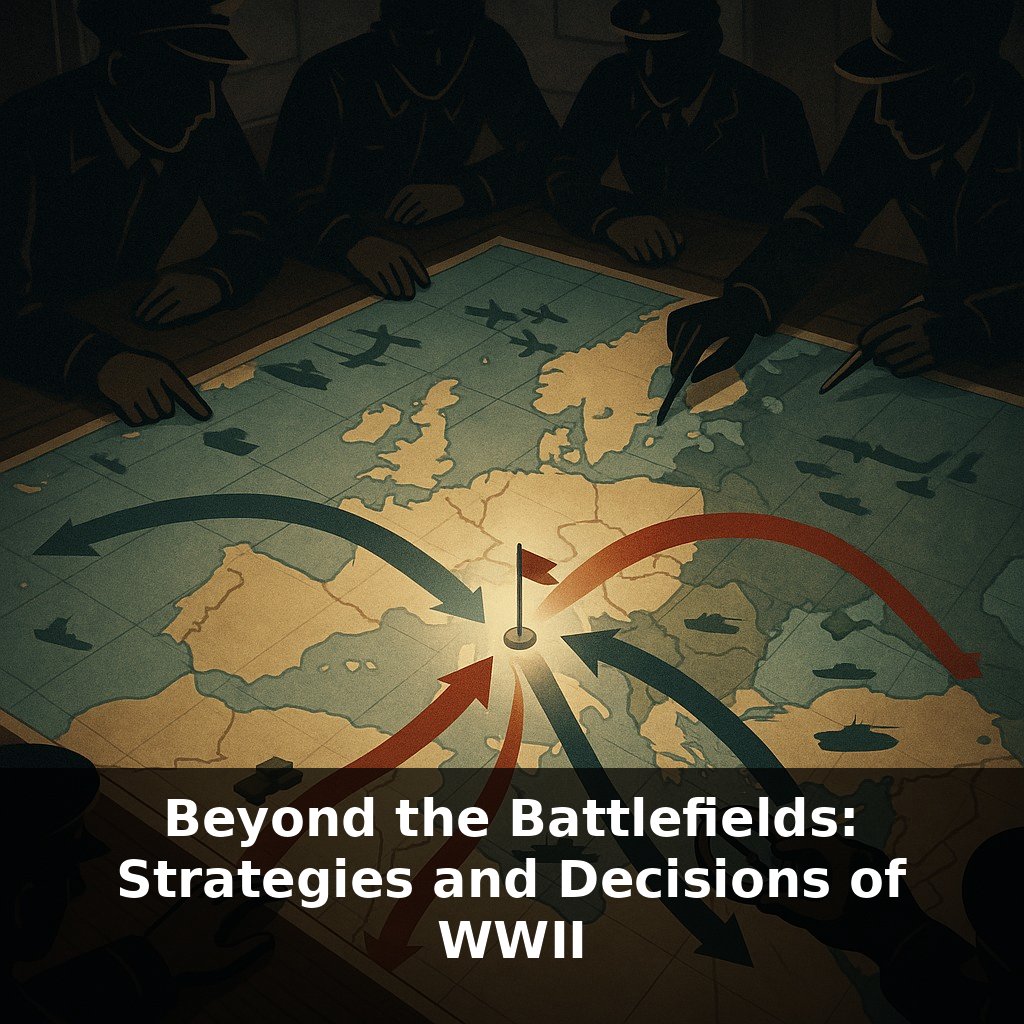
Artillery thunders, tanks race forward—and the real weapon isn’t steel at all, but timing. In just six weeks, an army built for trench warfare collapsed. How did commanders turn radios, speed, and confusion itself into tools sharper than any battlefield gun?
The real shock of Blitzkrieg wasn’t just how fast armies moved—it was how slowly their enemies reacted. While German columns pushed ahead, Allied headquarters often clung to yesterday’s reports, like a driver steering by the rearview mirror. By the time orders were typed, signed, and relayed, the situation on the ground had already shifted.
This episode looks at Blitzkrieg not as a magic formula, but as a system that punished hesitation. German planners treated the front like a living river: always flowing, sometimes flooding, rarely still. Instead of trying to control every drop, they set the river’s direction, then let local currents find their own path around obstacles.
We’ll explore how this mindset—accepting uncertainty but accelerating decisions—turned gaps in enemy organization into wide open doors, and why those doors stayed open far longer than they should have.
On the ground, this “river” wasn’t just flowing forward; it was constantly splitting, rejoining, and probing for weak soil. Panzer commanders weren’t obsessed with a straight line to the capital—they hunted for seams between enemy units, places where responsibility blurred and no one was quite sure who was in charge. Once found, these seams were widened by artillery and dive-bombers, then flooded with fast-moving columns. It was less about brute force, more about slipping through cracks in attention before they hardened into a solid defensive wall.
At the sharp end, this meant German units were organized less like a wall and more like a series of spearpoints backed by a flexible handle. Panzer divisions weren’t sprinkled evenly across the front; they were stacked, one behind another, in narrow sectors. When the leading elements hit resistance, they didn’t automatically stop and wait for a perfect plan from above. Commanders were expected to look left, right, even behind the enemy, and redirect thrusts toward any opening that appeared.
Crucially, this structure was baked into how forces were built, not just how they behaved in contact. Each Panzer division carried its own mix of armor, motorized infantry, engineers, and anti-aircraft guns—self-contained groups able to operate for days without constant resupply from slow-moving rear echelons. Instead of rigid, single-purpose units, these were combined-arms packages designed to solve problems on the move.
Overhead, the Luftwaffe extended this flexible reach. Stukas and fighter-bombers weren’t simply tasked to “support the infantry”; they were assigned to support specific operational goals: paralyze a crossroads here, sever a rail line there, turn a retreating column into a traffic jam somewhere else. This meant air missions were chosen for their effect on the wider campaign, not just the nearest firefight.
All of this leaned on a subtle but important shift: planning emphasized sequences and triggers rather than fixed scripts. A corps order might say: “If resistance is light, push for the next river line by nightfall; if heavy, hold the enemy in place while the neighboring corps envelops.” Subordinate leaders weren’t waiting for permission to adapt; adaptation was the default expectation.
Think of the overall system like a storm front rolling across a landscape: local gusts and downpours varied from village to village, but the general direction of the weather was clear. Higher command set that direction, then measured success not by tidy map lines, but by the enemy’s growing inability to coordinate a coherent reply.
As opponents tried to shift reserves to plug one breakthrough, another would appear where their map and reality no longer matched. The more they centralized their response, the more they lagged behind events; the more they decentralized without preparation, the more their scattered pieces were picked off in isolation.
In May 1940, that “spearpoint and handle” structure came into focus at Sedan. While some French units braced for a slow, grinding assault, German engineers rushed pontoon bridges into place under artillery smoke, and Panzer regiments streamed across before higher command on either side had a full picture. Instead of waiting for every infantry battalion to catch up, leading elements drove west the moment a few crossings held, aiming not at the strongest forts but at the road nets feeding them.
One Panzer group slashed toward the Channel, another protected its flanks, and motorized infantry fanned out to block French counterattacks. Luftwaffe squadrons were redirected on short notice to hammer suspected assembly areas or choke points where reserves might gather, often shifting targets mid-day as reports came in.
The result was a widening wedge: local commanders stitched together fresh routes from half-formed opportunities, while rear echelons struggled simply to understand where the front line now was.
Future implications
If campaigns once shrank from years to weeks, the next step may be days or even hours. Algorithms could propose thrusts faster than humans can blink, while drone clouds scout, strike, and screen like shifting weather systems. Yet that same density of sensors and precision fire may punish any force that bunches up. The puzzle becomes: how do you gain the focus of a hammer blow without ever looking like a hammer on enemy screens at all?
In the end, “lightning war” was less about moving pieces faster and more about shortening the space between seeing, deciding, and acting. Modern forces wrestle with the same problem under denser data and longer ranges. The open question is whether future campaigns reward those who hoard information, or those who dare to let go of control just enough to stay ahead.
Start with this tiny habit: When you sit down at your desk each morning, spend 30 seconds asking yourself, “What’s my Blitzkrieg move today?” and circle just one task on your to-do list that, if done fast and early, would punch a “breakthrough” hole in your day (like sending that bold pitch email or starting the first slide of a new strategy). Then, before you open any other app or tab, work on that one task for just 5 focused minutes—no perfection, just momentum, like the initial armored thrust. Over time, you’re training yourself to think like Guderian’s fast-moving columns: concentrate force, move first, and exploit surprise in your own work.