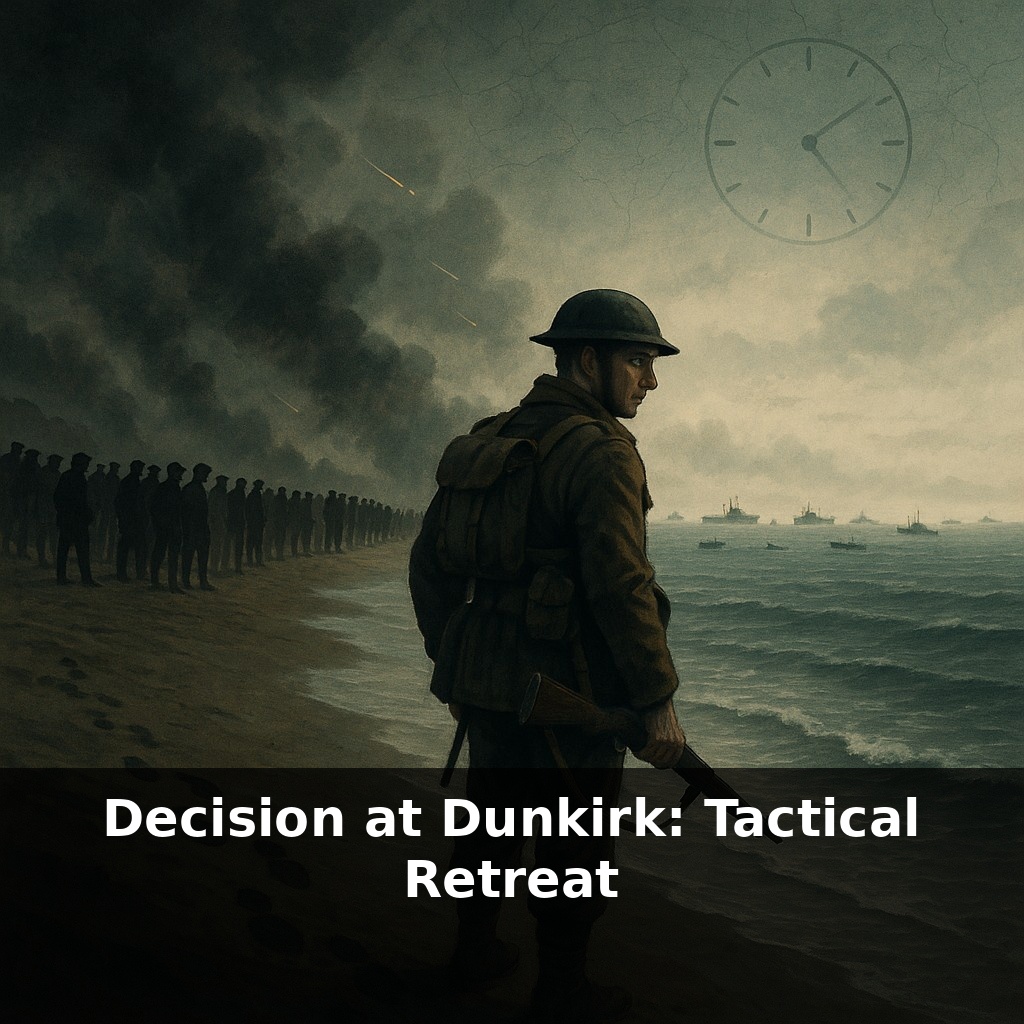
Gunfire echoing on the beach. Lines of exhausted soldiers stretching toward the sea. And then this: by the time the smoke cleared, more people had escaped Dunkirk than lived in most European capitals then. How does a retreat that desperate become a turning point instead of a surrender?
It starts with a brutal realisation: sometimes the smartest move on a battlefield—or in life—is to stop trying to win *here* so you can still win *later*. By late May 1940, British commanders were staring at maps that shrank by the hour as German spearheads carved through France. Supply lines were fraying, communication was patchy, and the neat arrows drawn in planning rooms no longer matched the chaos on the ground. In that kind of crisis, “hold your ground” isn’t strategy; it’s wishful thinking. The question they faced was painfully practical: What is the most valuable thing we have left—and how do we protect it? Not prestige, not equipment, but people: trained units, experienced officers, the organisational backbone of an army. Choosing to pull them out wasn’t about pride; it was about survival and the chance to adapt.
To act on that decision, Britain had to do something inherently uncomfortable: admit that the current front was unsalvageable and redirect its energy to what *could* still be influenced. That meant coordinating the Royal Navy, civilian shipowners, port authorities, weather forecasters, and ground commanders into a single, improvised system with one shared priority. Think of it like a conductor stepping into a symphony halfway through a chaotic performance, not to perfect every note, but to pull the orchestra through to the end of the movement without total collapse, accepting imperfections to preserve momentum.
The decision to pull back toward Dunkirk forced commanders to think in layers, not lines. On the ground, units weren’t told, “We’re escaping.” They were ordered to form defensive boxes, delaying German attacks village by village. These rearguards fought knowing they would likely never see the boats. Their job wasn’t to survive; it was to buy hours and days so others could.
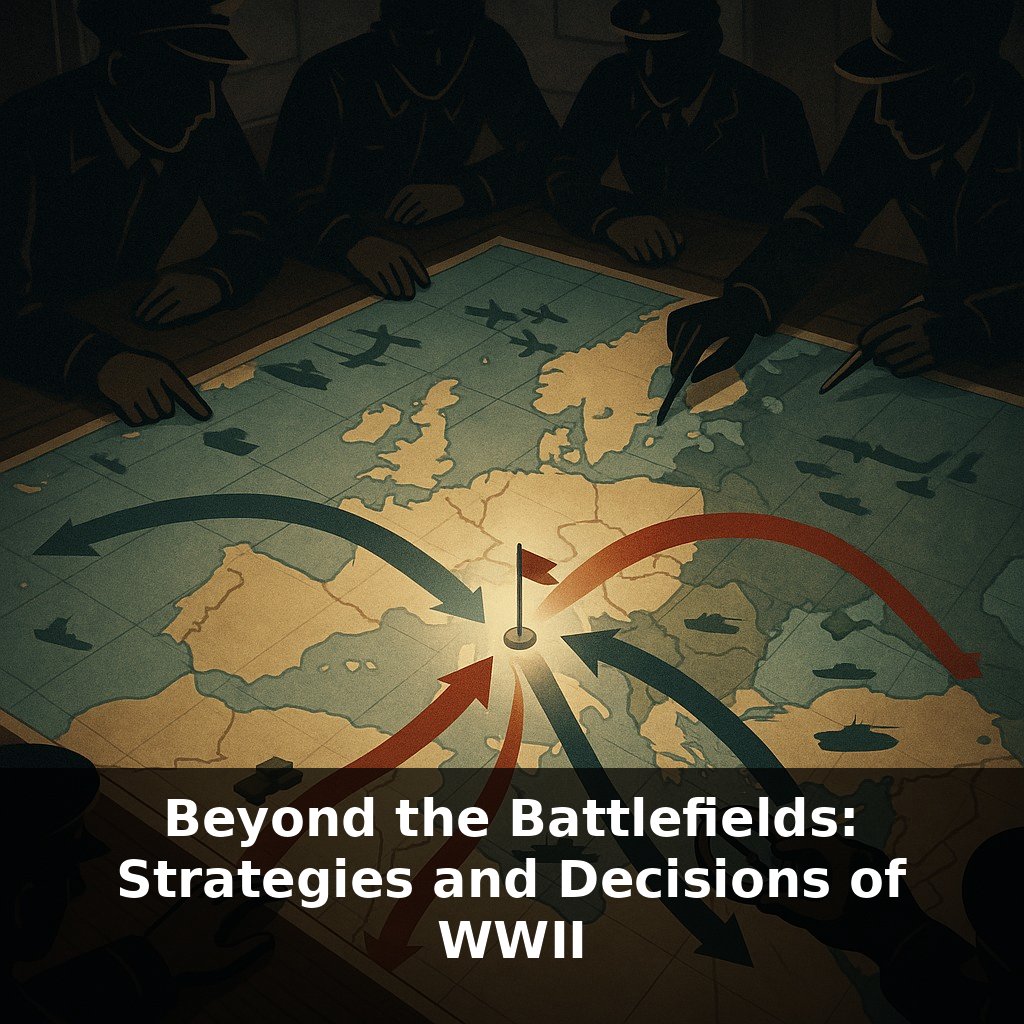
Higher up, planners in Dover and London had to accept a brutal trade-off: every minute given to loading ships meant more time for German artillery and aircraft to find targets. They staggered departures, shifted embarkation points along the coast, and kept changing sailing routes across the Channel to avoid predictable patterns. Chaos on the beaches was matched by constant recalculation on the maps.
Crucially, they separated what had to be controlled from what could only be influenced. They couldn’t control weather, German decisions, or how quickly roads clogged with refugees. They could, however, decide which units moved first, how to prioritise wounded, and when to switch from trying to save equipment to focusing solely on personnel. Early on, there was still hope of bringing back guns and vehicles. Within days, the order hardened: leave almost everything that doesn’t breathe.
This is where Dunkirk becomes less about heroics and more about disciplined loss. The British Expeditionary Force left behind nearly all its heavy gear: thousands of vehicles, tanks, and artillery pieces. On paper, that gutted the army. In practice, it cleared the decks for rapid rearming at home, using newer designs and lessons learned from failure in France. They weren’t just preserving capacity; they were shedding dead weight.
Commanders also had to manage narratives in real time. Publicly, the operation was framed as a tenacious stand under impossible odds. Privately, War Office files show concern bordering on dread: if the core of the army was destroyed or captured, negotiation—not resistance—might become the only realistic option. Getting those soldiers back gave political leaders space to reject compromise.
None of this was tidy. Coordination broke down, some units never received orders, and French and British priorities often clashed. Yet within that mess, you can see a pattern: repeated decisions to narrow the goal. Not “win the campaign,” not even “hold northern France,” but “save as many trained soldiers as possible this week.” Stripping the objective down to something brutally specific turned an unfolding catastrophe into a constrained, if costly, success.
On the ground at Dunkirk, “disciplined loss” wasn’t abstract. Entire signals units destroyed their own radios, burning codebooks page by page so nothing useful fell into German hands. Engineers blew up bridges *they themselves had just used* to cross, knowing it would cut off any idea of a counterattack. Medical officers faced sickening choices: stabilise those who could walk to the beach, sedate those who couldn’t, hand them to French staff, and move on. That kind of triage shows up outside war, too—startups shutting down a promising product line to keep the company alive, or disaster responders abandoning a half-finished dike to focus on a more defensible flood barrier. The pattern is the same: narrowing from “save everything” to “save what matters most, fast.” In nature, wildfires sometimes force forests into a similar logic. Firebreaks are carved, some stands are sacrificed, so that old-growth cores survive to reseed the landscape later; loss is shaped rather than denied.
Future crisis planning will need similar discipline. Urban evacuations, cyber breaches, or stranded orbital crews might force leaders to redraw the line between “acceptable loss” and “non‑negotiable core.” That means mapping in advance which assets are today’s equivalents of trained soldiers—and which are just replaceable kit. Think less about perfect continuity and more about graceful degradation: a system that can shed layers like a tree losing branches in a storm yet keep the trunk upright and alive.
Dunkirk hints at a hard habit worth practising: occasionally stepping back to ask, “If this all collapsed tomorrow, what would I fight hardest to save?” Not as a gloomy exercise, but as quiet upkeep—like tending a garden so storms break branches, not roots. Your challenge this week: map three “roots” in your work or life, then protect them on purpose.