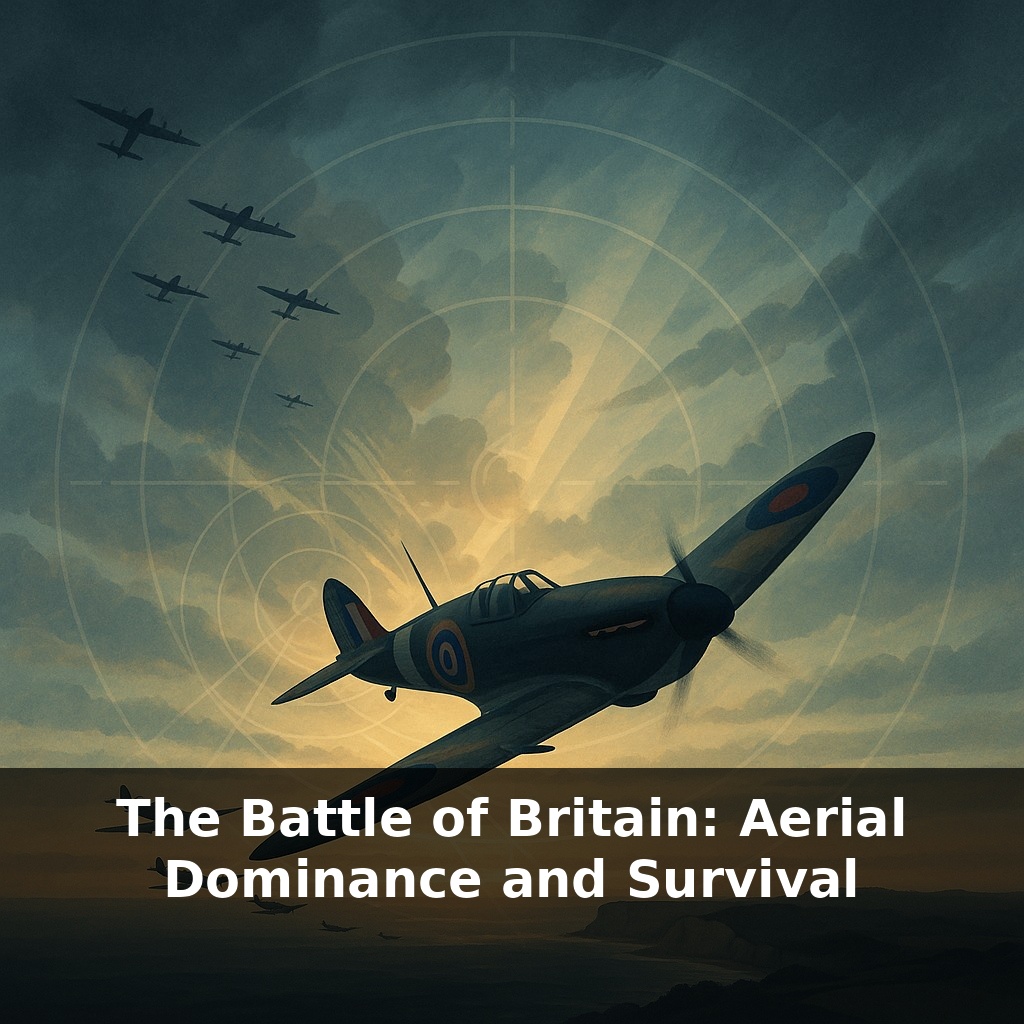
A war was nearly decided by a fifteen‑minute head start. In the summer of 1940, outnumbered British pilots scrambled into the sky, guided by unseen voices on crackling radios. German bombers approached, confident. The paradox? The side with fewer planes held the real advantage.
On paper, 1940 should have been a formality. Germany had more aircraft, more experienced crews, and the momentum of victory from Poland and France. Yet over Britain, the logic of “more” began to break down. Strength wasn’t just about counting planes; it was about how quickly you could find the enemy, decide what to do, and move the right force into the right patch of sky. That’s where Britain quietly rewrote the rules. Radar masts along the coast, ground observers scanning the clouds, radio operators, plotters, and controllers—most never fired a shot, but together they turned scattered squadrons into a single, responsive organism. Like a well‑rehearsed orchestra, each part seemed small alone, yet devastating in concert. The outcome would shape not only the war’s next move, but what “air power” would mean for every conflict after.
Britain’s real innovation wasn’t a single brilliant gadget or a heroic squadron; it was the decision to wire everything together and trust the system under pressure. Airfields were grouped into sectors, each with its own control room, all feeding and receiving orders from a central nerve‑centre in real time. This meant commanders could shift squadrons like pieces on a living chessboard, reinforcing weak spots or resting exhausted units. The Luftwaffe, by contrast, often flew powerful raids that behaved more like sudden storms—impressive and dangerous, but harder to steer once unleashed.
Numbers told one story; the daily “battle rhythm” told another. The Luftwaffe tried to force a quick decision with escalating pressure—first probing coastal targets in July, then hammering airfields and sector stations through August, and finally shifting toward cities in September. Each phase revealed how fragile air power could be when stretched over weeks rather than days.
One crucial piece was how the RAF chose to fight in the air itself. Early on, British formations were rigid “vics” of three fighters—easy to control, but clumsy in combat. German pilots flew in more flexible “finger‑four” formations that offered better visibility and mutual support. RAF losses in August were a brutal teacher. Gradually, especially among experienced leaders, British tactics loosened: more emphasis on altitude advantage, hit‑and‑run attacks on bombers, and allowing section leaders freedom to maneuver rather than clinging to tight, parade‑ground patterns. Control from the ground set the stage; survival often depended on what happened once contact was made.
The unsung crisis was manpower. Aircraft could be repaired or replaced within days; a trained fighter pilot took many months. By late August, front‑line units were burning through their most seasoned flyers. Britain responded with a kind of “human logistics”: rotating tired squadrons out of the hottest sectors, pulling instructors from training schools, and slotting foreign volunteers—Polish, Czech, Canadian, New Zealander, and others—directly into combat units. These “few” were, in reality, a mosaic of nationalities whose pre‑war experience often shortened their learning curve.
On the German side, strength in aircraft disguised weaknesses in planning. Intelligence underestimated RAF resilience, assumed radar coverage could be knocked out quickly, and failed to grasp how deeply the British air defence was embedded into national organization. When bombing shifted toward London in September, it felt to many civilians like a new, terrifying escalation. Strategically, though, it eased the pressure on Fighter Command’s infrastructure at the very moment when losses in both pilots and control facilities were approaching a dangerous threshold.
Sustained air war, it turned out, punished any force that treated it as a series of isolated strikes rather than a campaign that had to be managed day after day, like trying to sustain a difficult musical performance without exhausting your lead players or losing the rhythm that keeps everyone together.
Consider a single day in late August 1940. A raid forms over northern France, fragments into separate bomber and escort groups, then recombines as it nears the Channel. Each change forces British controllers to update not just “where” but “how tired” each defending unit is, who has fuel to climb high, who has just landed and is refuelling. That’s where the real contest lives: in the constant recalculation of risk versus endurance.
Look at the human side through two contrasting pilots. A fresh arrival from Canada might know the aircraft well but not local weather, radio accents, or preferred tactics. Next to him, a Polish veteran has flown combat since 1939, aggressive and impatient with rigid procedures. When they fly together, the newcomer often survives by copying the veteran’s instincts, while the veteran benefits from having one more set of guns in the fight. The system survives not by cloning perfect pilots, but by mixing different experiences into something that can absorb shock, learn fast, and still function under strain.
Future air conflicts will likely hinge less on who owns the most planes and more on who can keep information, people, and machines in tune over long periods. Think of storms crossing an ocean: satellites, drones, and ground sensors will all “watch the weather,” while AI helps commanders decide when to commit scarce crews and when to hold back. The lesson for smaller states is stark: invest in resilient networks and training pipelines, not just shiny hardware, or early success will evaporate under pressure.
The Battle of Britain hints at a broader pattern: survival favours those who can think in networks, not just in units. Later conflicts—from Cold War interception drills to today’s drone “picket lines”—quietly borrow its logic, threading sensors, people, and decisions together like currents in a tidal estuary, where each new stream reshapes how the whole waterway flows.
Here’s your challenge this week: Pick one “Battle of Britain” pilot (like Douglas Bader, Adolf Galland, or “Sailor” Malan) and spend 20 focused minutes researching a specific sortie or day of combat they flew, including which aircraft they used (e.g., Spitfire Mk I, Hurricane, or Bf 109) and where it took place. Then, open a map and trace the actual route of that mission—from takeoff airfield to combat area to landing—marking altitudes and approximate times as best you can. Finally, write a 3-sentence “mission debrief” from the pilot’s perspective, focusing on the split-second decisions they had to make to survive and maintain aerial dominance.