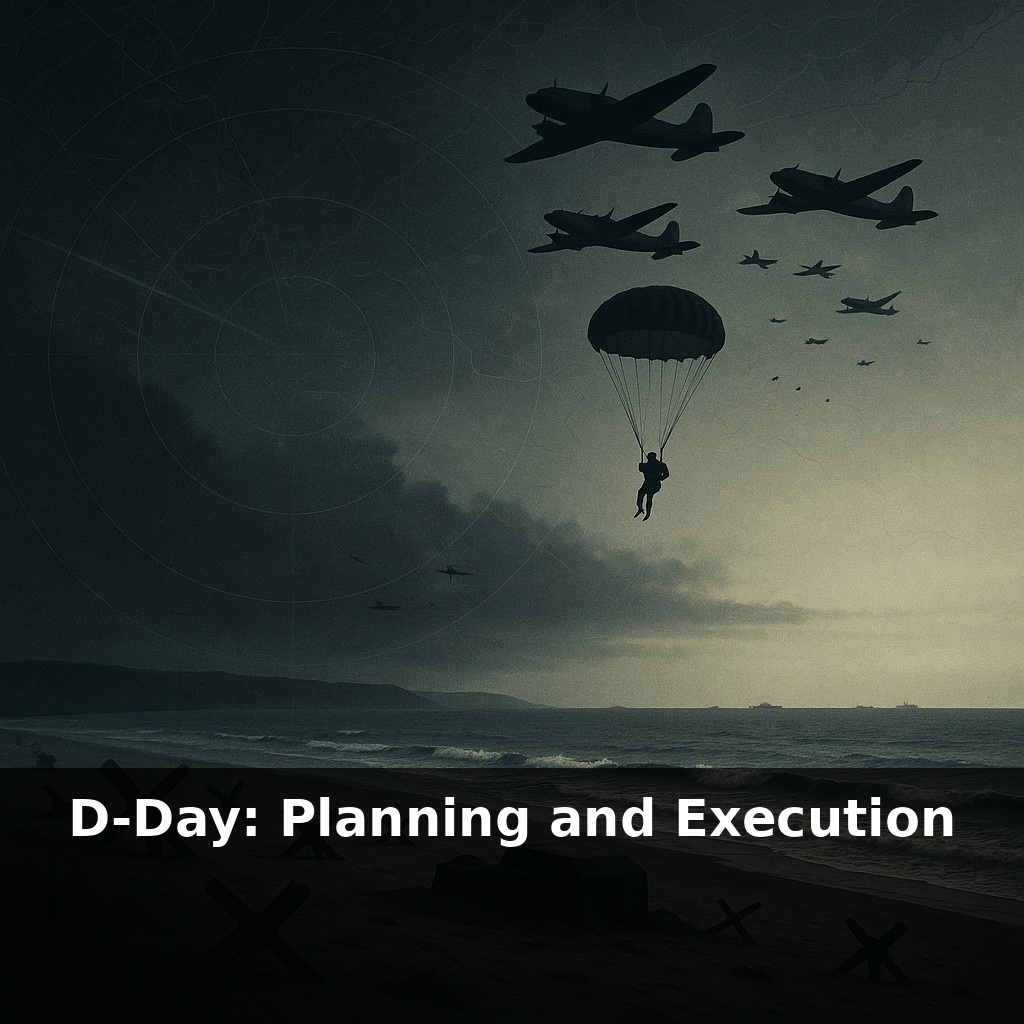
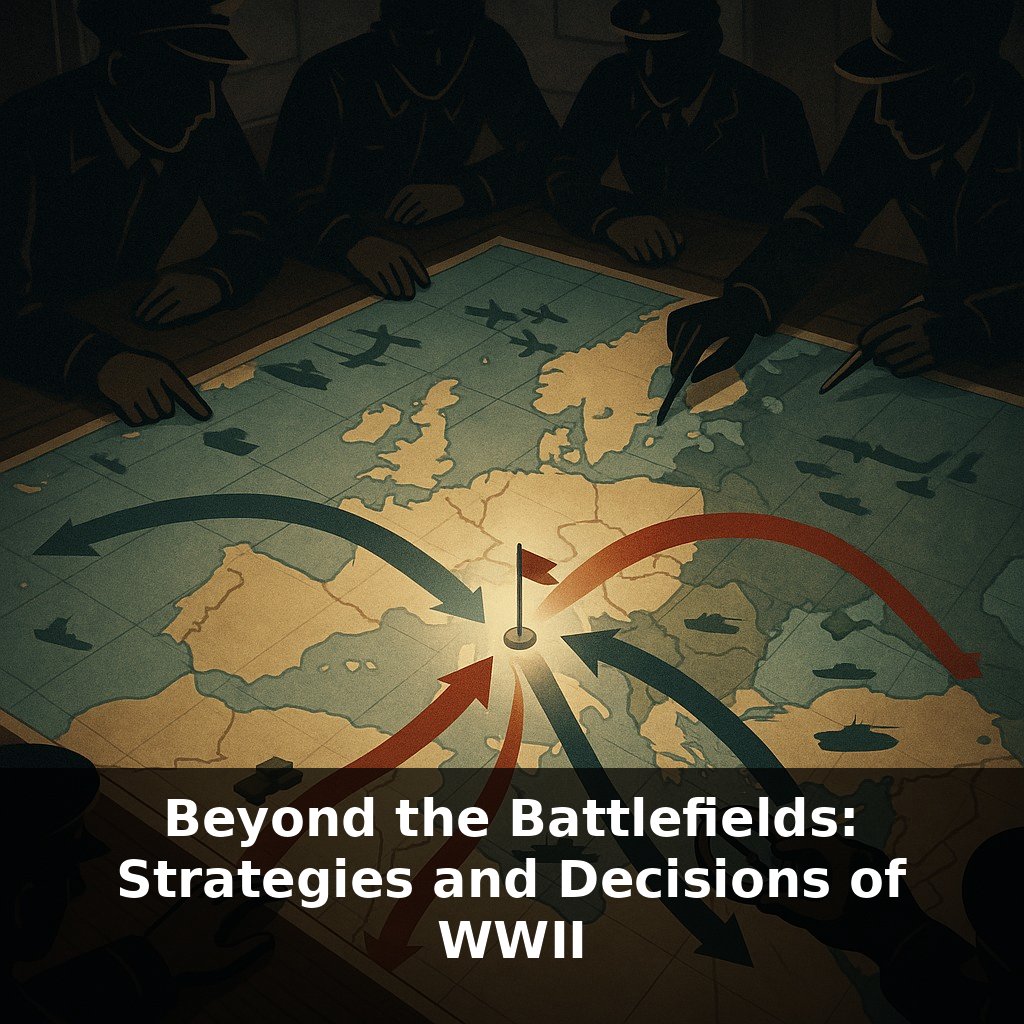
The moon is hidden behind a thick layer of clouds. It's June 5, 1944—the night before D-Day—and a massive fleet of Allied planes carries thousands of paratroopers toward the French coast. Beneath them, German radar stations search futilely through the dark. The Allies are undertaking the biggest gambit of the war, banking on the element of surprise.
By sunrise on 6 June 1944, the “invisible” phase was over. Now everything became brutally visible: steel against sand, men against concrete, timing against chaos. Naval gunfire had to lift at the exact moment landing craft hit the beaches; bombers had to avoid friendly ships while striking inland guns; engineers had minutes to clear obstacles before the tide swallowed their work.
This is where planning stopped being a document and became a living thing—adjusting, stalling, surging. A delayed tide, smoke from burning ships, or a misread landmark could throw entire units off course. Yet the system was built with that uncertainty in mind: backup landing zones, redundant signals, pre-briefed contingencies. Like a conductor working with an orchestra that might miss cues, Allied commanders designed Overlord so that, even when parts fell out of tune, the larger score could still be played to its end.
Neptune—the seaborne assault—was where abstract strategy met wet boots and cold surf. Its planners had to choreograph not just who went where, but *when* the sea itself would cooperate. Tide tables, moonlight, and wind forecasts sat beside unit rosters and artillery plans. Destroyers rehearsed firing close enough to friendly troops that a miscalculation measured in meters could be fatal. Meanwhile, engineers studied French coastal villages from aerial photos the way urban planners dissect traffic flows, searching for where convoys might jam before they ever reached the sand.
All of that timing meant little without the right *sequence* of forces. The first assault waves were not just generic infantry; they were layered specialists. Beach obstacle teams, naval gunfire spotters, engineers with explosives, tank crews in amphibious “swimming” Shermans, and communications units all had scripted roles down to the minute. Their job was to turn a hostile shoreline into a functional front line fast enough that later waves—artillery, supply, and follow‑on divisions—would have somewhere to go and something to eat when they got there.
Those later waves were where Overlord’s real scale emerged. Before D‑Day, planners calculated not only how many soldiers to land, but how many tons of fuel, ammunition, and food each division would burn every single day once ashore. That drove decisions like building the Mulberry harbours and laying PLUTO—the “Pipeline Under the Ocean”—to pump fuel from tankers in the Channel directly to depots in France. A single storm or delay in port clearance could ripple into front‑line shortages weeks later, so logistics officers treated every crate and jerrycan as part of a vast, interlocking equation.
Air power was integrated with the same precision. Heavy bombers had strategic targets deep in France and Germany, but medium bombers and fighter‑bombers were assigned to a “moving belt” of support zones just behind the beaches and advancing troops. Forward air controllers on the ground could call in strikes to break up German counterattacks or smash bottlenecks on key roads. The goal was not just to hit the enemy, but to *shape* the flow of the battle—slowing reinforcements, choking rail lines, and forcing German armour to move by night or risk being shredded in daylight.
Over all this hung the deception plan. Operation Bodyguard didn’t end at H‑Hour; it continued to feed the illusion that Normandy might be a diversion. False radio traffic from a phantom “First U.S. Army Group,” controlled leaks through double agents, and manipulated reconnaissance signatures kept German commanders uncertain about where to commit their limited reserves. Even after troops were landing in Normandy, some German leaders still held back units, convinced the “real” blow would fall near Calais. That hesitation bought the Allies time—time to build up their beachheads into something the enemy could no longer push into the sea.
On the ground, that “living” plan felt less like a script and more like a set of jazz charts: core themes fixed, but room to improvise as reality shifted bar by bar. Company commanders might find the lane they’d trained to use blocked by wrecked vehicles, so they’d pivot to a secondary route that supply officers had already plotted on their overlays. A traffic jam wasn’t just a nuisance; it could choke an entire brigade’s advance, so movement control teams acted like human traffic lights, redirecting convoys before chaos turned into paralysis.
Weather officers, too, weren’t just predicting storms; they were gaming out alternative build‑up sequences if swells made certain craft unusable. Naval beachmasters decided in real time which units could risk a rougher landing and which had to wait for calmer water. And as German responses evolved, staff at Allied headquarters reshuffled priorities, accelerating some units and throttling others, constantly trading short‑term risk against long‑term momentum.
Modern planners still mine Overlord for patterns. Instead of tide tables and hand‑drawn overlays, they juggle satellite feeds, cyber threats, and public opinion that can shift in hours. The lesson isn’t nostalgia for 1944 methods but discipline about sequencing: when to reveal intent, when to mask it, when to surge resources. Think of a storm front moving across continents—civil relief, cyber defense, and naval power now have to “stack” their responses without colliding, yet still hit at the decisive moment.
In the end, Overlord’s planners weren’t chasing perfection; they were engineering resilience. They expected fog, wrong turns, broken radios—then asked, “What still has to connect?” That mindset travels well: from coordinating global disaster relief to securing digital infrastructure, the real craft is syncing many small, fallible moves into one advancing tide.
Here’s your challenge this week: Choose one real project in your life and spend exactly 45 minutes today building a “D-Day operations plan” for it—break it into phases (intelligence gathering, logistics, timing, contingencies) just like the Allies did, and assign a specific date as your own “invasion” launch. List the 3 biggest “Atlantic Wall” obstacles you’re facing and, for each, design a concrete “airborne” move you’ll deploy 24 hours before launch to soften resistance (a key email sent, a tough conversation scheduled, a resource secured). Finally, set a 7-day window like the weather-dependent D-Day delay, blocking two alternative execution dates on your calendar so you’re committed to go even if conditions aren’t perfect.