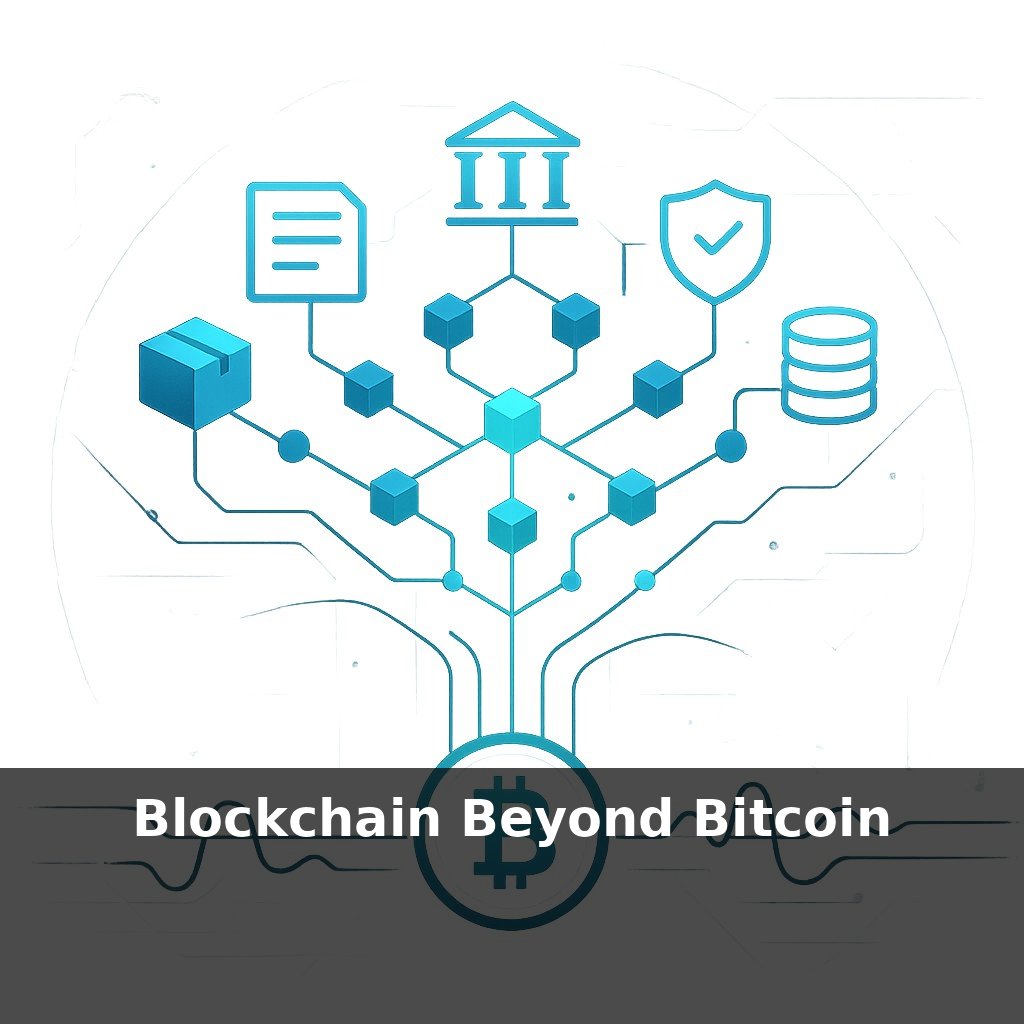
A trillion dollars’ worth of crypto sits on blockchains most people can’t clearly explain. In this episode, we drop into three real moments: a payment crossing borders, a game item changing owners, and a vote being cast—none needing a bank in the middle.
Blockchains don’t just move money, game items, or votes—they quietly rewrite who we have to trust. In traditional systems, you’re leaning on a bank, a platform, or an agency to keep records honest. With a blockchain, you’re leaning on math, open code, and a swarm of independent computers that all watch each other. That shift sounds abstract, but it leaks into daily life faster than most people notice. Artists minting NFTs rely on public records instead of galleries. Logistics firms trace food or medicine through each handoff, cutting out blind spots. Even login systems are starting to swap passwords for wallet-based identities. Across all these cases, the core question isn’t “How does the tech work?” but “What happens when the ledger itself becomes the most reliable person in the room?”
Today we zoom out from buzzwords and price charts to ask a quieter question: what kind of “paperwork of the world” does a blockchain really change? Think of all the places invisible records run your life: your paycheck hitting an account, miles on a flight, titles to your car or home, medical test results, even in-game rankings. Each lives in a system owned by someone, somewhere, with rules you mostly don’t see. Blockchains slip into this landscape as a new kind of record spine—one any qualified participant can help maintain, and everyone can later audit, long after the original players have moved on.
To see what’s actually different about a blockchain record, zoom in on three layers: **who can write**, **how they agree**, and **what happens after they do.**
First, **who can write.** In most systems, a short list of approved entities can update the ledger: your bank, a clearinghouse, a platform operator. On many blockchains, anyone who follows the rules can propose new entries. Some do this by locking up value (proof‑of‑stake), others by spending computing power (proof‑of‑work), and enterprise versions may restrict participation to vetted members. The key twist isn’t just openness; it’s that writers compete under transparent rules instead of relying on private deals or hierarchy.
Second, **how they agree.** A single database can resolve conflicts by fiat: whichever update the server accepts “wins.” Blockchains replace that with protocols that force scattered nodes to converge on one shared history, step by step. Each new batch of records is bundled into a block, given a fingerprint, and chained to the last accepted block. If two versions appear, the network has tie‑breaking rules—often favoring the longest or most economically costly chain. That sounds mechanical, but it encodes a social choice: we’ll treat the version that was hardest to fake as the truth.
Third, **what happens after they do.** Once a block sinks deep enough into history, unwinding it would require re‑doing huge amounts of past work or seizing control of a majority of validators. That doesn’t make change impossible—some networks have rolled back after disasters—but it makes rewriting history expensive, conspicuous, and politically fraught. Instead of quiet edits, you get loud, collective decisions.
This design has side effects. Speed is limited by how cautious the protocol is about finality; Bitcoin’s 10‑minute rhythm feels glacial next to retail payments, while faster chains often trade some security assumptions for latency gains. Public visibility allows auditors, researchers, and regulators to trace flows, even as users try to preserve privacy with techniques like mixers or zero‑knowledge proofs. And because the ledger itself is neutral about *what* it records, people keep pushing beyond money: tokenized shares, carbon credits, diplomas, access passes, loyalty points—new species of digital “claims” that don’t need a platform’s blessing to exist.
A hospital trialing a blockchain doesn’t care about coins; it cares that once a lab result is logged, no one silently swaps “negative” for “positive” under pressure. An insurer can later verify that exact entry without phoning three departments or trusting a fax. In trade finance, a shipment of cocoa beans can move from farm co‑op to exporter to chocolatier, with each handoff recorded so lenders see real‑time collateral instead of stale spreadsheets; that can shrink loan delays from weeks to hours. Musicians are experimenting with releasing tracks where every royalty split, remix right, and fan micro‑payment settles on‑chain, turning opaque label accounting into something auditable line by line. The one metaphor to keep in mind: like a complex piece of chamber music, each participant plays their own part, but the shared score—the ledger—keeps everyone in time, so disputes later can be resolved by replaying what was actually performed, not who has the sharpest memory.
A trillion dollars in crypto is only the opening act. As real‑world assets get tokenized, owning 1% of a building could feel as casual as subscribing to a streaming channel. Blockchains may fade into the background like TCP/IP did for the web—quietly wiring finance, supply chains, even devices that pay each other. Your challenge this week: each time you see a “closed” system—loyalty points, tickets, in‑game items—ask: what would change if these could move freely between apps?
As blockchains seep into daily life, they may feel less like finance and more like infrastructure—quiet pipes beneath cities. IDs, concert passes, even parking rights could become portable, not trapped in one company’s app. The open question isn’t just “what can be tokenized?” but “who gains power when records travel as easily as messages?”
Before next week, ask yourself: “If I had to explain blockchain to a smart 12‑year‑old using just the ideas of a shared spreadsheet, blocks, and cryptographic ‘locks’, what would I actually say, step by step?” Then ask: “Looking at something in my life that relies on a central intermediary (like my bank, TikTok, or a cloud doc), which parts could realistically be replaced by a shared, tamper‑evident ledger—and which parts clearly still need a trusted middleman?” Finally, ask: “If I were forced to design a simple, non‑crypto use case for blockchain tomorrow (say, tracking coffee beans from farm to café), what specific information would I put in each block, who would run the nodes, and why would a regular database not be enough?”