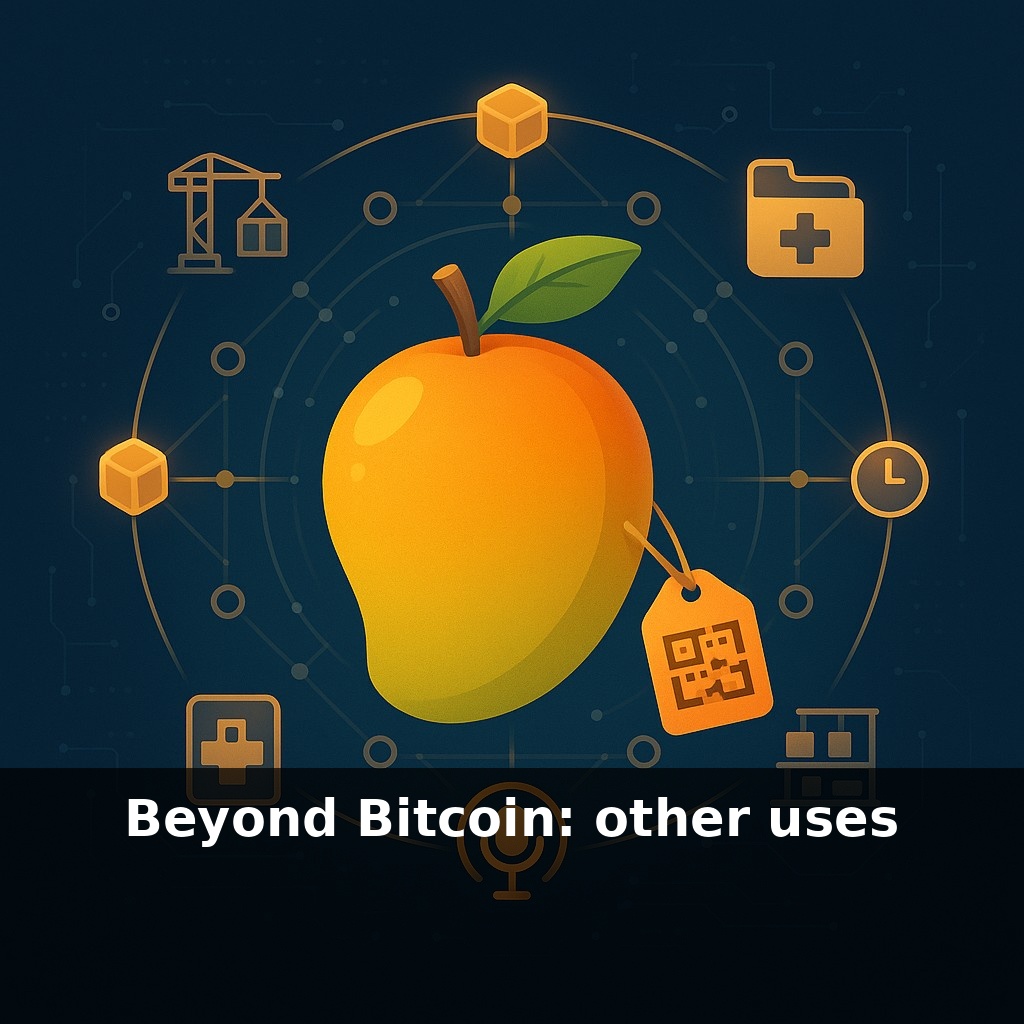
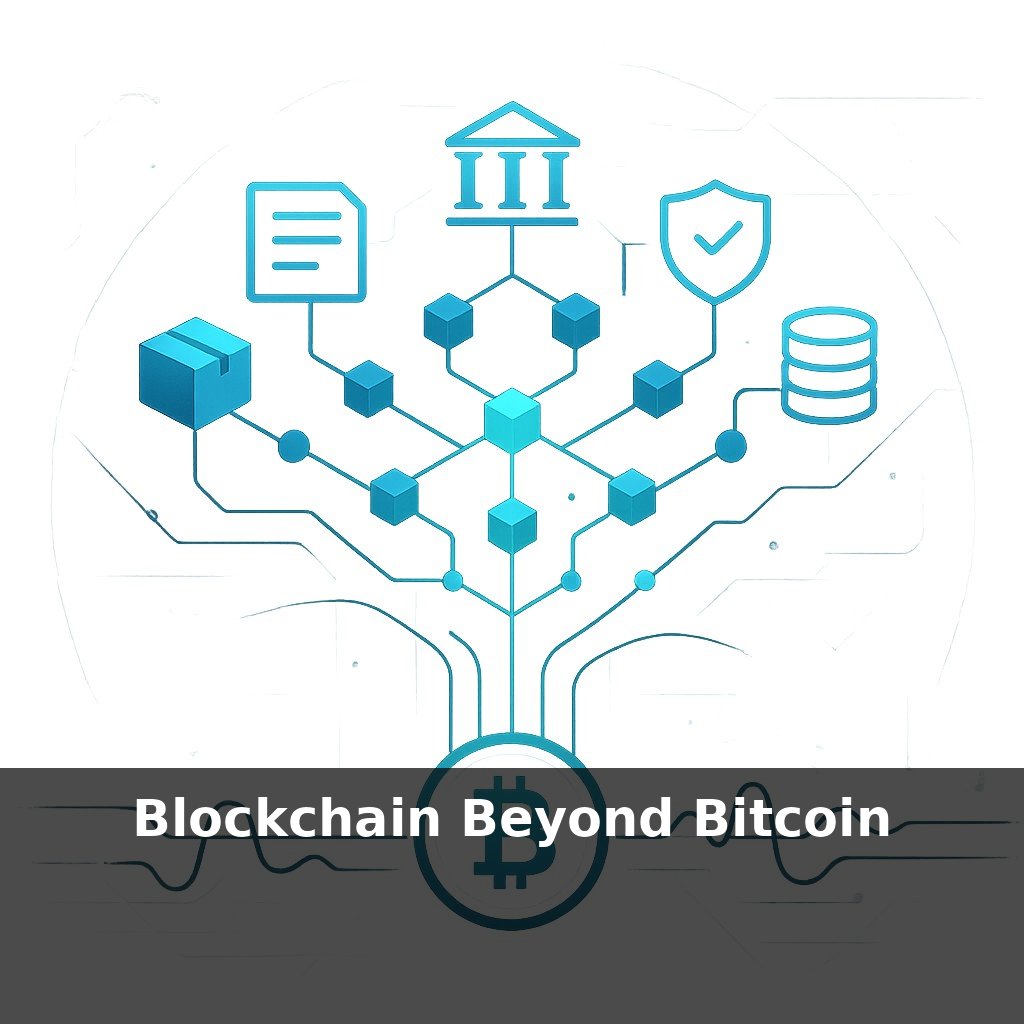
Some of the world’s biggest companies now use “Bitcoin tech” for things that have nothing to do with money. A supermarket can track a single mango from farm to shelf in seconds, while a hospital quietly guards patient records on a shared ledger no one fully controls.
Walmart’s mango experiment is just one hint of how far this tech can go beyond price charts and trading apps. When every step of a process leaves an indelible, time-stamped footprint, entirely new behaviors emerge. A port operator can spot a delayed container before it becomes a factory shutdown. A clinic can check whether a drug shipment really followed its required cold-chain route, rather than trusting a paper form and a shrug. Even creative work changes: a photographer can prove exactly when a shot was registered, and who licensed it, without relying on a single platform’s database. Governments are quietly testing similar ideas at national scale, from Estonia’s document integrity system to early trials in tamper-evident voting records. Each use case chips away at the same problem: how do you get many parties to trust the history of something, even if they don’t fully trust each other?
Now the frontier is shifting from tracking “things” to coordinating decisions. In energy, micro‑grids already let neighbors trade surplus solar power, settling tiny transactions without a central utility acting as referee. In healthcare, pilots link hospitals, labs, and insurers so a treatment update in one place updates eligibility elsewhere, cutting disputes and delays. Creators are experimenting with “programmable royalties” hard‑wired into licenses, so when a song is reused, payment is automatically split across everyone who contributed, more like a band sharing gig money than a label dictating terms.
Walmart cutting mango trace-back from 6 days to 2.2 seconds isn’t just a cute case study; it’s a glimpse of what happens when “receipts” become infrastructure. Once you can prove who did what, when, without asking a central database for permission, you start redesigning whole markets and institutions, not just supply chains.
Energy is one of the clearest examples. Today, power mostly flows one way: from big plants to passive consumers. But rooftop solar, home batteries, and EVs don’t fit that model. They behave more like a neighborhood of musicians, each switching between playing, listening, and recording. Blockchain-based energy platforms let a home act as a tiny power plant one minute and a buyer the next, settling hundreds of micro‑transactions among households, chargers, and community batteries with a level of granularity old billing systems were never built for.
Identity is another frontier. Instead of re‑creating your profile with every bank, clinic, or university—and trusting each one to store it safely—“self‑sovereign identity” pilots let you hold cryptographic proofs of your attributes (over 18, licensed driver, degree holder) and selectively present them. The verifier checks against public records on a chain without ever seeing your full data. Estonia’s experience shows this can work at national scale; the next step is giving individuals more control rather than just governments and corporations.
Healthcare projects are experimenting with similar ideas for consent. Rather than a stack of paper forms scattered across hospitals, a patient can grant, update, or revoke authorization for specific uses of their data—research, treatment, training AI models—with changes recorded in a way insurers, regulators, and auditors can all verify later.
Then there’s provenance for everything from cobalt and cotton to news photos and scientific datasets. De Beers’ work with Tracr hints at where this goes: when an end‑buyer can see a credible, tamper‑evident trail for a product, it becomes harder to hide labor abuses, unsafe sourcing, or manipulated evidence in the gaps between organizations’ internal systems.
Your challenge this week: pick one domain you touch personally—energy, healthcare, education, creative work, or shopping. Map a single journey (for example, a clinic visit or an online purchase) and circle every point where you currently “just trust” a database, platform, or intermediary. Then, for one circled point, sketch how things might change if all parties shared a transparent, append‑only log instead.
Think about a concert where every instrument’s part is recorded on separate tracks. Later, producers can solo the drums, boost the bass, or prove exactly who played which riff. Now translate that into other areas: a hospital could isolate which specialist updated your chart before a surgery delay; an insurer could verify precisely when a repair shop logged work on your car after an accident. In clean energy trials, each solar panel’s “track” is logged, so community projects can credit contributors based on measured output, not estimates or forms. In research, early pilots let labs register each dataset and protocol step, so when a breakthrough drug appears, regulators and journals can replay the “mix” and see which trials, revisions, and approvals led there. The pattern is the same: instead of one blurry recording of events, you get many synchronized tracks that can be replayed, inspected, and combined in new ways without re‑recording the entire song.
As these ledgers spread, the interesting part isn’t the tech; it’s what people build on top. Local co‑ops could pool data to bargain with platforms the way bands negotiate with labels. Neighborhoods might “playlist” shared resources—tools, cars, even community Wi‑Fi—logging access so insurance, maintenance, and cost‑splits become automated. Expect frictions too: unions, regulators, and citizens will push back if logs feel more like surveillance than shared memory, reshaping which data gets written at all.
As more of these records quietly accumulate, the question shifts from “can we trace this?” to “who gets to query the trail, and for what purpose?” Like streetlights, shared logs can make neighborhoods feel safer—or over‑policed—depending on how they’re placed, who controls the switch, and whether citizens help decide where the light falls.
Before next week, ask yourself: “If I could use blockchain for something in my own life or work beyond investing—like tracking supply chains, proving ownership of my digital work, or coordinating a group project—what’s one real situation where this would actually solve a problem I have today?” “Thinking about the examples from the episode (like decentralized identity, smart contracts for agreements, or tokenizing real-world assets), which one feels most relevant to my world, and what’s one concrete experiment I could run this week to test it—such as drafting a simple smart contract scenario or mapping a process that could be made transparent on-chain?” “If blockchain really did ‘fade into the background’ like the internet did, how would I want it to be quietly improving my daily life—more trust in where my food comes from, easier sharing of medical records, or less friction in legal agreements—and what’s one news article, project website, or tool I can look up today to explore that specific use case more deeply?”