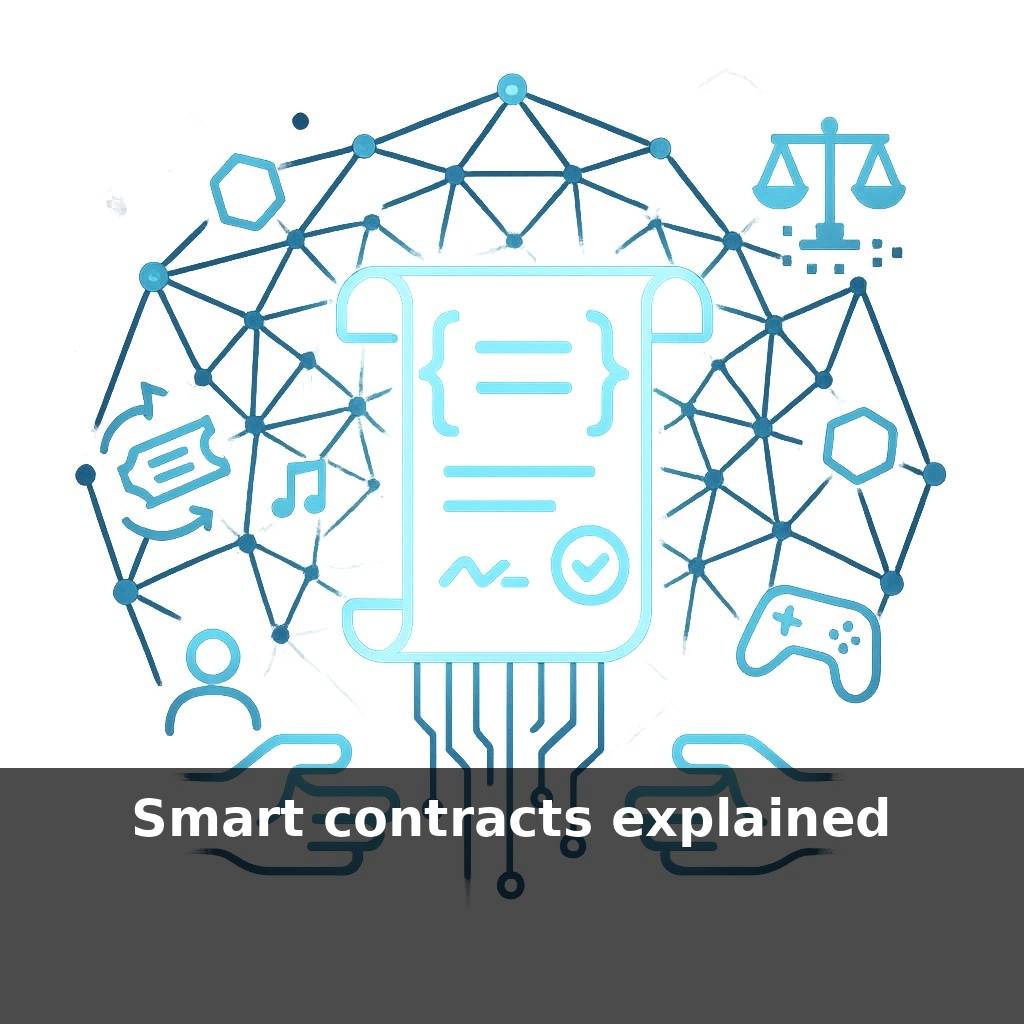
Right now, software is quietly signing deals worth millions without lawyers, paper, or even email. A loan approves itself. Tickets resell, and the artist still gets paid. A game pays you back when you win. The twist? No one’s “in charge” once the code is live.
Every day, Ethereum alone handles over a million smart‑contract interactions—most people never notice, yet value is moving, rules are enforced, and disputes are “pre-resolved” in code. This isn’t just crypto trading anymore. Musicians wire in royalty splits so collaborators are paid the instant a track is streamed. Game studios deploy items and currencies that players truly own, trading them without asking permission from a publisher. Startups launch “tokenized” funds where profits are distributed automatically to investors scattered across the globe.
But this new power comes with sharp edges. A single bug can freeze or drain millions, which is why security researchers now earn life‑changing bounties for finding flaws before attackers do. Even basic actions can become uneconomical when gas fees spike, turning a simple interaction into a $50 decision.
So the real question is shifting from “What can we automate?” to “What deserves to be irreversible?”
Smart contracts sit where law, code, and money collide, but they behave differently from all three. They don’t “care” who you are, only whether inputs match their rules. That makes them powerful for situations where strangers need to coordinate: routing trades across decentralized exchanges, managing on‑chain auctions, or distributing revenue to thousands of contributors. They’re also composable: one contract can call another like a musician sampling an existing track, letting developers stack financial “lego bricks” into complex products that still run on shared, public infrastructure.
At the core, a smart contract is just code plus shared state, but how that code is structured determines whether it behaves like a simple “button” or a full financial institution.
Most production contracts split into three layers:
- **Interfaces**: the public “menu” of functions other contracts and users can call. Standards like ERC‑20 (fungible tokens) and ERC‑721 (NFTs) live here, defining how others integrate with you. - **Logic**: the conditional rules—who can do what, when, and under which constraints. This is where lending terms, auction rules, or access permissions are encoded. - **Storage**: the long‑lived data the network remembers: balances, roles, configurations, past decisions.
Because everything is public, “security by obscurity” doesn’t work. Developers rely on patterns such as:
- **Access control** (roles, multisig wallets, timelocks) so no single admin can instantly push a dangerous change. - **Rate limits and circuit breakers** to slow or pause activity when something abnormal happens. - **Formal verification** and audits to mathematically or systematically check that critical properties hold.
Bugs are often subtle: a rounding error in interest math, a missing check on who can call a function, or an assumption about another contract that later breaks when that contract is upgraded. Cross‑contract interactions are especially risky, because any external call hands temporary control to unknown code.
Oracles add another moving part: they feed off‑chain facts (prices, randomness, real‑world events) into on‑chain logic. If these data sources are manipulated or go offline, protocols depending on them can misprice collateral, mispay rewards, or liquidate healthy positions.
On the flip side, the deterministic, modular nature of smart contracts enables new coordination tools: on‑chain treasuries governed by token‑holder votes, streaming payments that update balances every second, or royalties that follow an asset no matter how many times it changes hands—more like a well‑defined medical protocol than an improvised treatment, where every step and contingency is written down, reviewable, and repeatable.
A royalty split for a song can be mirrored in governance: a DAO for an indie film might route box‑office revenue to a contract that instantly allocates shares to writers, actors, and early crowdfunders, even if they live in 20 different countries and never sign a single shared document. In real estate, a building’s rent stream can be sliced into programmable pieces, where one portion auto‑pays the mortgage lender, another funds maintenance, and the remainder flows to investors—no monthly spreadsheet gymnastics.
We’re also seeing “programmable cap tables” for startups: investor tokens with cliffs and vesting baked in, or founder shares that automatically unlock only if on‑chain milestones are met. Some creators wire in “retroactive rewards,” so early supporters receive bonuses when certain traction metrics—like on‑chain volume or governance participation—are crossed. Others experiment with “subscription keys”: time‑limited passes that renew or expire without a billing department chasing cards.
Your challenge this week: pick one agreement in your life—rent, subscription, loan, or even a group budget—and sketch how it would behave if its rules were enforced by code that nobody could quietly override. What events would trigger automatic actions? Where would you still insist on human judgment? Push yourself to be concrete: list specific clauses, thresholds, or time conditions you’d encode, and note which parts you’d *refuse* to automate. This thought experiment exposes both the power and the limits of translating social trust into software.
“Code that holds money” will quietly start holding *power* too. As voting, payroll, and licensing creep on‑chain, entire workflows may feel more like streaming music than static paperwork—continuous, adjustable, and instantly shared. We might see neighborhood budgets, research grants, and even fan clubs governed by public rules instead of private inboxes, raising new questions: who writes these rules, who audits them, and how do we appeal when the code feels unfair?
Soon, many “terms and conditions” you accept could quietly become executable code, shaping everything from how fan clubs share ticket access to how research teams split future patents. The frontier isn’t just finance anymore; it’s trust itself. As more of it moves on‑chain, the real leverage may belong to those who can read—then rewrite—the rules.
Before next week, ask yourself: “If I took one real-world agreement I already use (like paying rent, invoicing a freelance client, or splitting bills with roommates), which parts could realistically be turned into a smart contract on Ethereum or another chain, and what exact conditions (‘if X happens, then send Y’) would I encode?” “Looking at the risks they mentioned—like buggy code, irreversible transactions, or relying on an oracle—what is one specific safeguard (e.g., multisig, time lock, testnet deployment, or using an audited contract template) I would insist on before trusting real money to a smart contract?” “If I had to explain to a non-technical friend today why smart contracts might replace parts of their current banking or legal processes, which concrete example from the episode (like automated insurance payouts or creator royalties) would I use, and what honest limitation would I also highlight?”