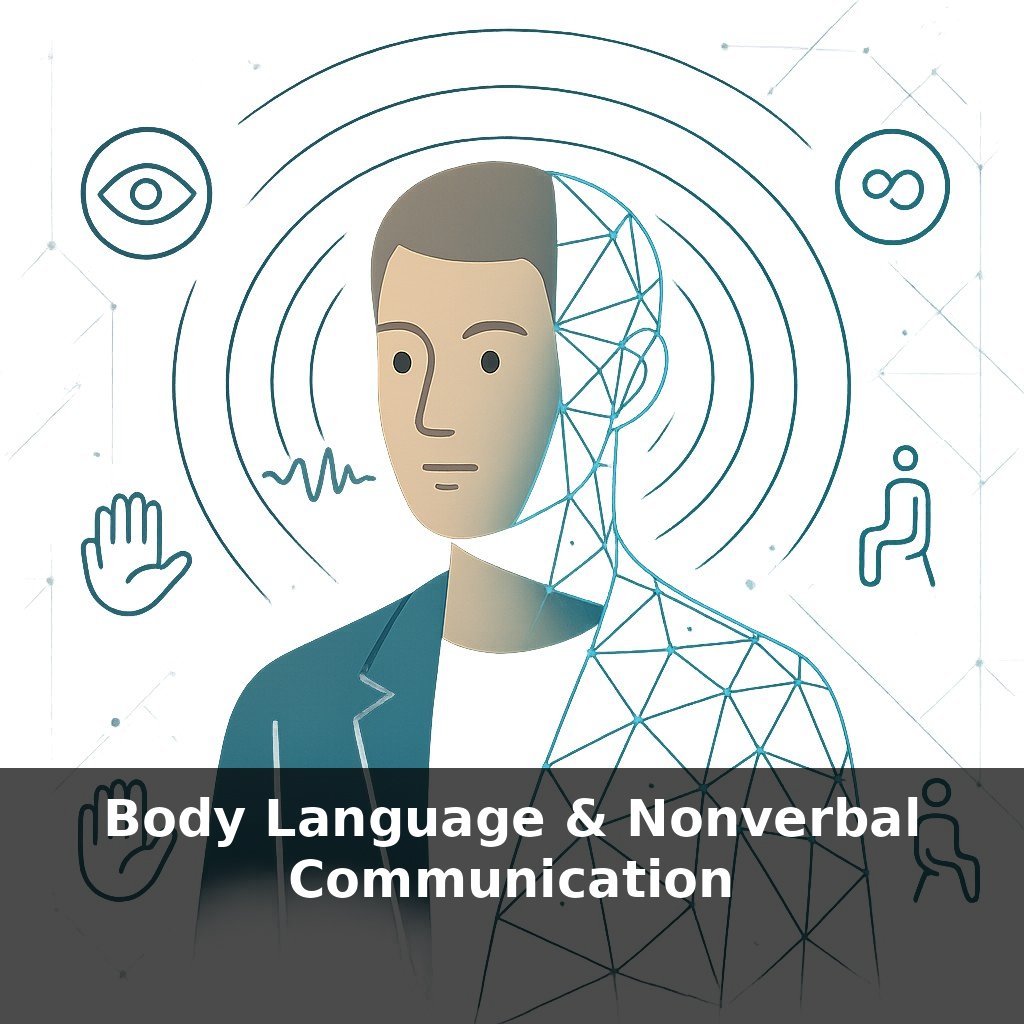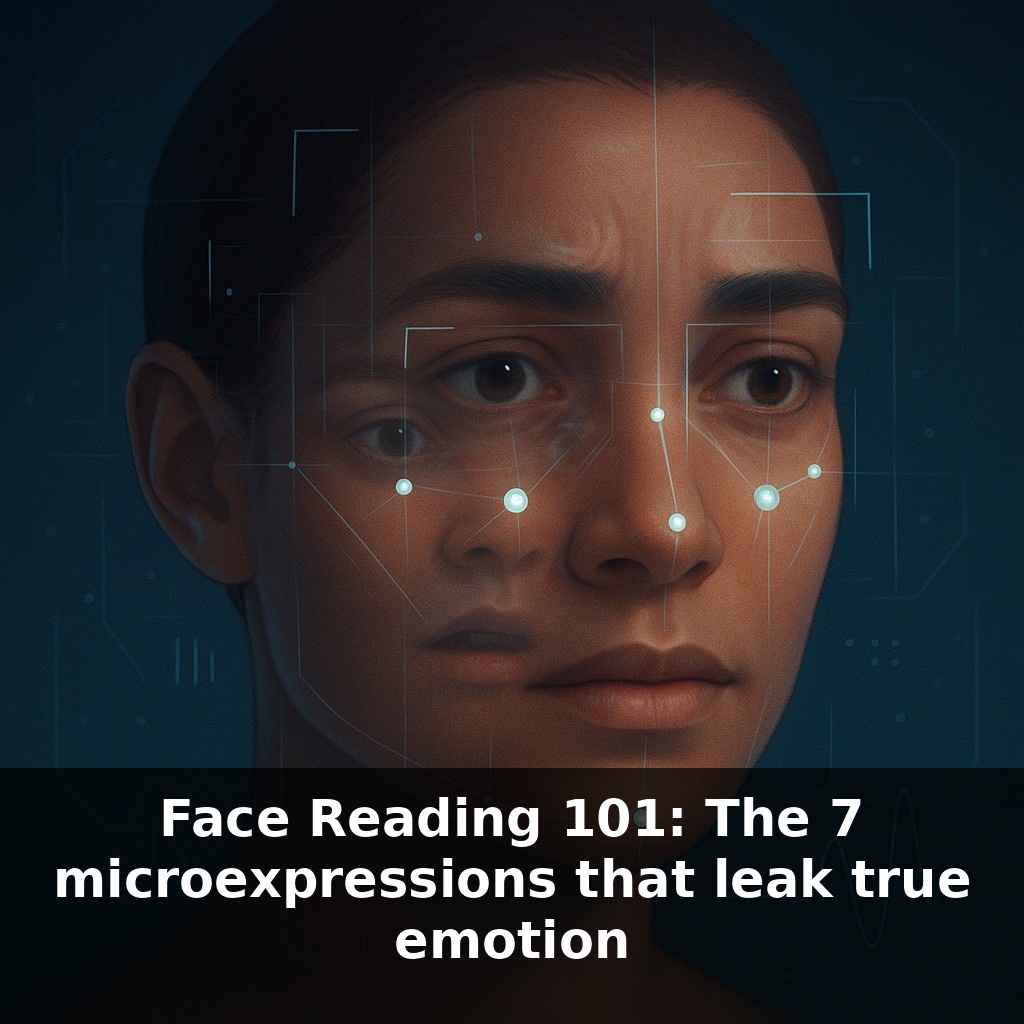
Right now, your face is telling on you—even if you’re alone. Research shows people leak flashes of real emotion in less than a heartbeat, while insisting they feel “fine.” In a job interview or first date, those tiny slips can reveal more than anything they say out loud.
Microexpressions are the split-second “outtakes” your face records before your social mask loads. You don’t feel them happen, and most people never notice them—but they’re constantly shaping how others respond to you. A tiny tightening around the eyes can make a sincere apology feel fake. A barely-there lip curl can turn a neutral comment into “I don’t respect you.” The wild part: research shows you can *train* yourself to catch these flashes, moving from vague gut feelings to specific, reliable reads. Not to mind-read or “win” interactions, but to understand what people are *really* reacting to—especially when their words sound polished and controlled. Across negotiations, first impressions, even video calls, those 1/25-second facial shifts act like a live “emotion subtitle.” Once you start seeing them, it’s hard to go back to hearing only what people say.
To work with these tiny signals, you need to shift from “vibe reading” to something closer to a scientist’s mindset. Most people lump everything into “good energy” or “bad energy” and stop there. But each of the seven core emotions has a distinct facial pattern, like separate instruments in a band. You’re already *hearing* them unconsciously; the goal now is to learn which sound belongs to which emotion. That starts with slowing interactions down in your mind, paying attention to *where* on the face something flickers—brow, eyes, nose, mouth—before you jump to any story about what it means.
If you want to get past “something felt off” and into *specific* reads, you need two things: a mental map and a way to practice without creeping people out in real time.
Start with a simple three-zone map of the face:
- **Upper face (brows/forehead)** – where you’ll catch early signs of *mental* states: effort, resistance, doubt, alertness. Anger and sadness both live here, but in very different ways. - **Mid face (eyes/eyelids)** – often the clearest window to intensity: how strongly someone feels, not just *what* they feel. Fear, genuine joy, and deep sadness all change the eye area. - **Lower face (nose/cheeks/mouth)** – great for spotting mixed emotions: forced smiles hiding contempt, or polite neutrality hiding disgust.
Instead of trying to memorize every muscle, you’re watching *how these zones coordinate*. Do they move together, cleanly, like a well-rehearsed band—brows, eyes, mouth all telling the same emotional story? Or does one zone “disagree” with the others?
For example: - A warm compliment with smiling mouth but dead, flat eyes signals reduced sincerity. - A “no problem” paired with a micro tightening of the nose and upper lip hints at unspoken irritation. - A calm voice plus a lightning-fast eye-widening can betray a flash of fear about what was just said.
The key is to separate **signal** from **story**. Signal: “I noticed a brief one-sided lip raise when I mentioned their competitor.” Story: “They must hate that company.” The first is observable; the second is a hypothesis you still need to test with questions, context, and pattern over time.
This is also where the misconceptions become dangerous. A single flash of disgust doesn’t equal “they’re lying.” It might mean they dislike the *situation*, a memory, or even their own answer. Your job isn’t to accuse; it’s to grow curious: “Something in that topic felt bad—what might it be?”
To build skill quickly, use structured practice: slow‑motion videos, pause‑and‑guess exercises, or microexpression training tools where you get immediate feedback. Real improvement comes from hundreds of quick reps where you: 1) make a guess about the emotion, 2) check the answer, 3) adjust your internal “template” for that face pattern.
Over time, your conscious practice trains your intuition, so in real conversations you can stay present while still catching those rapid, telling flashes.
Think of this like learning to read a new “accent” on familiar faces. Start with low‑stakes environments where you’re not emotionally invested. Watching a panel interview? Notice which candidate’s brow tightens *right after* another person speaks, then relaxes when they get the floor back. That tiny sequence often tracks competitiveness more than their polished words.
Or observe a manager giving feedback in a meeting recording: mouth relaxed, voice calm, but a split‑second nose wrinkle *only* when a certain project is mentioned. That’s a clue to dig deeper into *that* topic next time, not to label the manager as “negative.”
You can even practice with public figures. Queue up a politician answering a tough question; replay the few frames right as they *hear* the question, before they respond. Often, their first flash tells you how they *actually* feel about the subject, while the spoken answer tells you what they’ve decided to say about it. Use those discrepancies as starting points for better questions, not final verdicts about character.
In a few years, “poker face” may be obsolete. As cameras, AR glasses, and meeting platforms quietly get better at reading those tiny flashes, you might get real‑time prompts like a navigation app: “Tension just spiked—slow down here.” Sales tools could rank leads by silent reactions; dating apps might filter by how often you show authentic joy. The upside is richer feedback on how you impact others; the risk is a world where even your briefest flinch becomes quantifiable data.
As you start spotting these brief “glitches,” treat them less like verdicts and more like plot twists. They’re invitations to update your understanding, not reasons to call someone out. Over time, you’ll notice your own face joining the conversation too—like hearing your voice on a recording and, slowly, learning to fine‑tune the way you show up.
Try this experiment: For the next 24 hours, pick three different interactions (a coworker, a friend, and a stranger like a barista) and silently “call out” which of the seven microexpressions you see in real time—happiness, sadness, anger, fear, surprise, disgust, or contempt. Before each interaction, quickly remind yourself what each one looks like (for example, contempt = one-sided smirk, disgust = wrinkled nose, anger = lowered brows and tight lips). During the interaction, watch the upper face first (brows/eyes), then the lower face (mouth/jaw), and make a mental prediction of what the person is really feeling beneath their words. Afterward, check how well your read matched the vibe of the conversation (did their tone, decisions, or follow-up messages align with the emotion you spotted?).