 2min preview
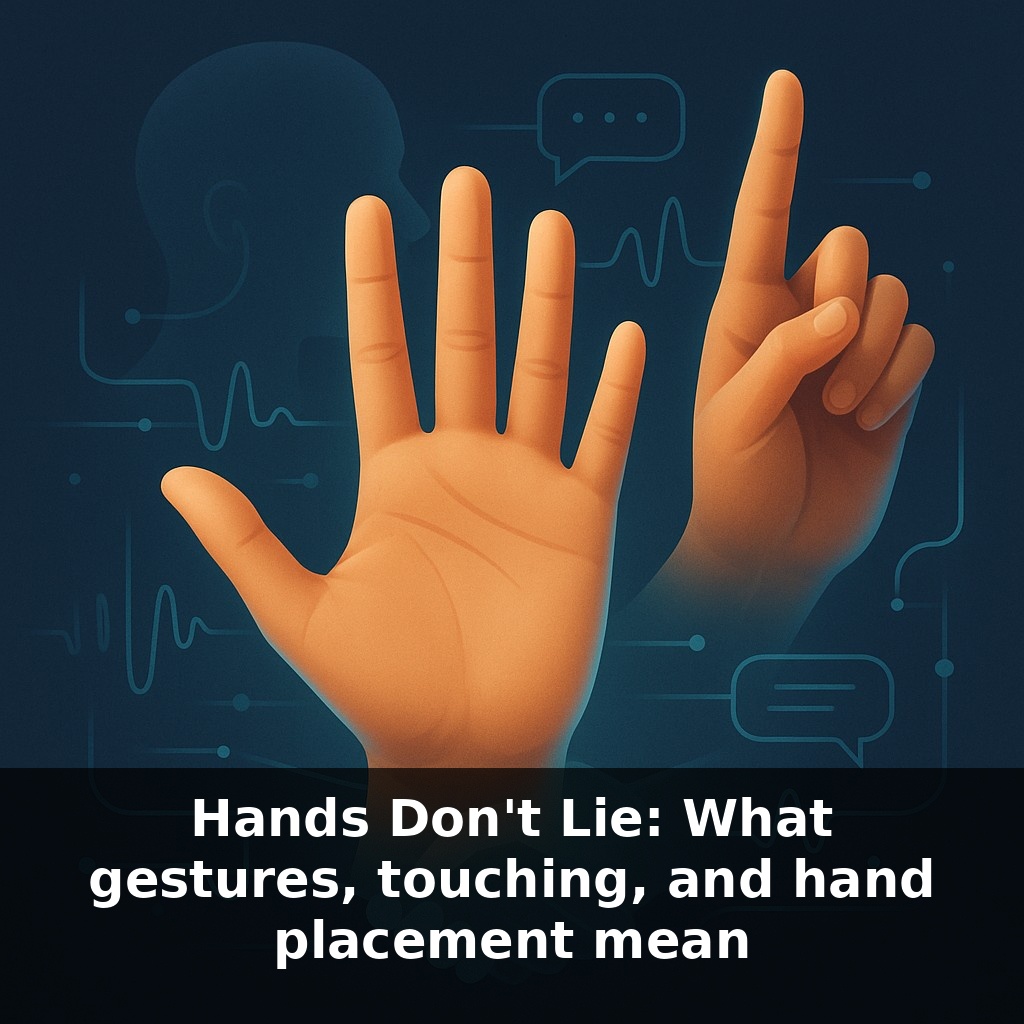
Hands Don't Lie: What gestures, touching, and hand placement mean
📝 Transcript
About half of what your hands are “saying” never reaches your conscious mind. You stop a story mid-sentence when someone raises a single finger. You instantly trust the stranger with open palms—and tense at the one with a lingering handshake. Why do your hands speak so loudly?
Sixty to eighty percent of the emotional meaning in a face‑to‑face interaction rides on nonverbal channels—and your hands are often in the driver’s seat. They don’t just “decorate” your words; they regulate who speaks next, signal whether you’re safe to approach, and quietly broadcast how much power you think you have in the room. A handshake that lingers past five seconds can feel like a dominance move; fingers drumming on the table can rush a speaker more effectively than any interrupting word. Touch adds another layer: at the right temperature and pressure, it can calm a crying infant or reassure a stressed colleague in under a second, long before either of you finds language. And then there’s culture: the same thumbs‑up that reads as casual encouragement in Los Angeles can land as a serious insult in parts of the Middle East. Your hands are fluent—even when you’re not aware you’re “speaking.”
Your hands aren’t just reacting to the moment; they’re running habits you’ve practiced for years. The way you fidget with a pen in tense meetings, clasp your hands when you pitch, or keep them buried in your pockets around new people—these patterns form a kind of personal “accent” others quickly pick up on. Neuroscience studies suggest your brain links specific hand movements to emotional states, so you may literally rehearse anxiety with every nervous self‑touch. The flip side is hopeful: with deliberate practice, you can retrain these micro‑movements so your default signals match the presence and warmth you actually intend to send.
Subscribe to read the full transcript and listen to this episode
Subscribe to unlockSubscribe for $1.99/month to unlock the full episode.
From this course
Body Language & Nonverbal Communication
7 episodesUnlock all episodes
Full access to 7 episodes and everything on OwlUp.
Subscribe — $1.99/monthLess than a coffee ☕ · Cancel anytime

