You brushed your teeth today, maybe twice—and missed two chances to rewire your brain. Research suggests even tiny moments of mindfulness, under five minutes, can noticeably reduce stress. So why do our most reliable daily routines stay completely mindless?
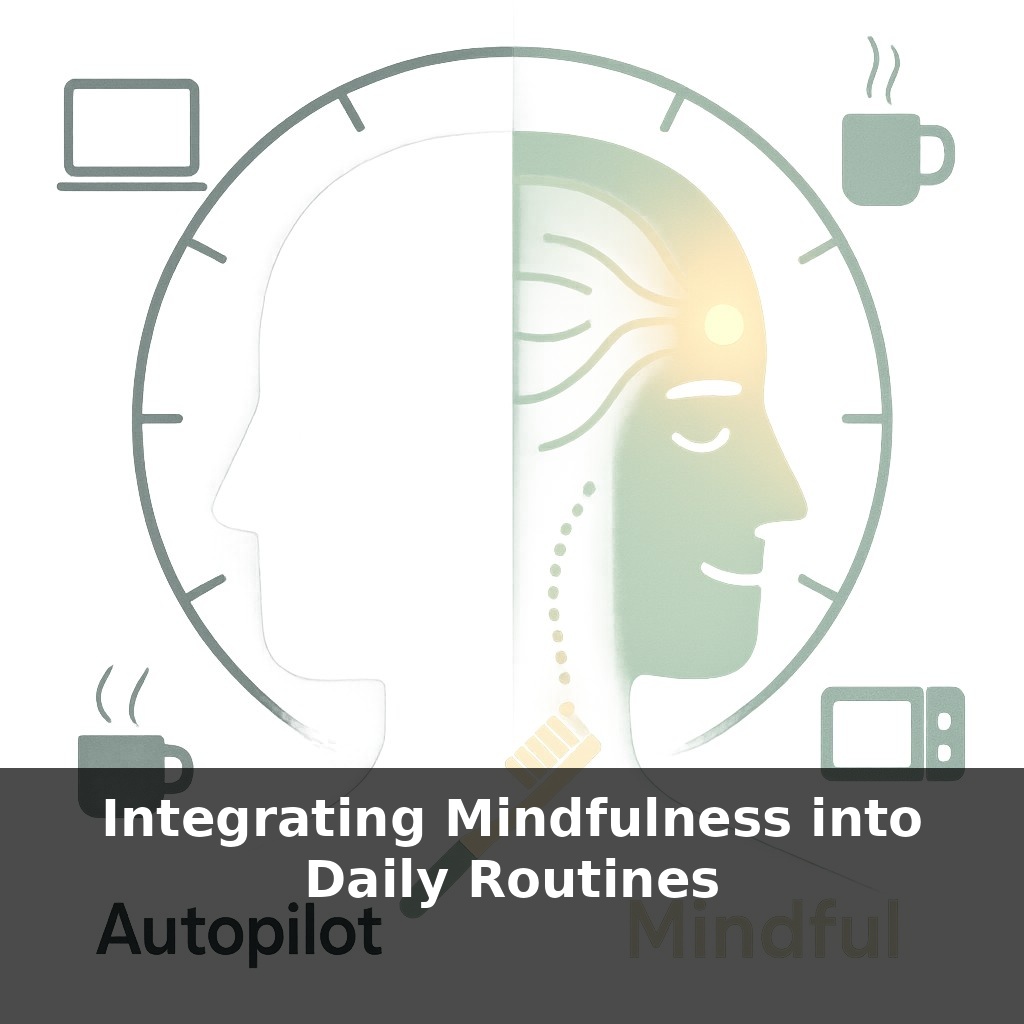
That tooth‑brushing moment is just one example. Your day is full of similar “autopilot zones”: opening your laptop, waiting for an app to load, standing by the microwave, walking to the bathroom between meetings. They’re like unused parking spaces in your schedule—always there, rarely noticed. Research on “micro‑practices” suggests these tiny in‑between moments are long enough to nudge attention and mood, yet short enough that your brain doesn’t resist with “I don’t have time.” Instead of carving out a sacred 30‑minute practice block, you start by quietly upgrading what’s already happening. Over time, those upgrades link together, the way scattered streetlights can eventually illuminate an entire road. In this episode, we’ll look at how to turn three ordinary routines into reliable anchors for awareness—without adding a single new appointment to your calendar.
Modern habit science adds an important twist: your brain loves patterns more than it loves “good intentions.” It doesn’t care that mindfulness is healthy; it cares that you always reach for your phone the moment you sit down, or scroll during every train ride. From a Buddhist perspective, this patterned grasping is called “conditioning” or habit-energy. The opportunity isn’t to fight routines, but to redirect them. Think of each cue—unlocking your phone, waiting in line, opening the fridge—as a tiny doorway. The question becomes: what do you train yourself to step into when that door opens?
A useful place to start is with a core Buddhist observation: the mind is already practicing something all day long. Every time you refresh your email, replay an argument, or plan three steps ahead in a conversation, you’re training specific patterns of attention. The real question is not “am I practicing?” but “what am I practicing, over and over, without noticing?”
Philosophically, this is close to the Buddhist idea of karma stripped of mystique: repeated mental actions leave grooves. Modern neuroscience calls this neuroplasticity; both point to the same fact that what you rehearse becomes what you are ready to repeat. Integrating mindfulness into daily routines is less about adding a new activity and more about editing the rehearsal schedule your life already runs.
Here’s where ordinary habits become powerful. Three common routines are especially promising: transitions, consumption, and maintenance.
1. Transitions: walking from one room to another, switching apps, joining a meeting. These are “edge moments” where your identity quietly shifts—from friend to worker, from reader to performer. In Buddhist practice, such thresholds are prime territory for remembering intention: Who am I about to be, and how do I want to show up?
2. Consumption: eating, scrolling, listening to news. These are moments when the mind is being “fed”—not only with calories or information but with moods and narratives. Brief awareness here can reveal how quickly a headline tightens your chest or a snack turns into self-critique.
3. Maintenance: brushing teeth, washing dishes, tidying a desk. These can feel trivial, yet they echo a central theme in Buddhist mindfulness: caring for what’s already here. Attending closely while you maintain your environment trains a gentler, less exploitative stance toward your own body and the world.
One practical layer from habit research: make each routine predict a specific, tiny practice. After you click “join meeting,” one slow breath. When the kettle starts boiling, feel your feet on the floor. When you close the front door, notice three sounds. It’s like updating a piece of software so that when one process starts, a secondary, lightweight process runs automatically in the background, adding stability without slowing anything down.
Over days and weeks, these paired actions form a kind of philosophical training ground. You’re not just calmer; you’re implicitly asking, many times a day: Can I be here, with this, without immediately needing it to be different?
Think of three everyday “modules” in your life: your commute, your meals, and your shutdown routine at night. Each one can quietly run a different “program.”
On your commute, instead of filling every gap with podcasts, let the first minute of movement be silent. Notice just the visual field: colors, shapes, motion. Not “pretty” or “ugly,” just data arriving. You’re training the mind to receive without immediately judging.
With meals, use only the *first* bite as a checkpoint. Feel the texture, register the flavor, then continue normally. Over time, patterns surface: which foods you inhale when anxious, which you linger over when relaxed. This isn’t about eating slowly; it’s about making cause-and-effect in your own life more visible.
At night, when you plug in your phone, do a 10-second “cache clear”: recall one thing that went differently than you expected today. Pleasant or unpleasant doesn’t matter. You’re loosening the grip of your default storyline—that life should match the script in your head.
Taxis with no drivers, homes that talk back, and classrooms run partly by code: in that world, awareness might become a shared responsibility between humans and systems. Your calendar could leave “white space” after thorny meetings, or city crosswalks might lengthen signals when crowd tension spikes. The open question is ethical: who decides when your attention is nudged, and toward what—calm, consumption, or critical reflection on the very systems doing the nudging?
Over time, these small check‑ins don’t just soften bad days; they reshape what “a normal day” feels like. Meetings get a touch less reactive, meals a bit less rushed, commutes slightly more spacious—like widening the margins on a dense page. The text of your life is the same, but there’s suddenly room to breathe, notice, and choose what actually matters.
Before next week, ask yourself: - “In the first 10 minutes after I wake up, what’s one everyday habit (like brushing my teeth or making coffee) where I can deliberately slow down and notice five sensory details instead of checking my phone?” - “During something I usually rush through—like my commute, washing dishes, or walking the dog—how can I turn it into a ‘mini practice’ by focusing on my breath for 10 cycles and gently returning my attention each time my mind wanders?” - “When I feel stressed today (maybe during email, meetings, or parenting), what specific cue—like my shoulders tensing or my jaw clenching—can I treat as a friendly reminder to pause for three conscious breaths before reacting?”