About half the content on LinkedIn gets skipped in under a second—*not* because it’s bad, but because it feels irrelevant or repetitive. One post sounds like a sales pitch, the next like a press release. Yet a few voices still spark real conversations. Why them, and not you?
58% more comments. That’s the gap between a polished “corporate” update and a simple first‑person story from you, the human behind the profile. And here’s the twist: posting *less* often (2–4 times a week) with the right mix of content beats showing up every single day with random ideas.
So if it’s not “post more” or “sound more professional,” what actually works?
A better way to think about your content is like planning a week of weather for your audience: some clear, sunny days (practical how‑tos), a few refreshing showers (thought‑provoking questions), and the occasional rainbow (social proof that something is working). The pattern matters more than any single post.
In this episode, you’ll learn what to post, how often, and how to stay visible without crossing that line into “ugh, not them again” territory.
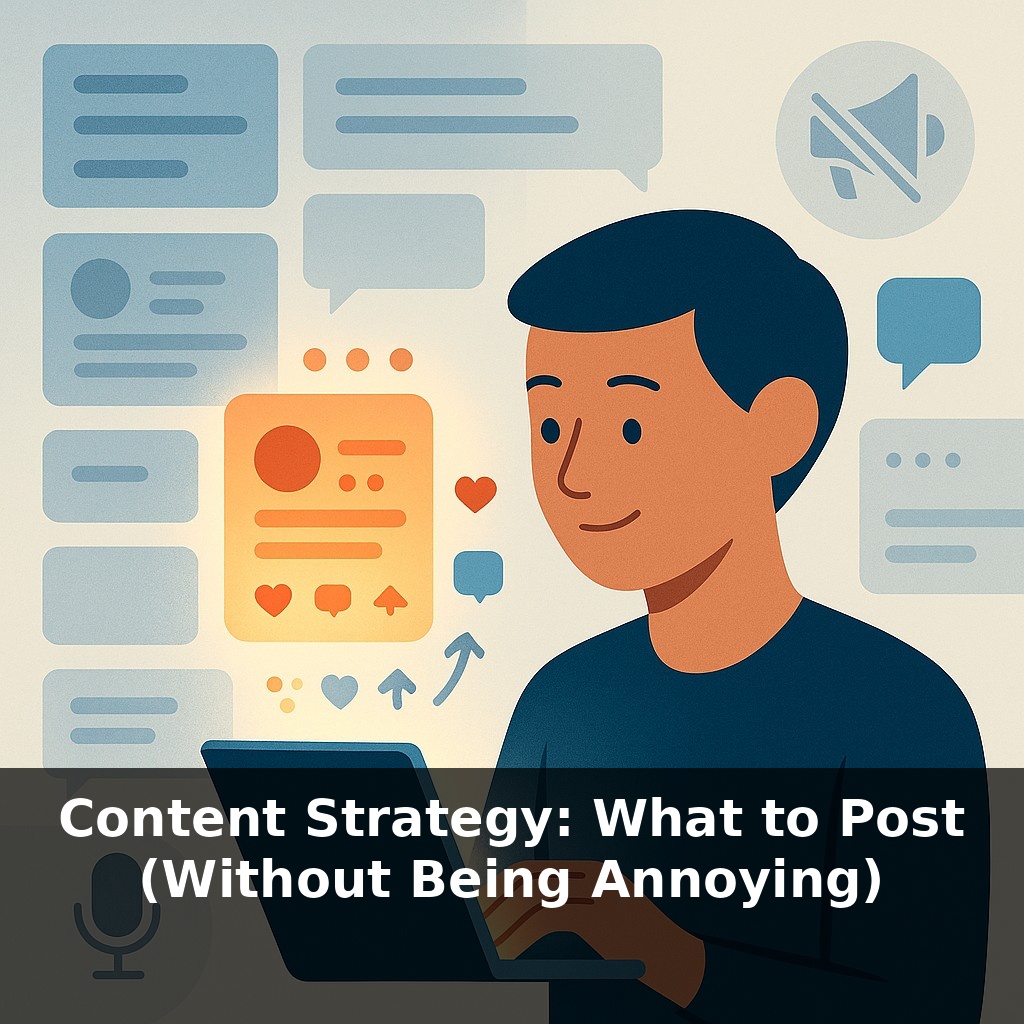
Here’s the tricky part: once you accept that “more posts” isn’t the answer, the next question hits—*so what do I actually put out there?* Most people default to two extremes: either only polished “big announcement” updates, or random thoughts that never connect back to anything meaningful. The result is a feed that looks busy but doesn’t build trust.
A more useful question is: *what does my audience need from me this week to move one tiny step forward?* Sometimes that’s a quick breakdown of a mistake you made, other times a behind‑the‑scenes snapshot of how you think through a real problem.
Let’s zoom in on *what* to share—post by post—so you’re useful, not noisy.
Think of three “content lanes” you can keep cycling through:
**1. Educational posts: “Here’s how I’d solve this.”** These are your practical, problem-solving pieces. Not theory—*application*. - Break down a single tiny problem you see all the time: a messy dashboard, an awkward stakeholder update, a broken onboarding step. - Show your thinking: “Here’s what I’d do first, second, third.” - Keep it narrow enough that someone could try it today.
Make it concrete: - “3 things I look for in a broken funnel before I touch the ads.” - “The email I send when a project is behind—but I still need trust.”
**2. Conversational posts: “Let’s talk about this tension.”** Here you’re not the expert with all the answers; you’re the peer with a sharp question. - Take a friction point in your field and turn it into a clear either/or: - “Which is harder: getting buy‑in for a risky idea, or killing a legacy project?” - Add *one* line of context from your experience, then ask for theirs.
You’re not trying to win an argument—you’re trying to surface patterns in how people think.
**3. Social‑proof posts: “This approach actually worked.”** This is where many people slide into bragging or vague “humbled to…” updates. Instead: - Anchor the story in a specific *before → after* shift. - Emphasize the process more than the win. - Pull out one lesson others can reuse.
For example: “We cut onboarding time from 21 to 9 days by changing exactly two things…” and then walk through them.
Now layer in *format* choices: - Use carousels when you’re walking through a process step‑by‑step. - Use a short text post for a sharp question or spicy opinion you can explain in <200 words. - Use a quick native video when your tone or screen demo carries the value.
You don’t need a huge calendar. You need a repeatable rhythm: each week, one post from each lane, tuned to a real situation you’ve actually lived through. Over time, people stop seeing you as “posting a lot” and start seeing you as “the person who always has something oddly specific and helpful to say.”
Think of your posts like a good doctor’s notes: short, specific, and tied to a real case, not a textbook. When you’re stuck on *what* to share, zoom in on a single “patient file” from your week.
Educational example: “Client’s CRM had 41 ‘lead stages.’ Here’s the 10‑minute exercise we used to cut it to 6 without causing panic.” Screenshot a whiteboard sketch, then outline the steps in a carousel.
Conversational example: “Today’s dilemma: a junior on my team shipped a flawed report—but owned it fast. Do you praise the ownership or zoom in on the mistake first?” Add one sentence on what you did, then ask how others handle it.
Social‑proof example: “Last quarter our demo‑to‑close rate flatlined. We didn’t touch pricing—we rewrote 2 opening questions. Close rate jumped 9%. Here’s the exact script change.”
Your goal isn’t to impress; it’s to let people “look over your shoulder” as you think, decide, and adjust.
Algorithms won’t save you from sounding generic. As AI-generated posts flood feeds, people will filter harder for *texture*: specifics, lived experience, and honest “here’s where I was wrong” moments. Treat each post like a studio sketch, not a billboard—quick studies that reveal how you think, not polished slogans. Over time, that visible practice compounds into trust: people start recognizing your fingerprints on ideas before they even see your name.
Treat this like sketching in a notebook, not carving in stone. Share small experiments, note what actually resonates, and let that guide the next draft. Posts that feel like open doors—inviting people to step in, add a detail, or disagree—age better than polished monologues. Over months, those “rough sketches” quietly add up to a recognizable body of work.
To go deeper, here are 3 next steps: 1) Block 30 minutes today to load your best-performing posts into **Airtable** or **Notion** and tag each one with the “3 E’s” from the episode (Educate, Entertain, Engage) so you can instantly see what your audience actually responds to. 2) Open **AnswerThePublic** or **AlsoAsked.com**, type in your niche topic, and pull 10 real audience questions—then drop them straight into a simple weekly content rhythm using the “anchor + 2 support posts” framework they described. 3) Grab a copy of **“Content Chemistry” by Andy Crestodina** or bookmark **Justin Welsh’s LinkedIn content OS** and adapt one of their content templates into a “non-annoying” series (e.g., a weekly “Mistake to Mastery” post) that you schedule this week using **Buffer** or **Later**.