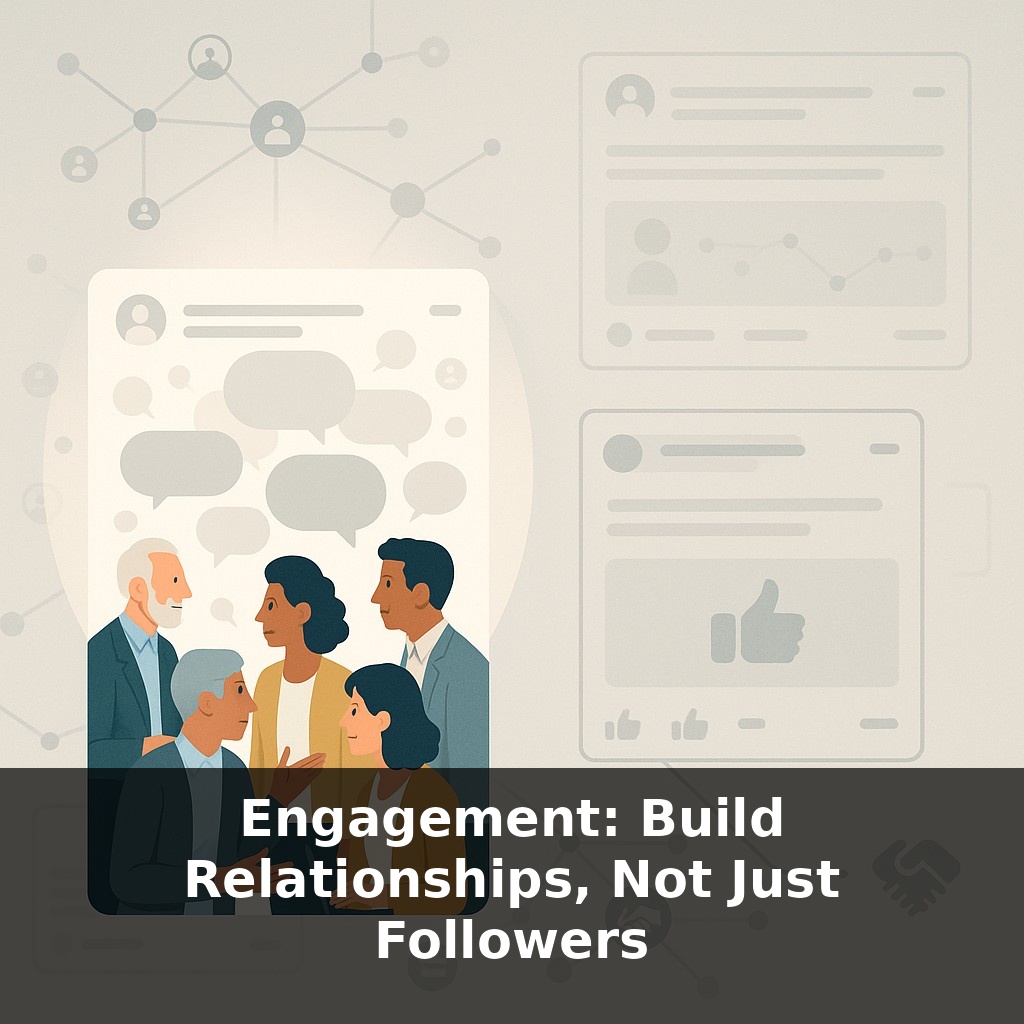
“On LinkedIn, posts with real conversations in the comments get about twice the clicks of posts that only collect likes. You’re scrolling your feed: one post has a wall of thoughtful replies, another has silent thumbs‑up. Which one pulls you in—and why does that matter for your career?”
Here’s the shift most professionals never make on LinkedIn: they optimise for visibility, not relationships. Views feel good, but views don’t vouch for you in a hiring meeting, introduce you to a decision‑maker, or send you a warm lead. People do. And the data backs this up: internal LinkedIn research suggests that networks combining close colleagues with looser, cross‑industry contacts are associated with a 48% higher chance of landing an interview within 3 months. That advantage doesn’t come from passive connections; it comes from consistent, two‑way interaction—comments that move a discussion forward, DMs that offer help or insight, and small collaborations that put you side‑by‑side with others. In a platform of 930+ million members, your edge isn’t “reaching everyone”; it’s being meaningfully known by the right few hundred.
To turn that advantage into something you can actually use, zoom in on where outcomes really come from. A hiring manager who has read three of your thoughtful comments is far more likely to open your message than someone who just saw your name on a connection request. A prospect who has exchanged 5–6 DMs with you about their challenges will trust your proposal more than one who downloaded a generic lead magnet. And since more than 65% of B2B leads on LinkedIn start from personal profiles, every deliberate interaction you initiate is a potential opportunity, not just a social touch.
Most people treat LinkedIn like a broadcasting tower: post, post, post—and hope something happens. The people who consistently turn it into job offers, clients, and referrals treat it like a lab: they run small, repeatable engagement experiments with specific individuals and track what actually converts.
Start with a simple, numbers‑driven lens: instead of asking, “How many people saw this?”, ask, “How many people moved one step closer to me?” For example: - You comment on 10 posts from people in your target field this week. - From those 10, 6 reply. - You send 4 short, relevant DMs that continue the thread. - 2 turn into 20‑minute conversations. That’s a 20% “conversation rate” from initial comments—not huge on paper, but if you repeat that every week for 3 months, you’ve had ~24 focused calls. That is where recommendations, referrals, and collaborations are born.
Think in terms of “relationship actions,” not “content actions.” Relationship actions are specific: - 3–5 comments per day that reference a concrete detail from the post (a number, a framework, a challenge) and add one useful angle. - 1–2 targeted DMs per day that tie back to a recent public interaction (“You mentioned X in your post—here’s the template/checklist I use for that.”) - 1 small collaboration per week: a joint post, carousel, or short interview with someone whose audience overlaps with yours by at least 30–40% (same buyers, adjacent roles, or similar seniority).
Design your feed to make this easy. Follow and connect with: - 30–50 people who hire for the roles you want. - 30–50 peers at your level in similar companies. - 20–30 “bridge” profiles in neighbouring functions (e.g., if you’re in product, add design, data, and sales leaders).
Then, each weekday, give yourself a 15‑minute “micro‑sprint”: - 5 minutes: scroll only those people, save 3 posts worth engaging on. - 7 minutes: write 3 comments of 3–5 lines each. - 3 minutes: send 1 DM that clearly does one of three things: offers a resource, asks a precise question, or proposes a tiny next step (like a 10‑minute intro chat).
Your challenge this week: pick 15 people (a mix of hiring managers, peers, and bridge profiles). For 5 consecutive days, interact with at least 5 of them daily—publicly or via DM—without posting anything yourself. At the end of the week, count: how many replied, how many ongoing threads you have, and how differently your feed feels when you log in.
Commenting “Great post!” 20 times a day won’t move anything. Think in tiers of depth. Level 1: add 1 concrete detail. Example: a sales leader shares a win; you reply with a short script that helped you close a similar deal. Do that 3 times today. Level 2: surface a pattern. Someone posts about a hiring challenge; you note that 4 of your past managers struggled with the same issue and share the one hiring question that filtered out 70% of bad fits. Aim for 2 of these this week. Level 3: co-create. If a post sparks a long back‑and‑forth, ask, “Want to turn this into a quick joint post? I’ll draft 150 words and tag you.” Run this once in the next 10 days.
Your goal: have 10 people who’d recognise your name *and* recall a specific idea you shared. That’s the start of strong‑ and bridging‑tie capital you can actually use.
Algorithms are shifting from “who follows you” toward “who engages *deeply* with you.” As this accelerates, aim to have 50–100 people who reliably react, comment, or reply to you each quarter. That small core can multiply your reach more than 5,000 passive followers. Expect more tools that highlight “top engagers,” prompt timely check‑ins, and flag stale contacts. Treat those signals like a CRM: review weekly, re‑engage 5–10 people, and track which 3–5 consistently open doors.
Treat this like compounding interest: 5 targeted comments, 2 intentional DMs, and 1 small collaboration each weekday means ~40 high‑quality touchpoints a month. Over a quarter, that’s 120 chances to be remembered, recommended, or referred. Protect that habit first; follower growth can trail behind as a side effect of consistent, useful presence.
Try this experiment: for the next 7 days, personally DM the first 5 people who comment on your posts and start a real conversation by asking one specific follow-up question about what they shared (no “thanks!” or generic replies allowed). Keep a simple tally of how many of those people: (1) respond, (2) reply more than once, and (3) engage again with your content that week (comment, share, or story reply). At the end of the week, compare that group’s activity to your usual “likes-only” audience and decide one change you’ll make to your daily routine to prioritize these relationship-style interactions.