Right now, as you listen, Apple is sitting on a cash pile larger than the foreign currency reserves of many countries. Yet a smaller local business can be closer to “financially healthy.” How can that be true? Let’s step into the numbers that quietly decide who’s actually safe.
A single page in a company’s report quietly answers three blunt questions: What do you own? What do you owe? And what’s really left for you? That page is the balance sheet, and it often tells a different story than the bank balance you see on a slide. A business can look busy, have money flowing in and out, yet be one delayed payment away from crisis. Another can grow slowly, but stand on rock-solid footing. The difference usually shows up here first. On this snapshot, machines, inventory, software, and even unpaid customer invoices stand on one side; loans, supplier bills, and tax obligations line up on the other. Your job isn’t to memorize every term—it’s to read this snapshot well enough to spot stress, strength, and hidden risks long before they become headlines.
On that dated page, every line is a clue about how the business actually runs day to day. Some items move quickly, like products waiting to be sold or invoices waiting to be paid. Others barely move at all, like a factory building or a long-term loan. Grouping them by how soon they might turn into cash—or demand cash—lets you see whether the next few months look smooth or tight. That’s why investors stare at things like the working capital ratio and short-term debt. They’re not just reading numbers; they’re tracing the near‑future chain reaction if sales drop or payments arrive late.
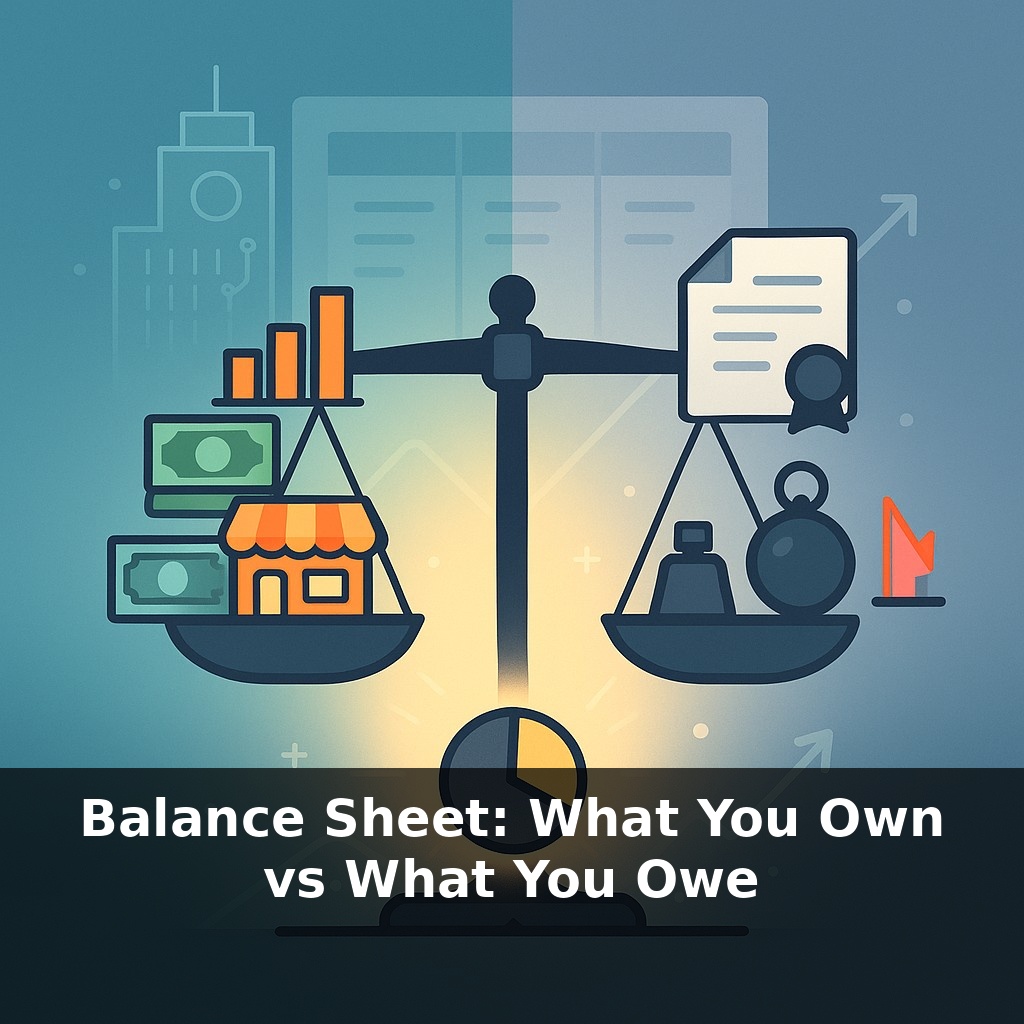
Think of the balance sheet as three tight-knit sections having a quiet argument about reality: assets insisting, “Here’s what we’ve built up,” liabilities replying, “Here’s what we’re owed back,” and equity saying, “Here’s what’s really left over after everyone else gets paid.”
Start at the top. Items due soonest usually appear first. You’ll see things like customer invoices, inventory, and cash equivalents grouped together; they’re the pieces most likely to move in the coming months. Below that, you’ll find items that change slowly: property, equipment, long-term investments, deferred tax assets. These rarely swing overnight, which is exactly why sudden changes here—like a big “impairment” or “write‑down”—deserve extra attention. They often mean past optimism met present reality.
On the other side, obligations stack up in a similar order. Supplier bills, tax payables, and the next twelve months of loan payments sit near the top. Farther down, you’ll see bonds, bank loans, leases, and other long-dated commitments. Together, they quietly encode the business model: is this company mostly funded by customers paying upfront, by banks, by bond markets, or by shareholders?
Equity at the bottom isn’t just “founder ownership.” It’s a running scoreboard of accumulated profits and losses, capital raised, buybacks, and payouts. A company that has earned billions over time but returned most of it as dividends can show modest equity—even if it’s thriving. Meanwhile, a company that constantly raises new capital can show large equity with very little proven earning power.
Real-world examples show how extreme this can get. Apple’s enormous cash and marketable securities line reflects years of profits exceeding what it spends and returns. Lehman Brothers, before failing, showed a huge asset base funded mostly by borrowed money; the thin sliver of equity meant small hits to asset values erased the cushion.
One helpful lens: ask which lines are judgment-heavy. Valuing complex securities, estimating bad debts from customers, or pricing slow-moving stock all involve assumptions. When those assumptions shift, equity absorbs the shock.
Your challenge this week: take one company you know—maybe your employer, a supplier, or a public firm you follow—and pull up its latest balance sheet. Don’t try to “analyze” it in full. Instead, do a focused three-part experiment:
1. Circle the three largest lines on the asset side. Ask: how quickly could each realistically turn into cash in a tough quarter?
2. Circle the three largest obligations. Ask: could they still be met if sales fell 30% for six months?
3. Look at total equity. Ask: if key assets were marked down by 10%, would equity still be positive?
Write down your gut answers, not polished ones. The goal isn’t to be precisely right; it’s to train your eyes to move past the headline numbers and notice where pressure would actually show up first.
Look at two very different businesses. First, a tiny design studio: five laptops, a small bank balance, a few unpaid client invoices, and no loans. Its numbers might look boring, but most items can be turned into cash quickly, and almost no one is waiting to be repaid. Now compare that with a fast‑growing online retailer. It shows impressive revenue, but its shelves are packed with unsold products bought on credit, and it owes huge amounts to suppliers in 30 days. One slow season, and that timing gap suddenly matters more than its sales story.
Here’s where the dated nature of that page becomes crucial: last quarter’s calm setup can turn into this quarter’s squeeze if inventories pile up or customers pay late. A single new loan or big equipment purchase quietly reshapes the picture too. Over time, you can watch patterns: does the company steadily build a cushion, or does it repeatedly stretch what it owes against what it owns, betting the next period will go perfectly? The answer often shows up there long before any crisis hits the headlines.
Over the next decade, who “wins” in many industries may be decided less by flashy products and more by who quietly tends their balance sheet. As rates fluctuate and credit tightens, firms with modest leverage can move like hikers carrying light backpacks—able to climb, pivot, or retreat when the weather turns. Meanwhile, companies built on optimistic asset values may find that a small storm forces them to stop, sell gear at a discount, or abandon the trail altogether.
Over time, that dated page becomes less a report and more a storyline: choices about inventory, debt, and payouts turning into visible plot twists. Treat each new version like a season finale—compare it with earlier episodes. Are buffers growing or shrinking? Are promises piling up faster than resources? The pattern you see there is often the future you’re walking toward.
Here’s your challenge this week: By Friday, list every asset you own (cash, checking/savings balances, investment accounts, retirement accounts, your car, home equity, and any business ownership) along with their current dollar values, and every liability (credit cards, student loans, car loans, mortgage, personal loans) with exact balances. Then calculate your net worth by subtracting total liabilities from total assets, and circle the **three biggest** line items on each side (top 3 assets and top 3 debts). Before the week ends, choose **one** of those top 3 debts and set up either an automatic extra payment (even $25/month) or a specific payoff date in your calendar.