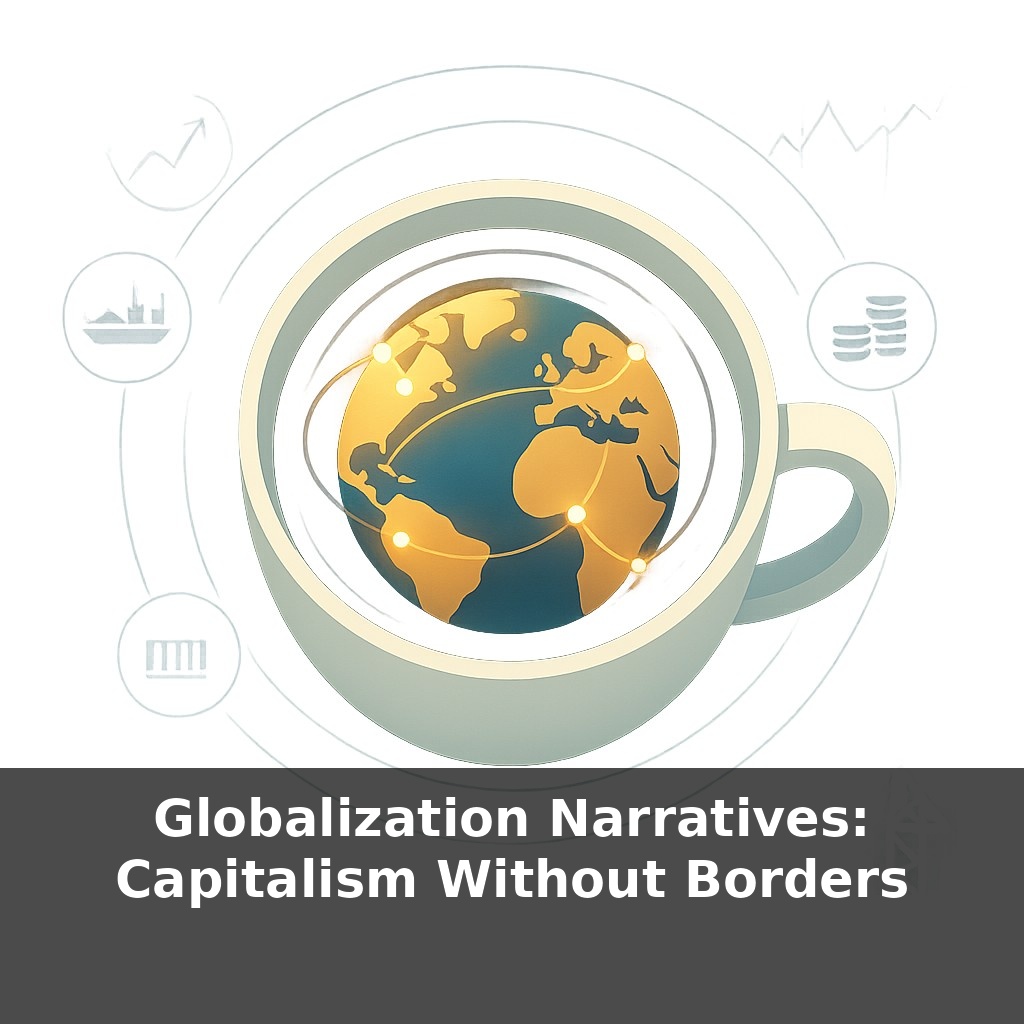
Right now, more than half of everything the world produces crosses a border. A coffee in London pays a farmer in Brazil, enriches a trader in Singapore, and boosts profits in Seattle. Globalization isn’t out there—it’s quietly budgeting your morning before you’re fully awake.
That morning coffee budget is part of a much bigger script. Since 1950, world exports have swollen from a side note in the economy to nearly a third of global output. But here’s the twist: most of that trade doesn’t happen in bustling ports or bazaars—it happens inside the private highways of multinational corporations. When an iPhone 14 ships, it’s not one product from one country; it’s the endpoint of contracts stretching across 43 countries, from camera lenses to rare earths to code.
This isn’t just about gadgets. Foreign investors now hold tens of trillions of dollars in factories, mines, server farms, and brands outside their home countries. That web can fuel dramatic gains, like China lifting hundreds of millions from extreme poverty through export-led growth. Yet it also concentrates power in boardrooms far from the places where workers live, vote, and protest, setting the stage for conflict over who really benefits.
But the story isn’t just written in trade stats and investment flows; it’s lived in streets, screens, and paychecks. Factories chase lower wages across borders, while code and customer service leap time zones overnight, reshaping whose jobs feel secure and whose feel disposable. Political parties rebrand around “open” versus “closed” economies, while cities compete like artists bidding for a global audience—offering tax breaks, talent, and infrastructure as their portfolio. Meanwhile, data moves fastest of all, turning platforms into quiet gatekeepers of how global capitalism feels from your couch.
Borders still exist on maps and passports, but less so in the way value gets made. What looks like “a product from country X” is often just the final stop on a long relay. A Zara jacket tagged “Made in Bangladesh” may use cotton from West Africa, dyes from Germany, design work from Spain, and retail strategy crafted in a London analytics team. The national label is a convenient fiction pasted onto a deeply international process.
This is where the narrative of “capitalism without borders” gets both persuasive and misleading. On one hand, earnings calls in New York react to elections in Argentina and wage strikes in Vietnam within minutes. Supply disruptions in one port can idle factories a continent away. Even cultural products are woven into this circuitry: a K‑pop group tours Latin America, streaming revenue flows through a US platform, ad buyers in Europe chase that attention, and fans everywhere remix the content on their own channels.
On the other hand, borders still matter—just not in the old ways. Tariffs may fall, but visa regimes decide who can move their body as easily as firms move their capital. A software engineer in Lagos can ship code to a client in Berlin in seconds, yet may wait years for a work permit to set foot in the office. Trade agreements become dense rulebooks about whose standards count: whose food safety norms, whose data regulations, whose labor rights are “global” and whose are optional.
Power tilts toward those who can play multiple jurisdictions against each other. A corporation can shift profits to low‑tax islands, move production when wages rise, and lobby different governments with the credible threat of leaving. Workers and small firms rarely have that exit option. They live inside one legal system while competing inside many.
Think of international rule‑making less as a neutral referee and more as a crowded writers’ room deciding the script. States, corporations, NGOs, and sometimes social movements argue over the plot: should cross‑border rules primarily protect investors, consumers, the environment, or national sovereignty?
Your challenge this week: trace the path of one everyday object you use—shoes, phone case, snack—and map at least five different places, rules, or institutions that quietly shape how it reached you. Then ask: who in that chain could walk away from this arrangement, and who is locked in?
A streaming series gives a glimpse of how tangled this script can be. A Korean drama is shot in Seoul with money from a US fund, licensed to a California platform, subtitled in Manila, promoted by Brazilian influencers, and watched on a TV assembled in Mexico using components from East Asia. Each step is governed by different deals: tax credits for filming, licensing contracts, brand‑safety rules, union agreements, privacy laws, even neighborhood noise ordinances around the set.
Or take climate action. When a carmaker in Germany commits to “net‑zero,” it leans on cobalt from Congo, lithium from Chile, software from India, and carbon credits from forest projects in Peru. Activists in one country can pressure a brand, but the emissions, jobs, and profits are scattered. Coordination starts to look less like a single world government and more like a constantly renegotiated art festival, where curators, sponsors, and local authorities argue over who gets the prime wall space.
Borders may re‑thicken in unexpected ways. Carbon tariffs, human‑rights due‑diligence laws, and data‑localization rules can act like new kinds of checkpoints, sorting whose goods and services are “clean” enough to pass. Demographics may quietly redraw the map: as younger populations in Lagos or Dhaka gain skills and bargaining power, the center of economic gravity could drift toward them, even if old institutions in Washington or Brussels still write most of the contracts.
So the story isn’t whether borders vanish, but who learns to write across them. From neighborhood co‑ops to cross‑border unions and climate alliances, new authors are testing lines in the script—sharing tactics, pooling funds, syncing campaigns. Like hikers comparing notes at a trail junction, they can’t redraw the map alone, but they can choose different routes through it.
Try this experiment: For one week, track a single everyday product you use (like your phone, coffee, or T-shirt) as if you were an investigative journalist of globalization. Each day, spend 10 minutes researching one step of its journey—where its raw materials come from, where it’s assembled, which corporations control each stage, and what trade agreements or labor conditions make its low price possible. Then, deliberately swap that product once (e.g., buy from a local roaster instead of a global coffee brand, or a locally made shirt instead of fast fashion) and notice how it changes not just the price, but your sense of connection to the people and places behind it. At the end of the week, decide whether you want to permanently change that one consumption habit based on what you discovered.