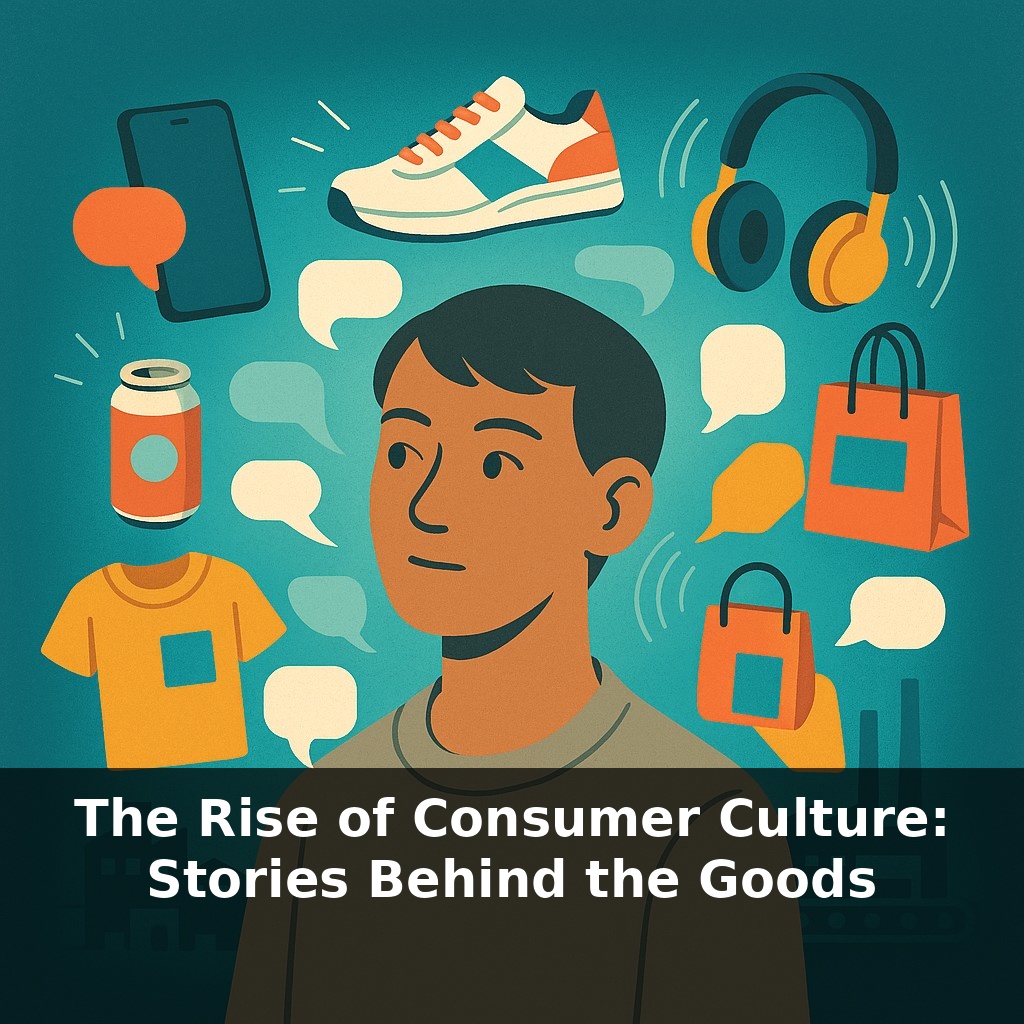
Right now, you’re probably within arm’s reach of at least ten branded objects—and each one is quietly telling a story about who you are. In this episode, we’ll step inside those stories and ask: when did everyday stuff start speaking louder than our own voices?
Those quiet stories aren’t accidental; they’re carefully scripted. In the last century, three forces began working together behind the scenes: factories learned to flood the world with goods, advertisers learned to give those goods personalities, and paychecks slowly grew large enough to make saying “yes” feel easy—and saying “no” feel like missing out.
This is how a car stopped being just a way to get from A to B and became shorthand for success; how a phone turned into a pocket-sized résumé of taste, tech-savviness, and income. A shirt is no longer just fabric—it’s a subtle broadcast about which tribe you belong to.
In this episode, we’ll trace how those forces converged, how they turned shopping into a kind of everyday storytelling, and how those stories ripple outward—to jobs, to the planet, and to the way we measure a “good life.”
Walk through a supermarket or scroll an online store, and you’re not just choosing products—you’re entering a contest of stories built on scale and repetition. After World War II, assembly lines didn’t just get faster; they got smarter, turning out near-identical goods by the millions. At the same time, rising wages meant more people could say “yes” more often, and global brands began treating the world as a single, sprawling marketplace. That’s how we reached a point where a handful of companies can shape closets, kitchens, and screens on every continent—often long before we notice they’re doing it.
Stand in front of a bathroom cabinet or a shoe rack and you can see the rise of consumer culture stacked, folded, and half‑used. None of this volume was inevitable. It took a specific historical collision to make “owning lots of stuff” feel not just possible, but normal—even virtuous.
One crucial shift happened long before malls and influencers. In 18th‑century London and Paris, growing middle classes started buying printed cottons, ceramics, and mirrors not just for use, but for display. Tea sets and patterned wallpaper turned into props for a new kind of social performance: showing that you were refined, modern, “improving.” The idea that the “right” objects could express a better version of you was already taking root.
Fast‑forward: by the late 19th and early 20th century, department stores in cities like Paris, New York, and Tokyo became physical temples to this logic. Under one roof you could wander, compare, and fantasize. Credit systems and easy returns lowered the risk of experimentation. Goods stopped arriving only when something broke; they arrived because a new color, cut, or feature promised a slightly upgraded self.
Twentieth‑century marketers learned to weaponize this. Instead of simply listing features, they segmented audiences: homemakers, businessmen, teenagers, “youth culture.” Products were designed with these imagined characters in mind, then sold back to people as tools to become that character. The post‑war teenager, especially in the U.S., is a turning point: pocket money plus cinema plus recorded music turned jeans, records, and hairstyles into badges of independence.
As incomes grew across more of the globe, that pattern scaled. The top 100 brands now hold trillions in combined value not because their products are always technically superior, but because they sell reliable shortcuts to meaning: “I’m successful,” “I’m ethical,” “I’m creative,” “I’m in the know.” A logo on a sneaker or a laptop lets strangers read a rough draft of your autobiography in seconds.
The costs, however, are quietly itemized elsewhere. That mountain of possessions in the average home implies webs of factories, warehouses, shipping routes, and landfills. Fast fashion’s torrent of textile waste is just one visible leak in a larger system that turns raw materials, labor, and energy into short bursts of novelty—and then into trash. Workers, meanwhile, often absorb the pressure for speed and low prices through long hours, low wages, and unstable jobs.
Yet the story isn’t one‑directional. People hack, resist, and reinterpret these scripts: they thrift luxury labels, repair old phones, or turn brand fandom into community. Consumer culture supplies the props, but the plot is still being argued over—in bedrooms, on resale apps, and in corporate boardrooms trying to anticipate the next desire before we can name it.
Open a drawer and pull out three objects at random—a mug, a T‑shirt, a gadget. Each one likely passed through a different hidden storyline. That mug might be a “limited edition” collaboration between a coffee chain and an artist, designed to turn a five‑minute caffeine ritual into a claim about taste. The T‑shirt could be a souvenir from a concert, carrying the emotional weight of a shared night and turning cotton into a portable memory. The gadget may have arrived through a “flash sale,” a ticking clock engineered to convert curiosity into urgency.
Now scale those stories up. Sneaker drops with artificial scarcity train people to camp on sidewalks or hit refresh on apps. Influencer “haul” videos teach viewers to read entire personality archetypes from one shopping bag. And loyalty points quietly nudge you to keep returning to the same brands, rewarding not just purchase but allegiance.
Your challenge this week: pick one object you own that feels strangely important. Trace its path—how you first heard of it, why you chose it, how you use or display it—and notice which parts of that story truly feel like yours.
Looming climate rules, digital ownership, and AI‑shaped feeds will quietly rewrite what “having enough” means. A wardrobe that auto‑resells unused clothes, a fridge that negotiates low‑carbon deliveries, a game skin that signals taste as strongly as real sneakers—these could feel as normal as email. Your future “stuff” may behave more like a subscription cast than a fixed cast of characters, updating itself while you’re busy living the plot.
Maybe the most unsettling twist is this: the “goods” are now learning back. Recommendation engines watch which items you hover over like a silent biographer, revising your character on the fly. As digital traces harden into profiles, a quiet question lingers: how much of tomorrow’s self will be co‑written by the things that are already watching you shop?
Try this experiment: For the next 7 days, pick one everyday item you normally buy on autopilot—like your favorite cereal, shampoo, or sneakers—and refuse to buy your usual brand. Instead, stand in the aisle (or scroll online) and compare at least three alternatives: look at packaging language, origin, price per unit, and any “story” the brand is selling you (heritage, lifestyle, eco-claims). Choose a different option based on one conscious value (e.g., local production, less packaging, no lifestyle hype) and note how that choice feels when you use it—more satisfying, annoying, neutral? At the end of the week, look at which items you actually missed and which “essential” brands turned out to be just habit plus advertising.