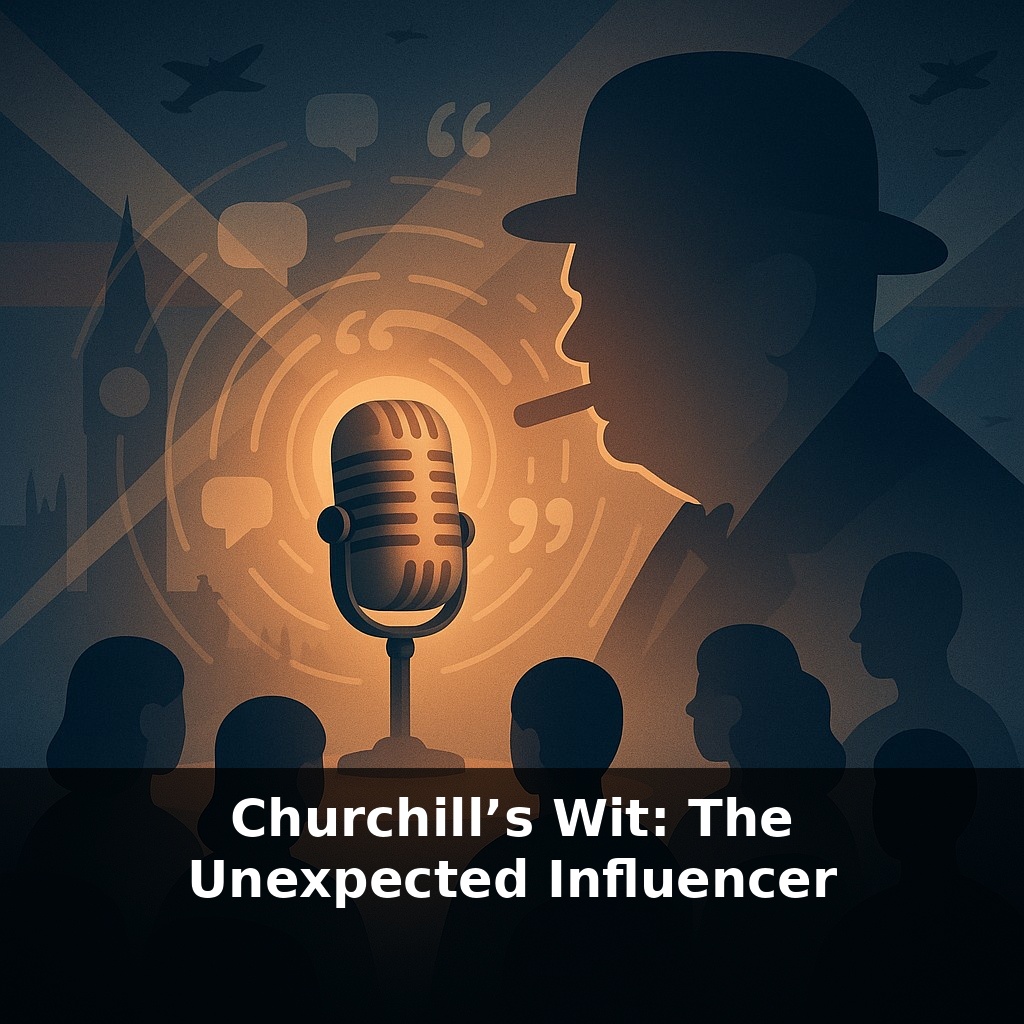
Bombs are falling, cities are dark, yet millions huddle around a crackling radio, waiting—not for news—but for one man’s voice. How did Churchill turn raw fear into stubborn courage, using nothing but carefully chosen words and the silence between them?
Churchill didn’t just “talk at” the nation; he engineered an emotional experience in real time. Those millions by the radio weren’t passive listeners—they were participants in a shared story where every pause, repetition, and sharpened phrase reminded them who they were and what they were fighting for. Behind the scenes, this wasn’t magic, it was method: pages layered with revisions, words swapped and re‑swapped until each line carried maximum punch with minimum clutter. This is where his real influence hides—not in the famous quotes, but in the discipline that produced them. Today’s leaders, from startup founders to presidents, try to bottle that same effect. They want to turn anxious teams into aligned missions, hesitant customers into committed communities, just by how they shape a sentence—and the expectations that wrap around it.
Churchill was doing all this in the tightest constraints you can imagine: limited airtime, censorship rules, morale on a knife edge, and an enemy actively jamming signals. Yet within those limits, he treated each broadcast like a strategic campaign, not a speech. He calibrated tone to the week’s events, seeded key phrases he knew newspapers would lift, and timed his messages with military developments so words and action reinforced each other. Modern leaders face their own constraints—algorithmic feeds, 8‑second attention spans, hostile comment sections—but the underlying challenge is the same: can you design language that still cuts through?
He also understood something most modern “content calendars” forget: people don’t just remember *what* you say, they remember *how it lands in their bodies*. Listen to his 1940 speeches and you can almost feel the built‑in rhythm—short, hammering clauses followed by a longer release. That wasn’t accident. Drafts show whole lines rewritten just to shift a beat or remove a syllable that broke the flow. He was scoring speeches the way a composer scores music.
And the numbers suggest it worked. Between 1940 and 1941, roughly 12.4 million Britons tuned in to his nineteen radio addresses—over 70% of the adult population. That’s not just an audience, that’s a weekly national ritual. Polling at the time shows his approval hitting 88% in July 1940, even as the military situation looked bleak. The circumstances didn’t improve; the *perception* of collective resolve did. That’s communicative leverage.
Another layer of the craft: he made the colossal feel graspable. Instead of reciting military briefings, he distilled stakes into a single, quotable image—“the few” of the Royal Air Force standing between Britain and defeat. Air Ministry notes suggest recruitment inquiries jumped sharply in the week after that phrase aired. Whether or not the exact 25% figure holds under scrutiny, internal memos are clear: language moved bodies, not just feelings.
Behind the scenes, this was a team sport. Researchers dug up facts, advisers suggested angles, civil servants combed through for security risks. Yet the final cadence, the exact ordering of words, stayed in his hands. He was less a lone genius than a ruthless editor‑in‑chief, protecting a distinctive voice while absorbing useful input.
Think of a startup CEO announcing a brutal pivot. The board, legal, and comms teams all contribute, but the founder’s phrasing will decide if employees hear “panic” or “plan.” Churchill lived in that same junction between many authors and one accountable voice—and treated it as a core part of leadership, not a cosmetic extra.
Churchill’s real legacy for modern leaders isn’t just “be inspiring,” it’s *how* he built messages that could survive stress. Think of a product team handling a catastrophic outage: customers are furious, engineers exhausted, leadership under fire. A mealy-mouthed email full of caveats just deepens distrust. Now contrast that with a statement built the way Churchill worked: one clean description of the problem, one honest admission of risk, one vivid commitment to what happens next—then repeated, in slightly different words, across status pages, support scripts, and investor calls.
You see similar patterns in standout crisis memos—from Johnson & Johnson’s Tylenol recall to Airbnb’s early‑pandemic host letters. In each case, leaders didn’t chase clever slogans; they chose one core image of “who we are in this moment” and let every sentence orbit that. The craft lives in ruthless subtraction: cutting anything that blurs the signal when people are scanning, not studying, your words.
As deepfakes and AI clones multiply, Churchill-style clarity becomes less about style and more about defense. The next wave of influence may hinge on who can prove their voice is real—through consistent values, not just familiar cadence. Short-form video intensifies this: a 15‑second clip can trigger markets or movements. Your future “speechwriter” might be an AI tuned to your ethics, flagging lines that persuade effectively but cross your red lines before you ever hit publish.
Your real leverage isn’t in learning Churchill quotes, it’s in treating every high‑stakes message like a prototype. Draft, test, and refine until the core idea survives distraction, fatigue, and stress. Think of each revision as tuning a racing bike: small adjustments compound into speed, stability, and trust when the road suddenly turns downhill.
Before next week, ask yourself: How can I borrow Churchill’s habit of turning pressure into punchlines—could I rewrite one recent stressful moment from my day as a single, sharp, humorous line instead of a complaint? Where in my next conversation (a work meeting, a family chat, even a text thread) can I intentionally swap a defensive reaction for a playful, Churchill-style quip that still respects the other person? Looking at one big decision I’m wrestling with, how might I frame it the way Churchill framed wartime setbacks—what’s the bold, slightly outrageous but honest way to describe what I’m really trying to do, and how does that change how I feel about it?