A single TV host holds so much sway that when she picks a book, sales can jump by more than half. Now, picture a talk show stage, a crying guest, and millions of strangers leaning closer on their couches—trusting one woman they’ve never met as if she were family.
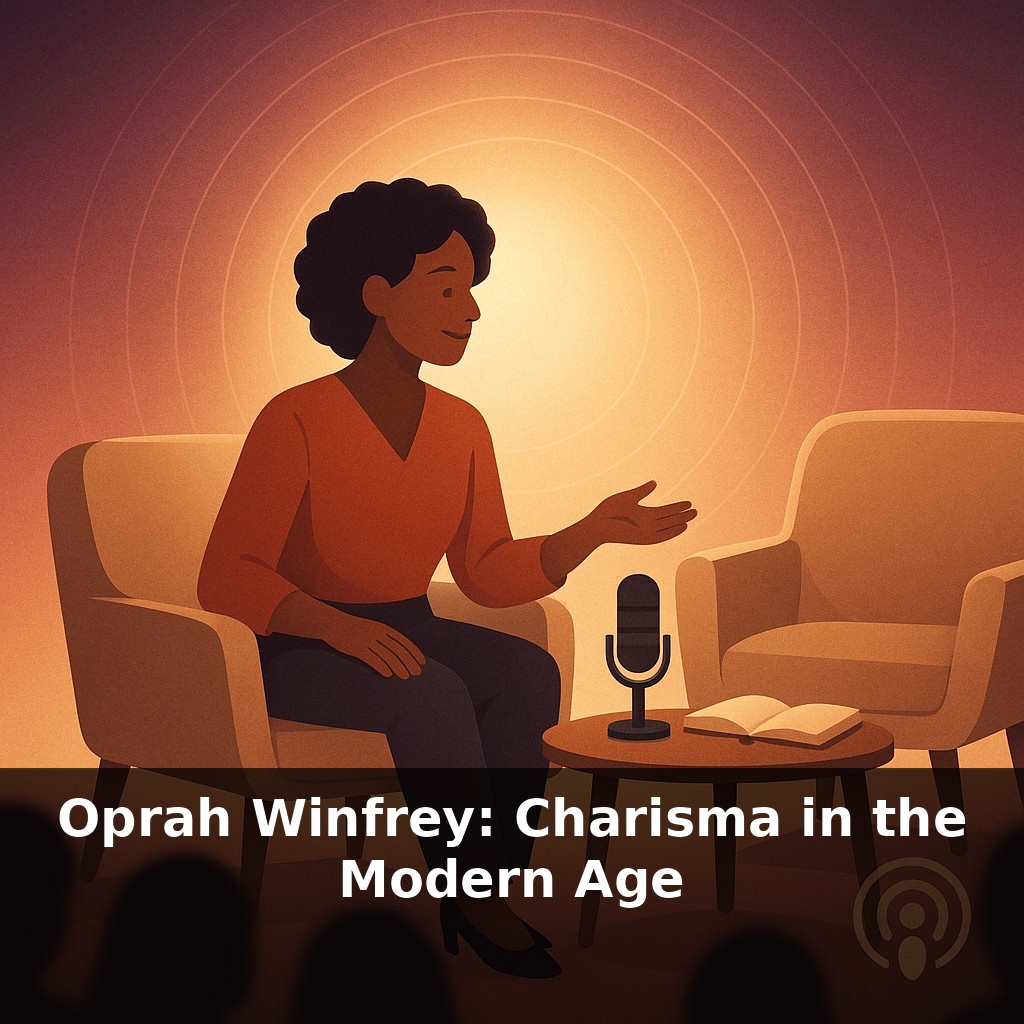
Oprah Winfrey doesn’t just host conversations; she engineers emotional environments. Walk onto her stage and you’re not entering a studio—you’re entering a carefully calibrated trust lab. The lighting is warm, the chairs angled slightly inward, her posture relaxed but alert. She asks short, open questions, then lets silence do part of the interviewing. Guests often reveal things they didn’t plan to share, not because they’re pressured, but because they feel seen. This is where her charisma lives: in the micro-moments. A hand to the heart when someone speaks of loss, a quick joke to release tension, a piercing follow-up that signals, “I really heard you.” Over time, these small signals fused into something bigger than a show: a recurring, almost ritual space where vulnerability feels not only allowed, but contagious.
But Oprah’s real power didn’t come from the studio; it came from how people carried her voice into their kitchens, commutes, and break rooms. She blurred the line between “host” and “trusted narrator of your life.” Crucially, she did this while selling things—ideas, books, products—without triggering the usual skepticism. Most pitchmen feel like pop-up ads; Oprah felt like a friend handing you something she’d already tried. That blend of counsel and commerce created the Oprah Effect: when she spotlighted a choice, it didn’t just seem popular, it felt emotionally pre-vetted—like a recommendation already filtered through your own values.
Oprah quietly rewired how power works on screen by changing three levers most people never notice: whose story gets centered, who owns the microphone, and how pain is processed in public.
First, story. Long before “representation” was a buzzword, she put people on daytime TV who usually lived at the margins of media: survivors of abuse, working-class mothers, queer kids, people in larger bodies, spiritual seekers who didn’t fit organized religion. But she didn’t frame them as oddities to be examined; she framed them as mirrors. Every episode asked, in one way or another: “Where is this in *you*?” That framing mattered. It turned guests from spectacle into stand-ins for the audience’s private questions, which made viewers feel less alone and more willing to update their own beliefs.
Second, control. Most charismatic performers rent platforms; Oprah insisted on building them. She negotiated ownership stakes in her show, then in Harpo Productions, then in cable (OWN). That meant she didn’t just appear in stories—she controlled which stories even existed. Financially, it gave her leverage to say no to segments, advertisers, or narratives that clashed with her values without ending her career. Psychologically, that visible independence reinforced the perception that when she recommended something, it wasn’t because a boss told her to. The medium itself signaled integrity.
Third, transformation. Oprah rarely stopped at “Thank you for sharing.” She consistently moved conversations toward, “What do we do with this?” A painful childhood became fuel for talking about boundaries. A celebrity confession became a doorway into mental health, spirituality, or forgiveness. Think of it like software that doesn’t just display your data but automatically organizes it into actionable dashboards: the raw emotion was never the endpoint; integration was. That’s a key charisma skill most people miss—not just connecting emotionally, but helping others assign constructive meaning to what they feel.
Underneath, she used learnable techniques: asking “What did that feel like?” instead of “What happened next?”, naming emotions out loud, revealing just enough of her own story to normalize others’, then zooming out to a shared lesson. None of that required a TV studio. It required attention, pattern-spotting, and the courage to go one layer deeper than small talk.
Notice how Oprah’s biggest shifts often happened *before* the cameras rolled or *after* the credits. Producers tell stories of her stopping a pre-interview to say, “We’re asking the wrong question—what is she really carrying?” That’s a diagnostic move, closer to a great software engineer tracing a bug than a TV host skimming a script. She wasn’t satisfied with surface narratives; she hunted for the emotional “root cause” and then designed questions around that.
You can see the same pattern in her book club dinners or behind-the-scenes conversations with staff. Instead of, “Did you like it?” she’d ask, “Where did it touch something old in you?” That tiny shift pushes people from opinion to self-inquiry. Over years, guests and viewers learned to anticipate that level of scrutiny—not as an attack, but as an invitation.
This is why copycats sounded flat. They copied the tears and confessions, but not the architecture behind them: a deliberate structure of safety, curiosity, and meaning-making that made depth feel not just possible, but almost inevitable.
Oprah hints at where media might be heading next. In an age of AI feeds, her style suggests a pivot from “most viral” to “most metabolizable”: content that helps people digest experience, not just react. Think of future platforms less like billboards and more like well-trained coaches, using data to ask sharper follow‑up questions. As creators claim ownership and audiences splinter, the rare advantage will be hosts who can convene strangers into temporary communities of honest self‑revision.
Oprah’s legacy hints at a practical question: where can *you* host better meaning-making—at your table, in your group chat, on your tiny corner of the internet? Your challenge this week: notice one conversation that’s looping on complaint and gently steer it toward “What could this teach us?” Treat it like upgrading an app from venting to version that actually debugs.