A new medicine can take well over a decade and cost more than two billion dollars, yet most experimental drugs still fail. In this episode, we’ll step inside the molecule‑level drama: where a tiny change in shape can mean cure, side‑effect…or total disaster.
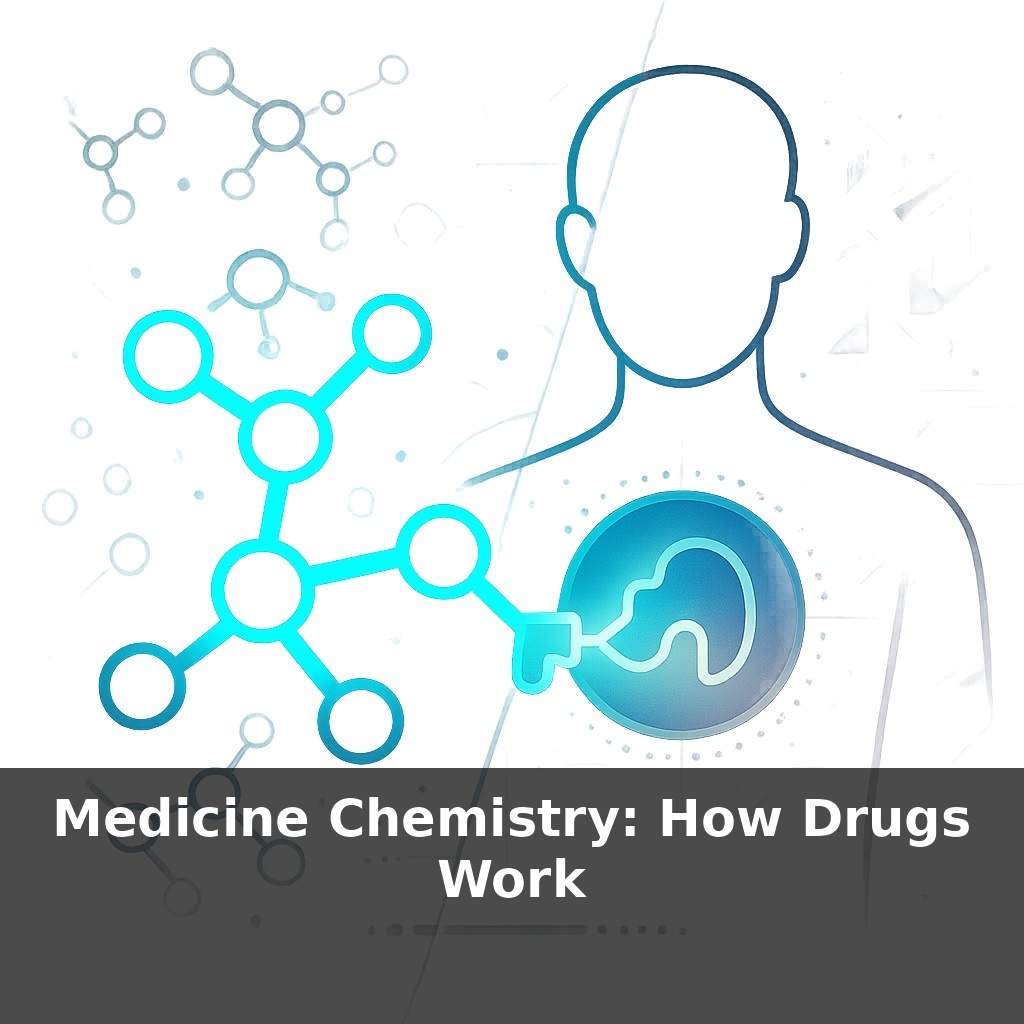
Medicinal chemists spend much of their time asking a deceptively simple question: *what exactly is this molecule touching in the body?* The answer is almost always a specific target—often a receptor, enzyme, ion channel or transporter that normally belongs to your cells, not to the disease. The job isn’t just to “hit” the target, but to hit it better than anything else in your body does, and to avoid hitting similar molecules that control completely different processes. This is where shape meets charge, and flexibility meets timing. The same chemical scaffold can calm an overactive immune cell, block a pain signal, or wreck your liver, depending on which target it favors. In practice, turning an early hit into a real medicine means redesigning it again and again, guided by structural biology, modelling and a growing list of real‑world side‑effects.
To make progress, chemists lean hard on feedback. Early “hit” molecules are often weak, sticky in the wrong places, or impossible for the body to absorb. Each round of testing adds a line to a growing notebook: this change boosts potency but ruins solubility; that tweak dodges one side‑effect but triggers another through an off‑target protein. Blood levels, liver metabolism and even how a tablet breaks apart become as important as binding. Bit by bit, the molecule’s job description expands—from simply touching a target in a dish to surviving the full, messy journey through a human body.
If you zoom in on that “growing notebook” chemists keep, three questions show up on almost every page: *How strongly does it bind? Where does it go in the body? What does the body do to it?* Those map to three pillars of drug action: potency, selectivity and pharmacokinetics.
Potency is about how much drug you need at the target. A highly potent antiviral might block a viral enzyme at nanomolar levels; an early version might need a thousand times more. Higher potency usually means lower doses, which can reduce side‑effects and cost. But pushing potency blindly can backfire: ultra‑sticky molecules may latch onto unrelated proteins, or hang around so long that tiny formulation differences change how much people actually absorb.
Selectivity is the art of discriminating between almost‑twins. Beta‑blockers show this clearly. Propranolol hits β1 and β2 receptors, slowing the heart but also tightening airways—a problem for asthma. Newer beta‑blockers like metoprolol lean toward β1 in the heart, keeping benefit while easing respiratory risk. Similar stories play out in cancer: imatinib’s huge impact comes from dialing in on BCR‑ABL while largely sparing kinases that keep normal cells alive.
Then there’s pharmacokinetics: absorption, distribution, metabolism and excretion—ADME. A molecule that works beautifully in a cell assay can fail because stomach acid destroys it, or because it dissolves poorly and passes straight through. Medicinal chemists tune pKa, lipophilicity and polar surface area to thread a narrow path: stable enough to reach the bloodstream, yet not so fat‑loving that it hides in fat tissue for weeks.
Metabolism is a double‑edged blade. Enzymes like CYP3A4 can quietly inactivate a drug, forcing higher doses, or convert it into a more potent “active metabolite.” Codeine, for instance, depends on CYP2D6 to form morphine; genetic differences here make some people non‑responders and others dangerously sensitive at standard doses. Overlapping metabolic routes also underlie many drug–drug interactions: one medicine can hog CYP3A4, sending levels of another soaring.
Medicinal chemistry, then, isn’t only about designing a binder; it’s about shaping a moving, changing participant in a crowded biochemical system.
Medicinal chemists often learn the hard way that “good in a test tube” doesn’t equal “good in a person.” A classic example is terfenadine, an early non‑drowsy antihistamine. It hit its allergy target well, but in some patients it also interfered with a heart ion channel, causing dangerous rhythm problems; it was withdrawn and replaced by fexofenadine, redesigned to keep the allergy effect while avoiding the heart.
Painkillers show another trade‑off. Traditional NSAIDs block COX‑1 and COX‑2, easing pain but irritating the stomach. COX‑2–selective drugs like celecoxib were crafted to tilt that balance—less gut damage, but later scrutiny revealed cardiovascular risks when the dial went too far.
A single methyl group, halogen or ring change can flip these outcomes, shifting solubility, metabolism and protein binding at once. The process feels less like drawing a blueprint and more like long‑range weather forecasting: small tweaks upstream can create very different clinical “storms” downstream.
AI is starting to suggest drug ideas humans might never sketch, nudging chemists toward “co‑piloting” rather than solo design. Gene‑editing therapies hint at one‑time treatments that could shift healthcare from managing disease to preventing it, yet their edits may echo for decades. 3‑D‑printed pills could let pharmacies “bake” doses to order, like custom bread loaves, while greener syntheses quietly trim the carbon cost of every prescription filled.
Your challenge this week: next time you take any medicine, search who discovered it, what year it was approved, and how its design has changed since. Compare an older and a newer drug in the same disease area—note how goals evolved (fewer side‑effects, simpler dosing, longer action, or entirely new mechanisms). You're not just reading history; you’re spotting patterns that hint at where the next generation of treatments might go.
In the end, every tablet is a negotiated truce between biology and chemistry, not a perfect victory. As we map more genomes and track real‑world responses through health apps and wearables, the truce can get smarter—doses tuned like individual radio stations, and whole classes of drugs quietly retired as better, leaner molecules take their place.
Start with this tiny habit: When you take any medication (even a simple painkiller), flip the box or bottle and read just one word from the “active ingredient” line out loud—like “ibuprofen” or “acetaminophen.” Then quickly ask yourself: “Is this supposed to block pain signals, reduce inflammation, or fight infection?” and take a guess based on what you remember from the episode. If you’re not sure, spend 30 seconds looking up just that one active ingredient and how it works in the body. Over time, you’ll start seeing every pill as a mini chemistry lesson instead of a mystery.