Factories torn from their foundations, loaded onto trains, and rebuilt thousands of miles away—*while* German tanks closed in on Moscow. How does a state become an industrial powerhouse almost overnight, and what happens when one man is willing to sacrifice almost anything to do it?
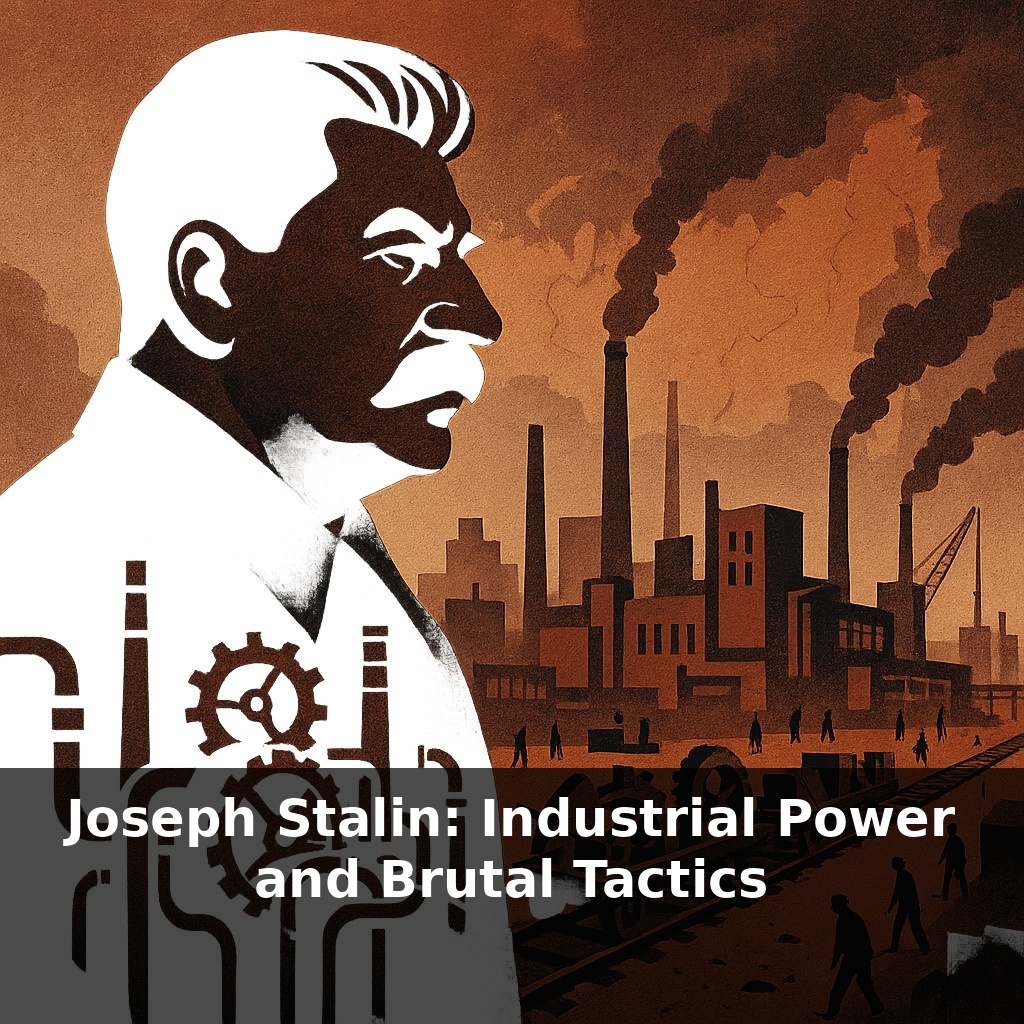
Stalin didn’t just move machinery; he moved the way an entire society thought about time, value, and human life. Under his rule, output wasn’t simply encouraged—it was commanded, measured in quotas that ignored weather, distance, or exhaustion. A missed target could mean demotion, prison, or worse, so planners learned to bend reality to the numbers, while workers learned that speed mattered more than safety. At the same time, the Red Army itself was being reshaped into a tool that mirrored this harsh logic. Commanders were punished for retreating, whole units thrown into near-suicidal attacks to hold a line for just one more day. This fusion of fear, urgency, and central control didn’t stay on paper—it reached from factory floor to front-line trench, turning the entire war effort into something closer to a storm front than a normal economy.
Now add the geographic shock: the “safe rear” kept shifting as the front moved. Industrial planners had to think in rail lines and river routes, not just blueprints. When the evacuation east began, machines arrived before housing, food, or even proper roofs. Workers slept in dugouts or half-finished barracks, then walked to assembly halls still open to the weather. At the same time, Stalin’s circle was tracking not just steel and coal, but grain, horses, and railway capacity—treating the map like a tightly stretched net where any tear could unravel a whole sector. This is the world in which his harshest choices start to make grim sense.
Stalin’s crash-industrialization in the 1930s suddenly looked less like ideological obsession and more like brutal foresight once the war began. The forced collectivization of agriculture had wrecked the countryside and killed millions, but it also gave the regime something it wanted: centralized control over grain, labor, and movement. When invasion came, the same mechanisms that had crushed peasants now redirected entire regions’ worth of resources toward the front with almost no room for refusal.
The Five-Year Plans had already drilled managers and engineers to think in terms of targets, not comfort. That pre-war discipline—often enforced by the NKVD—meant that, by 1941, the USSR had a dense web of rail links, power stations, and heavy plants that could be broken apart and reassembled farther east. The evacuation of about 1,500 plants was chaotic, but it was not improvised from nothing; it leaned on a decade of painful practice in moving people and priorities according to Moscow’s timetable.
On the battlefield, Stalin’s approach hardened into formal orders. Commanders knew that losing a factory town or a railway junction could mean a visit from a political officer before any review board. Order No. 227, “Not one step back,” codified that logic: units that retreated without explicit permission could find their soldiers reassigned to penal battalions, sent to clear minefields or assault strongpoints with minimal equipment. Barrier troops stood behind the lines to stop unauthorized withdrawals. These measures didn’t create courage, but they did create a grim predictability: everyone understood the cost of failure.
Yet this system still relied on more than fear. Soviet officers gradually learned from early disasters, rebuilding a decimated command structure and adapting tactics to make better use of tanks, artillery, and the huge, relocated factories now feeding them. Allied Lend-Lease added trucks, locomotives, and food, turning raw output into real mobility and endurance. In effect, Stalin presided over a war machine where coercion, industrial muscle, growing operational skill, and foreign aid all interacted—like overlapping weather fronts colliding into a single, violent storm that engulfed the Eastern Front.
Sometimes the best way to see Stalin’s system is through the people caught inside it. A young engineer in Sverdlovsk might be promoted overnight to run a critical assembly line, not because he’s ready, but because the previous manager was arrested. A farm woman from Ukraine could find herself drafted into factory work in the Urals, learning to weld tank hulls by day and queueing for bread by night. At the front, a commander who creatively bends orders to save his regiment risks denunciation, while another who spends lives recklessly but hits his target gets a medal.
Think of the overall rhythm less like a smooth factory conveyor and more like a piece of music constantly rewritten mid-performance: tempos lurch, whole sections are dropped, soloists disappear. Lend-Lease trains arrive unannounced, forcing planners to reshuffle schedules; new offensives demand sudden surges of shells and fuel, sending shockwaves back through coal mines and rail depots. Individuals improvise just to keep up, but the score still carries one composer’s name at the top.
Stalin’s methods still echo in how leaders talk about “emergencies.” Once a system normalizes extraordinary powers, it becomes easier to declare every setback a crisis that justifies harsher controls. Think of how quickly “temporary” measures can harden, like wet cement turning solid while no one is watching. Modern tools—data tracking, automated logistics, AI planning—could supercharge this dynamic, making it simpler to steer whole economies while making individual voices even easier to mute.
Stalin’s wartime machine left behind more than wreckage; it rewired expectations of what governments *can* demand. Later rulers studied his playbook the way coaches replay risky victories—testing how far they might push labor, truth, even memory itself. Like a forest after a controlled burn, new growth emerged in the USSR, but the soil stayed thick with ash and buried, unfinished arguments.
Before next week, ask yourself: 1) “If I were in a system where speaking up against a ‘five-year plan’ at work or in my community carried serious social or career consequences, which compromises would I be most tempted to make, and what non‑negotiable line would I refuse to cross?” 2) “Looking at how Stalin’s show trials and propaganda reshaped ‘truth,’ where in my own information diet (news, social media, workplace briefings) might I be accepting a convenient narrative instead of checking uncomfortable facts, and what’s one source I’ll deliberately challenge or cross‑check this week?” 3) “Seeing how rapid industrial gains came with famine, Gulags, and purges, when I pursue productivity or ambition in my own life, whose well‑being—mine or others’—am I silently treating as expendable, and what’s one concrete change I can make this week to achieve goals without dehumanizing anyone?”