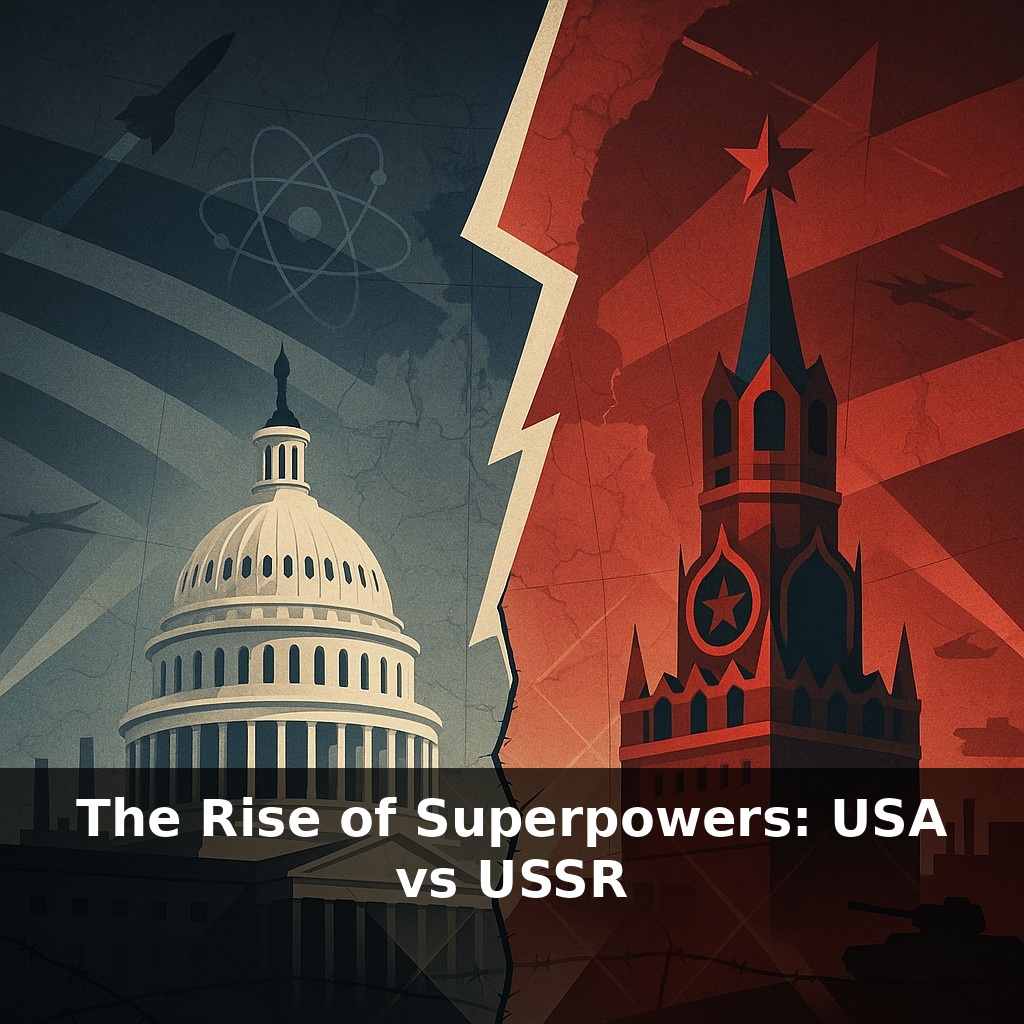
In the summer of 1945, one country produced about half of everything made on Earth—cars, steel, food, weapons. Yet, within a few years, it felt deeply threatened. How does the richest, safest power on the planet come to fear a devastated, war‑scarred rival?
The uneasy mood after 1945 wasn’t just about factories and bank accounts; it was about ideas, borders, and memories of catastrophe. Both Washington and Moscow looked at the same shattered map of Europe and saw something different. For U.S. leaders, ruined economies smelled like fertile soil for extremism; for Soviet leaders, every open frontier felt like an unlocked door before a storm. Each side read the other’s moves—aid packages, occupation zones, political pressure—not as isolated choices but as clues to a long game. As communist parties grew in France and Italy, and non‑communist politicians were sidelined in Poland and Hungary, suspicion hardened into strategy. The trauma of the 1930s and the war years lingered like a low rumble of thunder, convincing both superpowers that failing to shape the peace now meant risking an even worse disaster later.
Both superpowers began turning vague suspicion into concrete machinery: institutions, doctrines, and front lines. In Washington, this took shape as global commitments—bases strung from Alaska to the Mediterranean, new agencies supervising loans, intelligence, and reconstruction. In Moscow, it meant tight control over neighboring governments, coordinated security services, and economic links that redirected trade eastward. Everyday people often met these grand designs in small, practical ways: a factory contract that now depended on U.S. credit, or a school curriculum quietly rewritten to match Soviet priorities. Bit by bit, habits of cooperation gave way to routines of rivalry.
On paper, the postwar balance looked wildly uneven. The United States controlled an unparalleled share of global output, its cities untouched by bombing, its navy roaming every ocean. Across the ruined continent, by contrast, Soviet citizens were rebuilding homes with scavenged bricks. Yet raw numbers hid a crucial fact: the Red Army was already in place where power mattered most.
With roughly 11 million personnel under arms in 1945, Soviet forces sat not at sea lanes but on rail hubs, river crossings, and capitals from Berlin to Bucharest. That presence gave Moscow something the United States lacked: immediate leverage over governments being born out of the rubble. In ministries and police stations across Eastern Europe, new security officers trained in Soviet methods began to matter more than distant diplomats.
Washington’s answer was money rather than massed divisions. The Marshall Plan did more than ship food and machines; it tied Western European recovery to American planning and supply chains. As factories in France or West Germany restarted, they increasingly depended on U.S. credits, technology, and markets. By 1951, industrial output in participating countries had climbed dramatically, and so had their alignment with U.S. preferences on trade and security. Moscow read this not as charity but as encirclement-by-contract.
Flashpoints exposed how fragile the arrangement was. In 1948, when Soviet authorities tried to squeeze the Western powers out of Berlin by blocking land access, U.S. and British planes answered with a year-long airlift that kept the city supplied without firing a shot. Each side learned a lesson: it was possible to confront the other directly, provided the tools were pressure and logistics, not tanks rolling toward each other.
Meanwhile, nuclear weapons turned every calculation upside down. At first, the U.S. monopoly seemed to guarantee safety. But once the USSR tested its own bomb in 1949, policymakers on both sides had to think in layers: not just how many warheads they had, but how fast they could be delivered, whether radar could see them coming, and how to convince the other side that using them would be suicidal. By 1960, U.S. stockpiles dwarfed Soviet numbers, yet improvements in missiles and bombers narrowed the effective gap. Power became less about totals and more about credible threats.
Your challenge this week: pick one crisis from this period—Berlin, Korea, or the first nuclear tests—and trace, step by step, how both Washington and Moscow tried to gain advantage without crossing the line into open war.
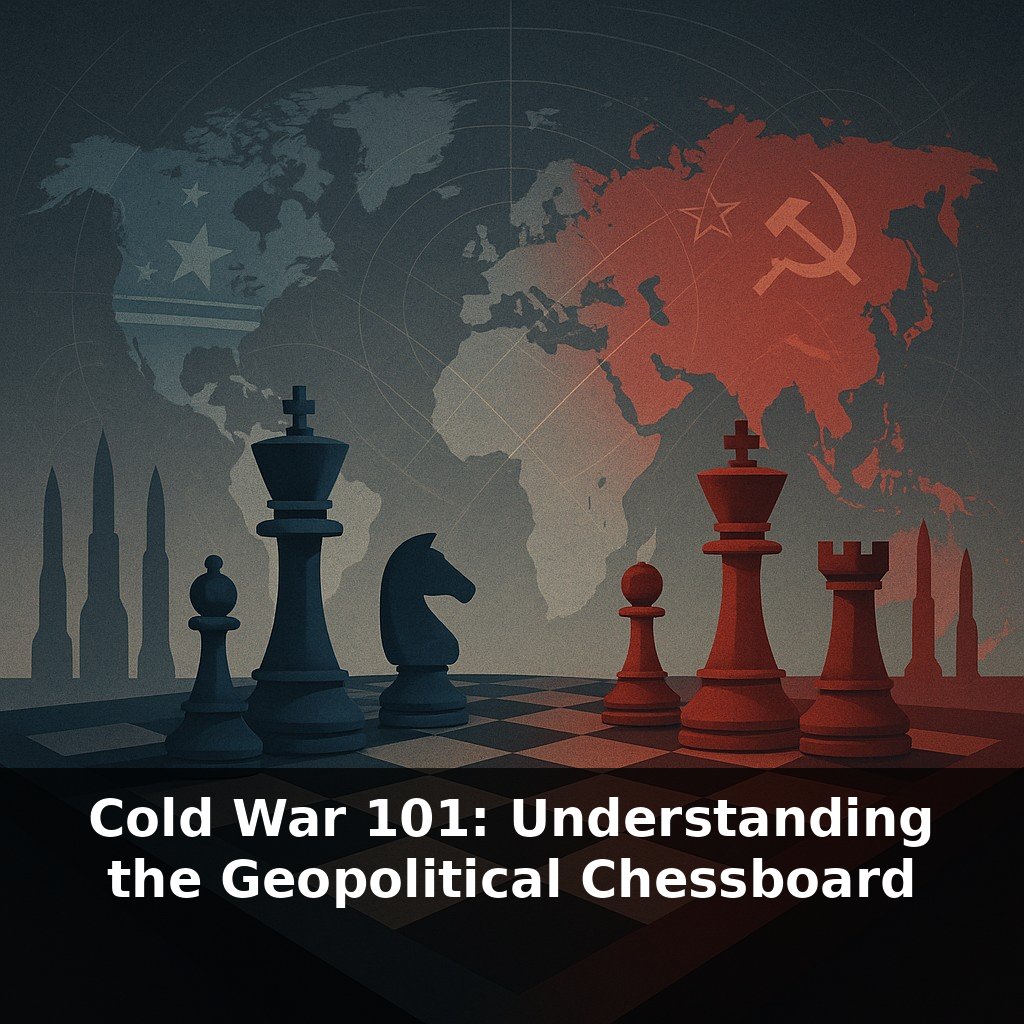
Think of early Cold War power kind of like a storm system forming over an ocean: you don’t just watch the size of the clouds, you track pressure, temperature, and wind direction. In the late 1940s and 1950s, three “weather fronts” mattered a lot.
First, alliance patterns solidified. NATO (1949) wasn’t just a military pact; it locked together planning staffs, weapons standards, and war games. The Soviet response, the Warsaw Pact (1955), did the same in reverse, making Eastern European armies train and mobilize as a single force.
Second, intelligence became a core tool. The CIA and the KGB expanded from simple spy rings into global information systems—funding newspapers, student groups, and front organizations that could sway opinion without a single soldier moving.
Third, the race moved upward—literally. Early rocketry and the launch of Sputnik in 1957 signaled that whoever controlled space-based observation and long‑range missiles could shape crisis decisions. Leaders now had to assume they were being watched, timed, and mapped in unprecedented ways.
Nuclear rivalry now extends beyond warheads to code, data, and orbiting hardware. Deterrence once centered on missiles; today, a crippling cyberattack or anti‑satellite strike could matter as much as a warhead count. Arms limits must account for algorithms that aim, detect, and decide faster than people can. Your challenge this week: watch one current crisis and ask, “Who controls the switch—military force, digital systems, or public narrative?”
The early Cold War didn’t settle anything; it taught leaders how to live with unsolved danger. Arms talks, cultural exchanges, and hotlines were like safety rails on a narrow mountain path—useful, never foolproof. As you look at today’s rivalries, notice not just who is stronger, but who is quietly building those rails before the next storm hits.
Try this experiment: For one day, “live” as if you’re a small country in 1947 choosing between the USA and the USSR. List 5 real policies from the early Cold War (e.g., Marshall Plan aid, collectivized agriculture, NATO-style military alignment, state-planned economy, liberal democracy) and assign each to either a “US path” or “USSR path.” Then, pretend your town is the country: pick which path you’d choose for each policy and note how it would change your daily life (jobs, freedoms, security, culture). At the end of the day, decide which superpower’s model you’d have aligned with and why—and what trade-offs you’re actually willing to accept.