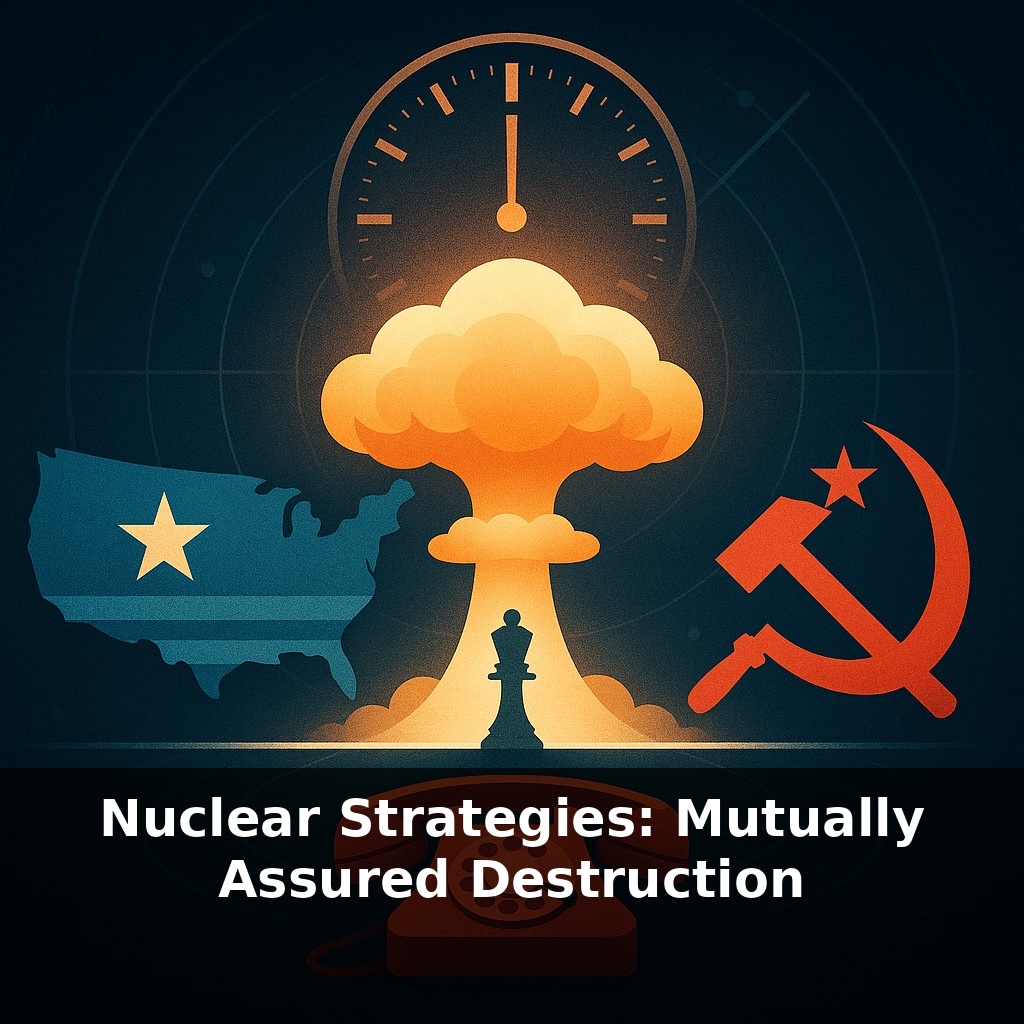
Sirens blare, phones ring, and a handful of people have less than half an hour to decide whether the world ends. Here’s the paradox: the same nuclear weapons built to destroy cities may be the main reason the U.S. and Soviet Union never fought a direct war. How can that be true?
MAD—Mutually Assured Destruction—took that Cold War paradox and turned it into a strategy: stability through the constant threat of total catastrophe. It only really works if both sides believe two things at once: that the other *can* retaliate after being hit, and that they *will*. That’s why “second-strike capability” became the holy grail. Submarines hiding under the ocean, mobile missile launchers, and hardened silos weren’t just hardware—they were signals: “Even if you strike first, you lose.”
This logic reshaped budgets, diplomacy, and even everyday life, from air-raid drills in U.S. schools to vast Soviet civil defense plans. Like a storm system that stretches across continents, MAD seeped into every corner of Cold War policy, influencing how leaders handled crises, miscalculations, and technological breakthroughs.
MAD didn’t appear overnight; it emerged from messy trial and error as both superpowers reacted to each other’s moves. Early on, U.S. bombers loitered in the air and Soviet leaders dug deep bunkers, each side trying to prove it wouldn’t be caught off guard. Arms-control treaties later tried to “shape the weather” of this dangerous climate—limiting certain missiles, banning others, and setting up hotlines so a radar glitch wouldn’t spiral into disaster. Yet every new technology, from missile defenses to hypersonic glide vehicles, raised fresh questions: does this make war less likely—or just less predictable?
At its core, MAD changed how leaders thought about victory itself. In earlier wars, “winning” meant taking territory, toppling governments, or forcing surrender. Under the shadow of nuclear arsenals, true victory quietly became *not losing everything*. That mental shift explains why superpowers poured resources into weapons they hoped never to fire and rehearsed doomsday scenarios they were desperate to avoid.
The numbers give a sense of how extreme this logic became. By 1986, the world sat on roughly 70,300 nuclear warheads—far beyond what was needed to devastate any opponent. U.S. and Soviet planners weren’t just asking, “Can we destroy them?” but “Can we still destroy them if they hit us first, and then if *that* fails, do we have backups?” Layers of redundancy—multiple warhead types, different launch platforms, separate command chains—were all built to convince the other side that *some* retaliatory force would always survive.
Crises like the Cuban Missile standoff showed how fragile this balance could feel in real time. With ICBMs needing about 30 minutes to cross oceans—and sea-based missiles cutting that to under 15—leaders operated under brutal time pressure. A radar blip, a computer error, or a misunderstood test could, in theory, force a choice before anyone fully understood what was happening. That’s why hotlines, early-warning satellites, and shared notification agreements mattered: they were attempts to keep human judgment in the loop when minutes counted.
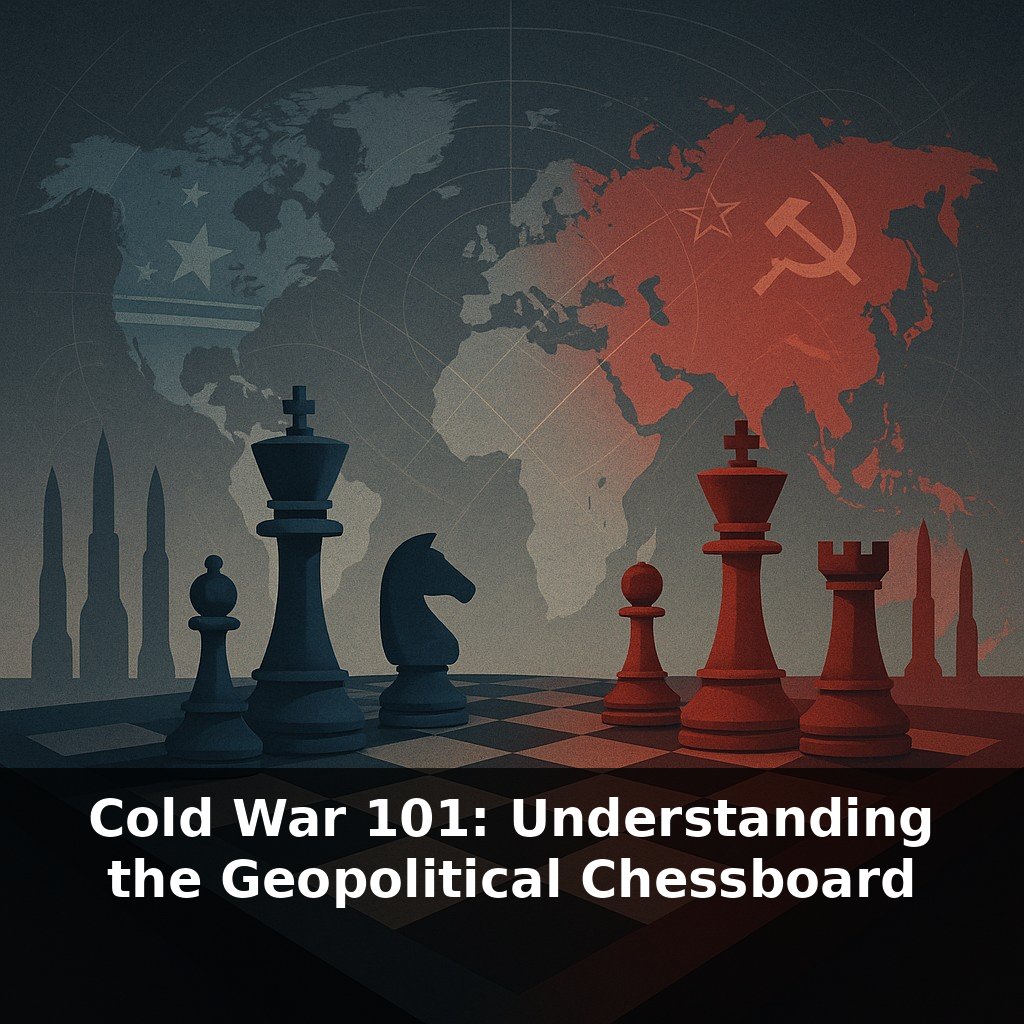
Though arsenals have shrunk to about 12,500 warheads today, the underlying incentives haven’t vanished. Modern budgets—tens of billions in U.S. modernization, billions in Russian programs, and newer nuclear states seeking credibility—signal that governments still worry about appearing vulnerable. MAD has become less of a U.S.-Russia duopoly and more of a crowded chessboard, where additional players and faster delivery systems increase the number of ways miscalculation can happen.
Paradoxically, stability now depends not just on fear of retaliation, but on *shared restraint* and constant communication in a world where more fingers hover over more buttons.
Think about how this logic plays out in concrete Cold War moments. In 1973, during the Yom Kippur War, the U.S. quietly raised its alert level while Soviet forces moved airborne units toward the region. Neither Washington nor Moscow wanted a showdown over Egypt and Israel, but each signaled, “Don’t push further,” knowing the other could escalate far beyond local battlefields. Or take NATO’s Able Archer exercise in 1983: a realistic war game that some in the Soviet leadership briefly feared was cover for a real strike. The danger didn’t come from new bombs, but from misreading intentions under stress. Today, something similar lurks in cyber operations against satellites or command networks; a hack that looks like preparation for disabling nuclear systems might be “just” espionage, yet still trigger panic. The dilemma resembles watching dark clouds gather over several countries at once: no single leader controls the storm, but everyone’s choices shape how violent it becomes.
New tools are warping old nuclear habits. AI-assisted targeting, blurred lines between cyber probes and attacks, and growing space reliance mean leaders may face more “false alarms” with less time to check them. Like a coastline where the tide creeps higher each year, crises that once stayed below the nuclear threshold may sit closer to it. Whether norms like no‑first‑use spread—or erode—will shape how often we gamble on staying dry.
So where does that leave us? MAD now stretches beyond two rivals; it’s more like a crowded freeway in dense fog, where every driver trusts that no one will slam the brakes. Your challenge this week: follow one current headline about a nuclear‑armed state and note not the weapons mentioned, but the *signals* leaders send about restraint—or its limits.