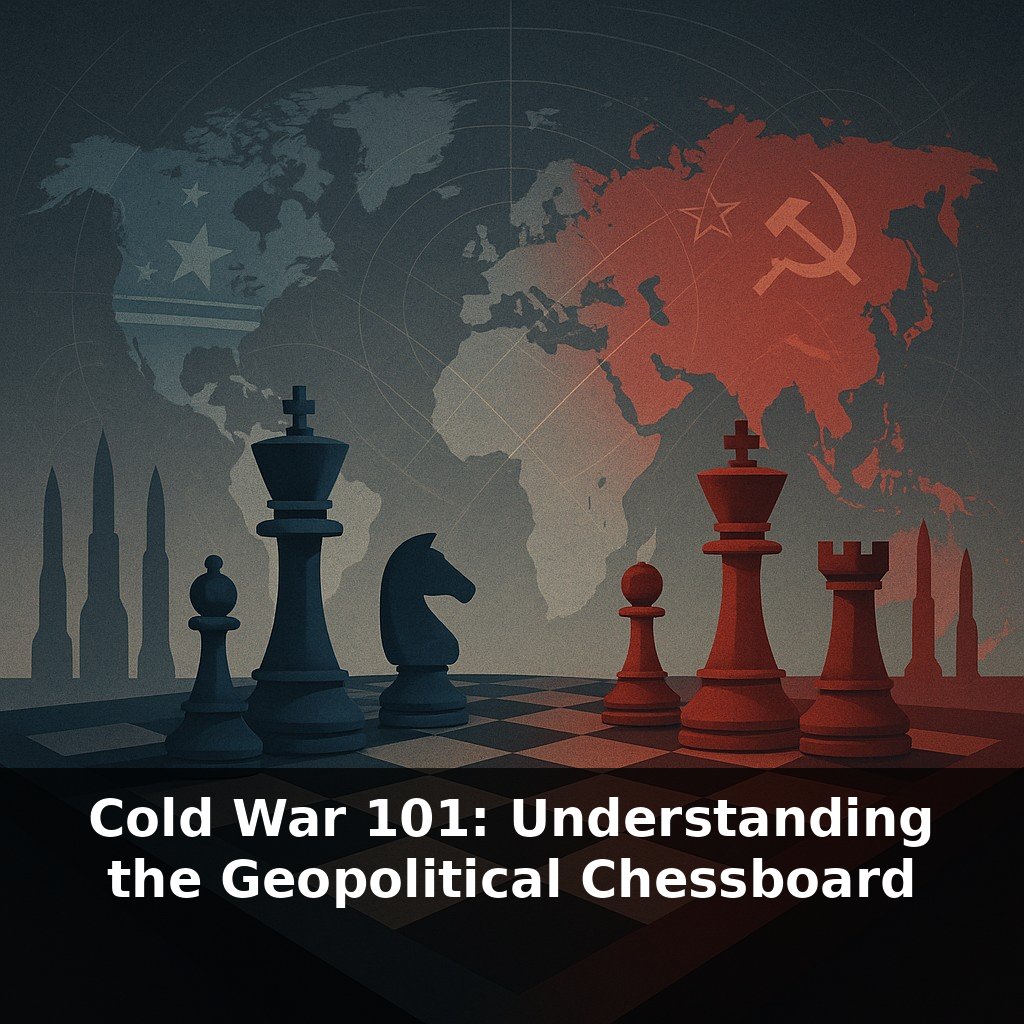
By the end of the Vietnam War, more Vietnamese had died than the entire population of some European countries. Now zoom in: a village split by a road—one side supplied by Moscow or Beijing, the other by Washington—each local choice quietly tugging at the balance of the Cold War.
Listen to the casualty numbers from Korea or Vietnam and it’s tempting to see only chaos—streets in ruins, families displaced, maps smeared with front lines that shift like a stormy tide. But beneath that destruction ran a cold, methodical logic. Leaders in Washington, Moscow, and Beijing treated distant battlefields almost like a harsh climate forecast: where to send aid, where to apply pressure, where to pull back before getting caught in the nuclear “eye of the storm.”
In Korea, Soviet pilots sometimes flew MiGs in Chinese uniforms; in Afghanistan, U.S. money quietly armed fighters the Pentagon would never officially meet. Today, when missiles fall in Syria or drones buzz over Ukraine, that same logic hasn’t disappeared—it’s just wearing new uniforms, speaking new languages, and using different technologies to shape wars that many great powers refuse to fight in their own names.
Proxy wars are the backstage of great‑power rivalry, where the loudest actors aren’t always the ones writing the script. Local leaders weigh offers of weapons or loans the way farmers weigh changing weather: will this rain nourish the crops, or wash the fields away? A junta might accept tanks to crush rebels, while rebels take missiles to resist that same junta—both funded by different capitals an ocean away. Sometimes, aid arrives with advisers, “volunteers,” or private contractors, blurring where local ambition ends and outside agendas begin. The result is a war that speaks with many accents but serves a few distant interests.
When outsiders step into someone else’s war, they rarely all move at once. Think of it as a storm front made of different layers: money, weapons, trainers, “advisers,” propaganda, and finally, if things escalate far enough, deniable fighters and pilots.
Korea showed the early template. Washington didn’t just send troops; it wrapped the conflict in a UN flag, pulling in forces from Britain, Turkey, Ethiopia, and others. That mattered. A multicolor coalition made intervention look less like one country barging in, more like a collective stand against aggression. On the other side, Moscow stayed officially in the shadows. Soviet pilots flew MiG‑15s with Chinese or North Korean markings, and Soviet technicians helped design defenses. The message: we’ll fight your war in the air, but we won’t put our nameplate on it.
Vietnam sharpened this model. Instead of large formations under their own flag, outside powers leaned on rivers of matériel. Transport planes and ships carried rifles, artillery, surface‑to‑air missiles, spare parts, fuel, radios, even field hospitals. Training missions taught local troops how to use and repair everything. Once that pipeline existed, it became a kind of life‑support system: turn the flow up, and a faltering army could suddenly launch offensives; turn it down, and campaigns withered on the vine.
Both superpower camps also waged proxy wars in the realm of story. Each side framed local factions as “freedom fighters” or “aggressors,” lobbied at the UN, and courted journalists. Winning sympathy could mean more open aid, fewer embargoes, and a lighter diplomatic cost for keeping the conflict going.
Yet the locals were not just taking dictation. Leaders in Seoul, Hanoi, Kabul, or Luanda learned to play sponsors off against each other—promising loyalty, hinting at defection, or quietly ignoring advice when it clashed with their own priorities. Sometimes they escalated violence precisely to force patrons to send more help.
MAD hung over all this like a pressure ceiling: push too far and risk nuclear confrontation; hesitate and risk losing influence. Syria and Ukraine show that this ceiling still exists, even though the players and technologies have changed. The basic question remains: how much control can a distant capital really buy once it starts arming someone else’s war?
In Korea, decisions about aid shaped the map as much as battlefield tactics. When Washington sent modern artillery and air support in 1950, UN forces pushed rapidly north; once Chinese troops arrived with their own backing and Soviet‑built MiGs, the front froze roughly near the 38th parallel. In Vietnam, Soviet surface‑to‑air missiles didn’t “win” the war, but they forced the U.S. to fly higher, alter targets, and spend enormous sums on new countermeasures. Afghanistan in the 1980s shows the other side of the ledger: relatively cheap U.S. support—Stinger missiles, training in Pakistan, cash funneled through intelligence services—made Soviet helicopters vulnerable, turning a grinding occupation into a draining stalemate. Proxy aid works a bit like a sudden shift in wind during a forest fire: it doesn’t create the blaze, but it can turn a contained burn into a fast‑moving inferno—or blow it back on whoever thought they controlled it.
Your challenge this week: pick one current conflict in the news and, for seven days, track how outside states show up—not through troops, but via loans, drones, sanctions, cyber tools, or “security cooperation.” By week’s end, sketch a map linking who funds, who trains, who blocks resolutions. Notice how climate, rare minerals, or migration routes quietly pull strings. The more clearly you see those hidden ties, the harder it is to accept any war as purely “local.”
Proxy wars rarely stay inside their original borders; they leak. Refugees cross frontiers, black markets bloom, veterans carry tactics and trauma into new fights. Small streams of aid and grievance can merge into wider currents that reshape regions, influencing future conflicts and peace efforts. Following those flows is less about blame and more about seeing where future storms could form.
Try this experiment: Pick one Cold War hotspot—say, the Korean War in 1950, the Vietnam War in 1965, or the Soviet-Afghan War in 1980—and open two browser tabs: one with a short historical summary of the conflict, and one with a current news article about a modern proxy conflict (like Ukraine, Syria, or Yemen). As you read them side by side, highlight or list every instance where a great power is providing weapons, money, training, or “advisors” instead of direct troops. Then, out loud or in a voice note, explain in under 2 minutes how the modern conflict you chose is similar to and different from your historical case—especially in who’s pulling strings behind the scenes. Finally, decide whether you’d label the modern conflict a “proxy war” based on your comparison, and note one thing from the past that might predict how this current conflict could evolve.