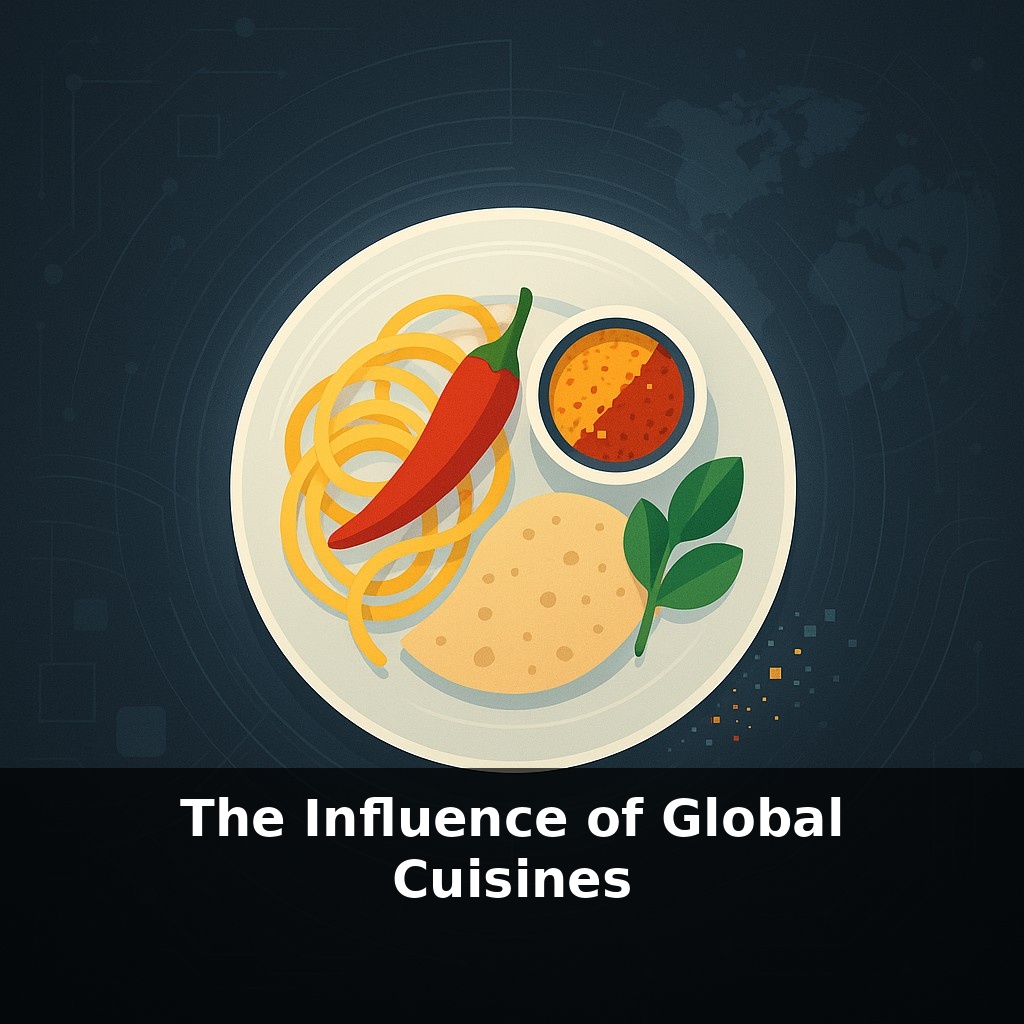
Last night’s dinner might have taken centuries to reach your plate. A chili from Mexico, a noodle from China, a spice blend from North Africa—quietly woven into “normal” home cooking. Today, global cuisine isn’t a special occasion; it’s the default setting in your kitchen.
That quiet mash‑up on your plate isn’t an accident; it’s the result of centuries of trade routes, migration stories, and, lately, algorithmic recommendations. A chili crisp TikTok, a Korean BBQ reel, a travel vlog in Oaxaca—each one nudges a new ingredient into your pantry the way a friend slips a book onto your reading list. Supermarkets follow your curiosity: harissa suddenly appears next to ketchup, gochujang sits by the barbecue sauce, and “international” aisles quietly dissolve into every aisle. At the same time, grandmothers, street vendors, and small restaurants are fighting to keep specific food traditions intact, even as they adapt. You’re not just “trying a new recipe” anymore; you’re standing at the intersection of preservation and reinvention every time you decide which flavors get to share a pan.
Walk down a modern grocery aisle and you’re seeing the scoreboard of those forces in real time. A decade ago, harissa was a specialty-shop secret; now U.S. sales have jumped 71% in just five years, and it sits beside familiar hot sauces shaped by immigrant stories—like David Tran’s sriracha, now shipping around 20 million bottles a year. At the same time, institutions push back against everything blending into one vague “fusion.” UNESCO has singled out 26 specific foodways—from Mexican cuisine to Japanese washoku—treating them like culinary landmarks that must stay on the map, even as new routes keep being drawn.
Open most recipe sites today and you’ll see it: miso roasted carrots, kimchi grilled cheese, za’atar sheet‑pan chicken. The recipes are labeled “easy weeknight dinner,” not “experimental fusion,” because techniques that once marked a cuisine now travel on their own. You’re no longer just “cooking Japanese” or “cooking Indian”; you’re borrowing specific tools from those kitchens with surgical precision.
Think in terms of three kinds of imports you can play with: ingredients, techniques, and structures.
Ingredients are the obvious ones: gochujang in chili, tahini in brownies, rose water in lemonade. A single newcomer can flip the mood of a dish without rewriting the whole thing. But the deeper shift happens with techniques. When you learn Japanese umami layering, you start asking, “What’s my base note? What adds savor? What brings long‑finish depth?” Suddenly, anchovy paste might sneak into your tomato soup, or a Parmesan rind into your bean pot, not as a gimmick, but as quiet infrastructure.
Now add Indian‑style tempering: heating fat and blooming spices at the end. You might finish lentil soup with sizzling garlic‑cumin oil, or wake up a pan of canned chickpeas with mustard seeds and chili fried in ghee. Nixtamalization—originally for corn—nudges you to ask, “What happens if I treat this grain differently before cooking?” That curiosity births things like alkaline noodles at home or more digestible whole‑grain breads.
Structures are the templates underneath: taco, dumpling, bowl, stew. Peruvian Nikkei chefs didn’t just put soy sauce on ceviche; they re‑thought the structure of sashimi and ceviche side by side, then built new defaults: raw fish plus citrus plus soy‑driven depth. That mindset spreads: poke bowls morph into bibimbap‑style grain bowls, then into cold‑noodle salads with North African spices.
Culinary exchange here works like architecture: you keep the load‑bearing walls of a dish (the starch, main protein, cooking method) but swap out materials and finishes from other “building traditions” to change how it feels and functions, without making it collapse.
The tension is where it gets interesting. Change too much and the dish becomes unmoored; change too little and you’re just collecting jars. The sweet spot is when you understand why a technique exists in its original context, then re‑deploy it with that logic intact. A Japanese dashi base in chicken pot pie isn’t “random”; it’s a conscious choice to deepen savor where the structure can support it.
That level of intention is what separates “I dumped some soy sauce in this” from cooking like a chef with a truly global pantry.
Think less in terms of “trying a new cuisine” and more like upgrading specific parts of a familiar dish. Take Tuesday pasta: keep your usual garlic and tomatoes, but stir in a spoon of smoky North African chile paste and finish with preserved lemon instead of Parmesan. Same structure, new accent. Or breakfast eggs: fry them in olive oil, then drizzle with a quick topping of warm oil, chili, and seeds for a crackling finish. It’s still your usual eggs, just with a dressed‑up exit.
You can also flip a template without touching the comfort factor. Turn a classic chicken soup into a brighter bowl by adding ginger, scallions, and a splash of soy at the end; it reads as “chicken soup” to your brain, but the flavor memory is different. Or load your standard sheet‑pan vegetables onto flatbread with yogurt and fresh herbs and suddenly “side dish” becomes a complete meal.
The point isn’t to chase novelty; it’s to train your eye to spot where a dish can borrow one smart move from another tradition and still feel like home.
By the time today’s kids are cooking for themselves, their “basic pantry” may look nothing like yours: quinoa from nearby farms, seaweed snacks as normal as chips, lab-grown cutlets sitting beside paneer and tofu. Climate shifts and digital sharing will keep tightening the feedback loop: a dish that trends in Lagos or Lima on Monday might tweak how you season dinner by Friday, quietly training your palate to navigate a denser, more global map of flavor.
Each tweak you make—a dash of smoky paste here, a quick spice sizzle there—gradually redraws your personal flavor map. Treat your pantry like a playlist: archive the “classics,” but keep adding remixes that surprise you. Over time, your default Tuesday dinner becomes a quiet record of where your curiosity has traveled, and which stories you’ve invited to stay.
Before next week, ask yourself: 1) “If I had to cook one dish from a cuisine I’ve never tried at home (like Ethiopian injera with lentils or Thai green curry), which would it be—and what’s the *first* step I can take today to make it happen (finding a recipe, locating a key ingredient, or asking someone who knows the cuisine)?” 2) “Looking at the spices, sauces, and staples in my kitchen right now, which global flavors are completely missing—Mexican chiles, Japanese miso, Indian garam masala, Middle Eastern tahini—and which ONE will I actually buy or order this week to start broadening my taste world?” 3) “Whose food story from another culture—an immigrant neighbor, a coworker, a local restaurant owner—am I genuinely curious about, and how can I start a real conversation with them in the next few days about the dish that best represents ‘home’ to them?”