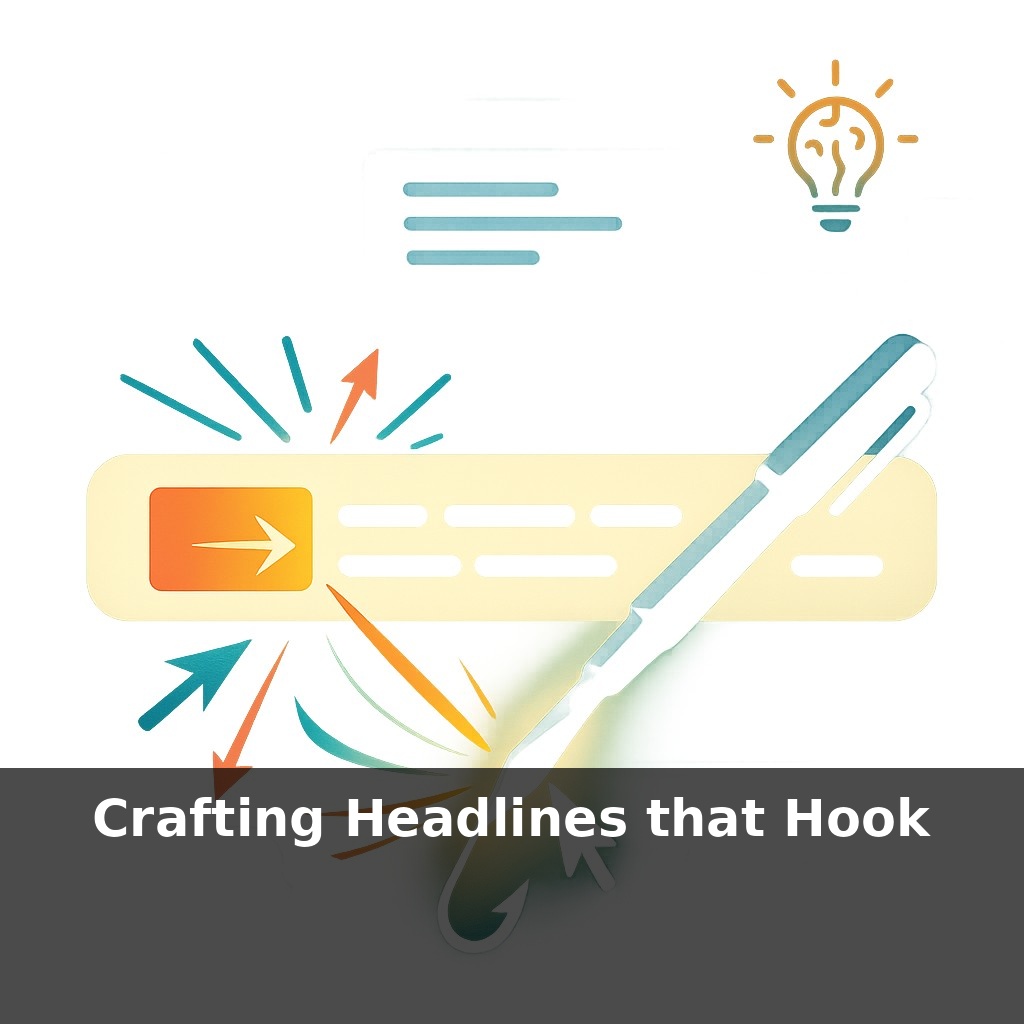
Eight out of ten people will hear your headline and decide—within a heartbeat—whether you’re worth their attention. They won’t hear your story, your insights, or your offer… unless that first line hooks them. So why do most of us still write headlines on autopilot?
Most people *think* they’re bad at writing that first line. In reality, they’re just flying blind.
Behind every “effortless” scroll-stopper sits a stack of invisible decisions: which human bias to tap, which emotion to surface, which word to sharpen—and which to ruthlessly cut. The pros aren’t guessing; they’re running tiny psychological experiments in a single sentence.
This is where things get interesting.
Those few words at the top of your post, email, or page quietly decide whether your ideas live or die. But they’re also one of the rare places where small tweaks create outsized impact: a swapped verb, a clearer promise, a number where you used to be vague.
In this episode, we’ll treat that first line like a system you can tune, not a lightning bolt you wait for. You’ll see how to decode what pulls people in, why certain phrases spread, and how to build your own repeatable process instead of relying on “inspiration.”
Here’s the twist: the “system” behind strong headlines isn’t just a bag of clever phrases—it’s a way of thinking. Great writers don’t start by wordsmithing; they start by deciding *whose* brain they’re trying to light up, and *why* that person should care right now. That means working backward from a clear outcome: a click, a reply, a sign‑up, a share. Then they choose tools accordingly—curiosity when the idea is unfamiliar, specificity when trust is fragile, urgency when delay has a real cost. Think less “How do I sound smart?” and more “What outcome am I engineering in a single, precise line?”
Here’s where most people quietly sabotage themselves: they try to “come up with” a great line out of thin air. Pros do something very different—they *separate thinking from phrasing*.
First, they zoom in on a single sharp promise. Not “a better newsletter,” but “how to cut your writing time in half,” “how to land your next 3 clients,” or “how to stop losing 40 % of readers in the first paragraph.” Vague ideas create vague headlines. Specific outcomes create phrases that practically write themselves.
Then they choose one dominant angle instead of cramming everything in: - **Curiosity-led**: best when the idea is unexpected. You hint at a result, but hold back the mechanism. - **Benefit-led**: best when the value is clear but ignored. You spotlight the gain in crisp, concrete terms. - **Threat-led**: best when people underestimate a risk. You surface what they stand to lose by doing nothing. - **Social-led**: best when belonging matters. You show what peers, competitors, or aspirational figures are doing.
Notice what isn’t happening here: there’s no fishing for clever puns yet. That comes *last*.
Only after the promise and angle are locked do they start swapping in higher‑octane language: - Replacing weak verbs (“get,” “do,” “make”) with precise ones (“double,” “delete,” “salvage”). - Trading abstractions (“productivity,” “engagement”) for scenes or numbers (“win back 3 hours,” “get 40 more replies”). - Testing one emotional color at a time—relief, pride, frustration, ambition—instead of mixing five.
Think like a meticulous engineer, not a poet in a hurry: you’re testing trade‑offs. More intrigue usually means less clarity. More urgency can mean less trust. On LinkedIn, a slightly longer, story‑flavored line might win; in search results, a tight, benefit‑first title will often beat it.
So instead of asking, “Is this good?” ask: - “What *single* outcome does this line make obvious?” - “Which angle best matches how my reader feels today?” - “What am I willing to sacrifice—mystery, detail, tempo—to win the click *and* keep the promise that follows?”
Think of this like tuning a custom playlist for different listeners. The *song* (your idea) stays the same; the *track title* shifts so the right people hit play. For a technical audience, that might mean swapping “skyrocket your sales” for “increase MRR by 17 % without paid ads.” Same underlying promise, different filter.
Let’s ground this in concrete shifts:
- Creator on X: “Grow on Twitter faster” → “Steal the 10-thread template that got me from 0 to 12k followers” - SaaS landing page: “Better project management” → “See every deadline, blocker, and owner in one live dashboard” - Newsletter opt‑in: “Marketing tips in your inbox” → “One 3‑minute teardown each week to fix a real campaign”
Notice how each version quietly answers: “What do I get, how much, and how soon?” You’re not chasing drama; you’re tightening the promise. Over time, you’ll spot your own patterns—phrases your audience reliably clicks, and ones they scroll past. That data becomes your private swipe file.
As platforms evolve, the hidden game will shift from “grab eyes” to “earn trust repeatedly.” AI will assemble micro‑audiences on the fly, so the same piece may need several title variations, each tuned like different pricing tiers for the same product. Voice interfaces will punish clumsy phrasing, favoring lines you can *say* and remember. And as clickbait gets penalized, your advantage comes from clear signals: consistent tone, accurate previews, and a recognizable “signature” in how you frame ideas.
Now the frontier is pairing that crafted line with ruthless feedback loops. Watch which titles readers *save*, *search for*, or quote back to you—those are like deposits in a trust account, compounding over time. As you iterate, you’re not just chasing clicks; you’re quietly training your audience to recognize your voice and follow it into deeper work.
Here’s your challenge this week: Choose one piece of content you’ve already created and write 10 new headline variations for it using three hooks from the episode: curiosity gap (“The Surprising Reason…”), ultra-specific promise (“How to Get X Result in 7 Days”), and objection-busting (“Think You Can’t X? Read This First”). Test your top 3 headlines by posting the same content in 3 places (or 3 times) and only changing the headline. At the end of the week, compare clicks or engagement, pick the winning headline style, and commit to using that style for your next 5 pieces of content.