Most of the copy on your favorite websites… doesn’t actually exist. What you’re seeing is just today’s winning experiment. Behind the scenes, teams quietly swap headlines, buttons, even tones of voice—testing tiny tweaks that, overnight, can unlock millions in hidden revenue.
Only about 1 in 8 online experiments actually wins. That means even smart, well‑reasoned copy ideas are mostly… wrong. And that’s the point. Teams like Booking.com don’t chase perfect first drafts—they build systems that let them be wrong quickly, learn precisely why, and turn those lessons into reliable gains.
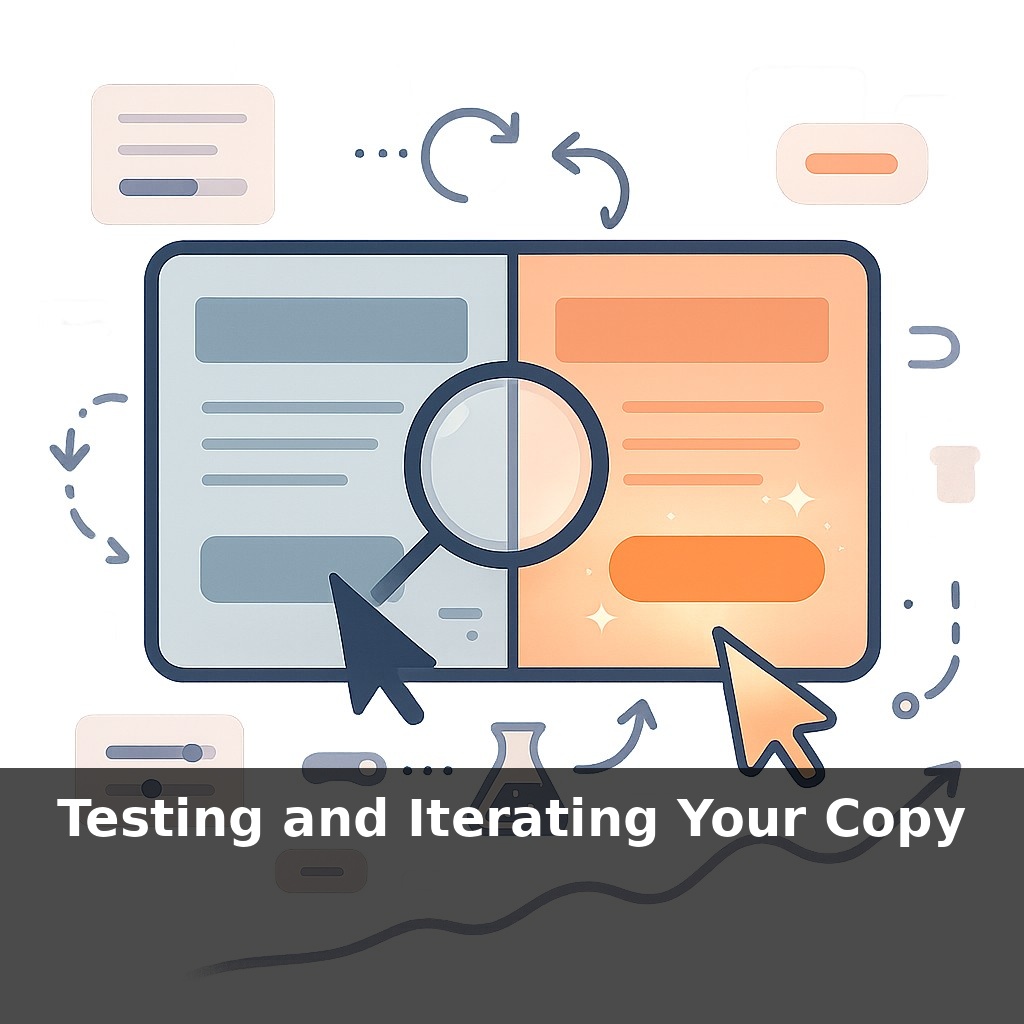
In this episode, we’ll treat your copy less like a masterpiece and more like a prototype on a workbench. You’ll see how small shifts—headline angle, button wording, even sentence rhythm—can be isolated, measured, and either promoted or discarded without ego. We’ll also move beyond surface‑level metrics: not just “did it get more clicks?” but “did it attract the right people and lead to better outcomes?” By the end, you’ll have a simple, repeatable way to turn every piece of copy into a running experiment that keeps teaching you.
Most people test copy like a one‑off exam: launch variant A vs. B, crown a winner, move on. But the teams that compound results treat testing more like managing an investment portfolio. Each new variation is a small bet; the goal isn’t to be right today, it’s to keep increasing the odds that your next move is smarter than the last. That means pairing numbers with narrative: not just “Version 2 won,” but “Version 2 worked better for new visitors on mobile, and only in the afternoon.” When you start testing this way, your copy stops being guesswork and starts behaving like a source of ongoing, predictable insight.
Think of this phase as upgrading from “Does this work?” to “What exactly made this work, for whom, and under what conditions?” The trap is treating each result like a verdict on your creativity. It’s not. It’s a clue in a longer investigation.
Start by deciding what, specifically, you’re trying to learn with each change. “More sign‑ups” is an outcome; “Do urgency‑driven CTAs repel higher‑value customers?” is a question. When you frame tests as questions, failures become useful answers instead of disappointments. You’re less tempted to throw in five changes at once and more likely to isolate a single lever: headline promise, risk‑reversal line, social proof placement, or the emotional temperature of your CTA.
Next, zoom in on who is reacting, not just how many. A headline that boosts overall clicks might quietly attract more freebie‑seekers and fewer serious buyers. Segment results by traffic source, device, customer type, or stage in the journey. You may find that a “losing” version overall is a superstar for returning customers on mobile in certain regions. That’s not a failed idea; it’s a targeted tool waiting to be deployed.
Now, pair the numbers with behavior. Heat‑maps, scroll‑depth, and session replays can reveal that people hover on a guarantee line but bounce before the pricing explanation, or that they keep trying to click a non‑clickable element. Then, add a handful of quick conversations: five to ten users walking through the page while thinking aloud will often uncover the confusing phrase, missing reassurance, or unexpected objection your dashboards can’t name.
Over time, turn these observations into hypotheses you can reuse. “Risk‑reversal statements above the fold increase completions for first‑time buyers,” or “Specific, time‑bound benefits outperform vague promises for comparison shoppers.” Each new piece of copy becomes a testbed for these working theories. You’re not chasing one permanent winner; you’re building a library of patterns that compound, even as your audience and offer evolve.
Watch what happens when you tweak just one word in a real campaign. A SaaS startup changed “Start free trial” to “Start proving this works” on a pricing page aimed at skeptical teams. Sign‑ups barely moved—but sales calls from larger accounts jumped. The new phrasing acted like a magnet for evaluators with internal stakeholders to convince, even though the headline, layout, and offer stayed identical.
Another team selling an online course quietly shifted a module title from “Bonus Resources” to “Implementation Checklists.” Completion rates for that module rose, and refund requests dipped. Same content, same length—only the mental promise changed: from “extra stuff” to “this will help me actually do it.”
Think in small, surgical edits like these. Swap a single verb in your CTA to attract deciders instead of dabblers. Rename a section to match the moment your reader is in (“Make the case to your boss” instead of “Share with your team”). Then watch not just how many people respond, but which people lean in.
Soon, your “winning” copy won’t be a single static version; it will behave more like living software. AI systems will spin up hypotheses faster than you can read them, rewrite lines on the fly, and re-route visitors based on subtle behavioral cues you’re not consciously tracking. Your real job shifts from word‑smithing to rule‑setting: which signals matter, which tactics are off‑limits, and how much autonomy you’re willing to give an algorithm carrying your brand’s voice.
Treat each “finished” line as a draft waiting for its next test. Over time, you’ll spot patterns in what your audience instinctively leans toward—like noticing which dishes your guests empty first at dinner. Stay curious, log your hunches, and let evidence nudge your style. The more you treat copy as a living conversation, the more it will quietly start working harder.
To go deeper, here are 3 next steps: 1) Set up a free Google Optimize alternative like VWO’s free plan or Convert.com’s trial and run a simple A/B test on your headline and CTA (e.g., pain-based vs. benefit-based headline) using the exact traffic source that brings you the most visitors today. 2) Use Hotjar or Microsoft Clarity to record 25 user sessions on your sales page, then watch them tonight and jot down every spot where people hesitate, rage-click, or scroll back up—those are your next copy test ideas. 3) Grab a copy of “You Should Test That!” by Chris Goward or “Making Websites Win” by Karl Blanks & Ben Jesson, and choose one specific testing framework from the book to apply to your current page this week (e.g., testing risk-reversal, social proof placement, or specificity of your main promise).