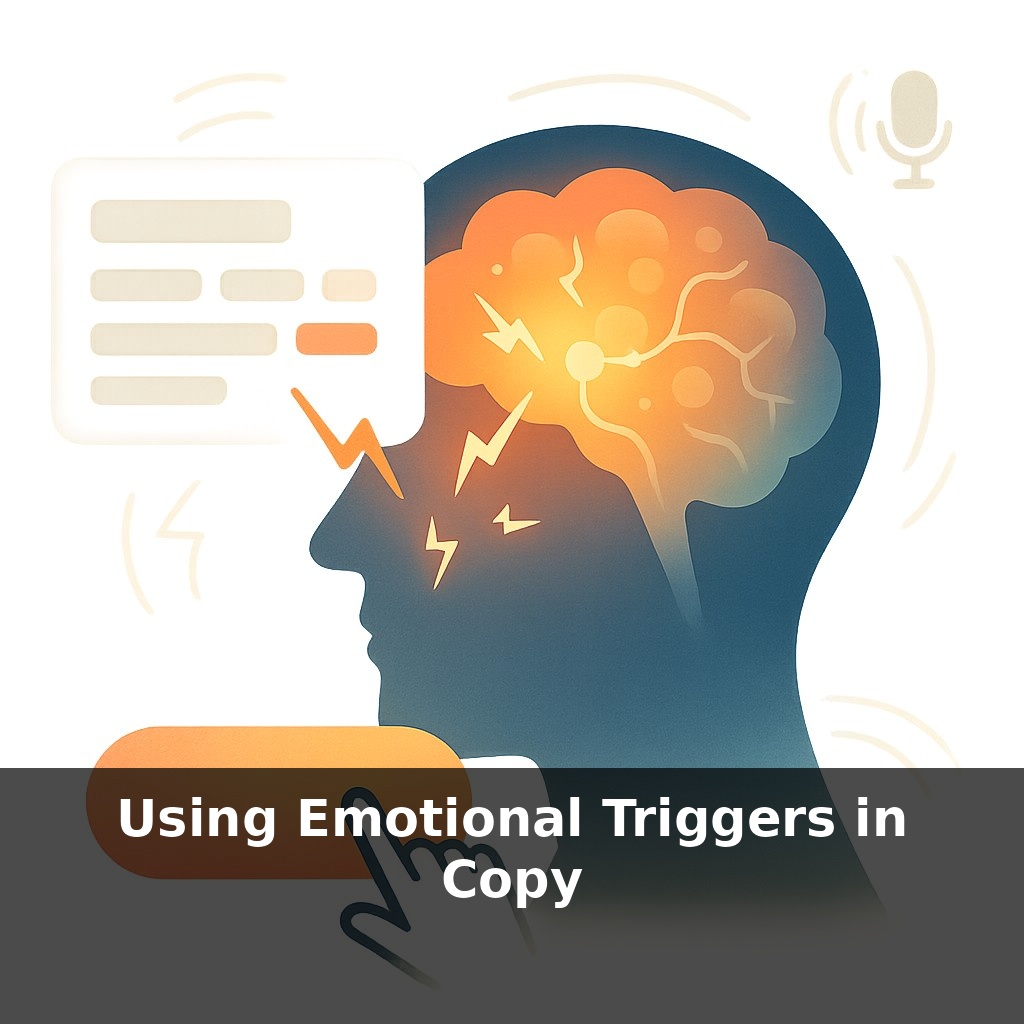
Most of the time, your readers decide to click, buy, or delete before they’ve even “thought” about it. In this episode, we’ll drop into that split second: the tiny emotional jolt in a subject line, a headline, or a button that quietly steers what happens next.
Gerald Zaltman says 95% of purchase decisions happen in the subconscious. That means your reader’s “I’ve thought this through” moment often arrives *after* their brain has already leaned yes or no. Today, we’re going deeper into how to deliberately spark those leanings with emotional triggers—curiosity, fear, belonging, hope—not as manipulative tricks, but as levers you can use more consciously.
Instead of piling on more logic, we’ll look at *which* feelings reliably move people to open, click, or give—and how different contexts call for different triggers. A fundraising campaign, for instance, might lean on a single, vivid human story, while a product launch could use intrigue and anticipation.
Think of this as learning your reader’s emotional “control panel.” By the end, you’ll see why small shifts in language can quietly reroute their decisions long before they start explaining them.
You’ve already seen that tiny emotional shifts can tip decisions fast. Now we’ll zoom out and map *which* feelings you can reliably tap—and when. Think of this less as “pressing buttons” and more as tuning a playlist for the moment your reader is in. A launch email might lean on curiosity and anticipation; a renewal notice might call for reassurance and safety; a community invite might highlight status and belonging. We’ll also look at how intensity matters: the difference between a gentle nudge of intrigue and a spike of urgency that risks backfiring if it’s not backed by truth.
When researchers analyzed 3.5 million email headlines, they found something odd: swap in a few emotionally charged words and open rates nudge up by about 6%. That’s not a copywriting “trick”—it’s a signal. Certain emotional cues repeatedly pull people closer, while others push them away or numb them.
To use this deliberately, it helps to group emotions by the kind of movement they create:
**1. Pull-me-closer emotions:** These are curiosity, intrigue, and anticipation. They’re great for getting someone to take a *first* small step. Notice how small, specific gaps work better than vague hype:
- Weak: “Amazing update inside!” - Stronger: “The mistake costing most freelancers 10 hours a week”
You don’t just say “curious?”—you create a concrete, unresolved gap that *demands* closure.
**2. Push-me-away-from-risk emotions:** These include loss aversion, mild fear, and concern. They’re powerful but volatile. Used well, they highlight what’s at stake without spiraling into doom:
- Grounded: “Don’t lose your progress: save your work in 2 clicks” - Overblown: “Your files could vanish forever any second”
Tie the concern to a clear, manageable action. The moment it feels overwhelming or exaggerated, people shut down or mistrust you.
**3. Pull-me-into-identity emotions:** Belonging, pride, status, and contribution make people think, “People like *me* do things like *this*.” These are especially strong in communities, causes, and premium products:
- “Join 12,000 designers who build cleaner interfaces in half the time” - “Be the reason one more child starts school this year”
Here, the action isn’t just practical; it says something about who they are.
**4. Steady-me emotions:** Reassurance, relief, and safety help when someone is already leaning yes but hesitating. You’ll see them in guarantees, onboarding, and post-purchase flows:
- “Cancel anytime, no questions asked” - “We’ll walk you through your first project step by step”
Think of it like good interface design in software: not flashy, but it removes friction so progress feels safe.
The deeper skill is *pairing* these groups to the stage your reader is at: spark intrigue to get a click, add identity to justify commitment, and finish with reassurance to get them over the last hump—without ever turning the volume up higher than the truth can support.
Occasionally, the most effective “trigger” looks almost boring on the surface. Take Obama’s “Hey” email. Why did it mint roughly $60M? Not because the word is magical, but because, in an inbox full of polished pitches, it mimicked a note from a friend. It hinted at intimacy, broke pattern, and quietly signaled, “This is for you.”
Use that as a cue: emotional impact often hides in *contrast* with the surrounding noise. A charity surrounded by data-heavy appeals chooses one child’s face and a simple, human line: “Tonight, Amal sleeps outside.” A SaaS brand in a features-obsessed market opens with: “You didn’t start a business to live in spreadsheets.”
Think of each channel as a crowded room. What *stands out* there—warmth, wit, vulnerability, calm authority? Testing isn’t just swapping words; it’s experimenting with *which* emotional note, at *what* volume, cuts through that specific room without shouting.
Brands are already training AI to sense micro-reactions—scroll speed, hover time, even vocal tension—and adjust tone on the fly. Your copy might soon behave more like a live DJ than a static script, fading from urgency to calm once someone leans in. The risk: “emotional spam” that feels creepy or manipulative. The opportunity: interfaces that notice when you’re overwhelmed and *soften* the ask instead of pushing harder. Your edge will be designing those boundaries on purpose, not by accident.
Treat this less like “pulling strings” and more like tuning an instrument. Over time, you’ll notice certain notes your audience leans toward—warmth, wit, calm, urgency. Map which notes fit which moments, the way a good playlist matches a drive, a workout, or a late-night focus session. You’re not forcing reactions; you’re scoring the journey.
Start with this tiny habit: When you write a headline or hook for your copy, add just one specific emotional word to it (like “frustrated,” “relieved,” “embarrassed,” or “confident”). Before you call it done, quickly ask yourself: “What is my reader feeling right before they need this?” and tweak one phrase to reflect that exact moment (e.g., “tired of second-guessing every email you send?”). Each time you open a new doc or draft, type the emotion you’re targeting at the very top (like “fear of missing out” or “relief after finally deciding”) before you write a single line.